
Progeria (Hutchinson-Gilford Progeria Syndrome): Current Affairs October 2025 | UPSC Daily GK Update | Atharva Examwise
Introduction
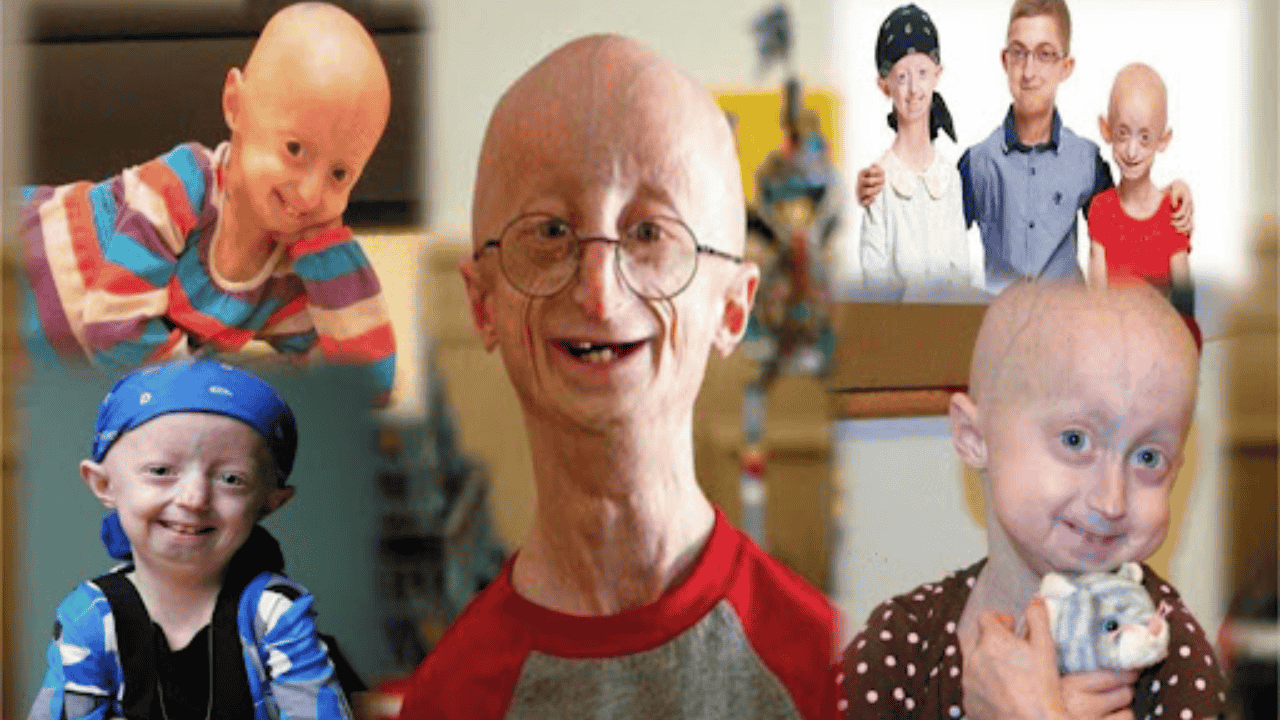
Progeria, or Hutchinson-Gilford Progeria Syndrome (HGPS), is an extremely rare genetic disorder that causes rapid aging in children. It affects only one out of every 4 to 8 million newborns.
Globally, around 350–400 children live with this condition, while in India, there are an estimated 60 cases, of which only about 25% have been identified.
This topic is not only significant from the perspective of medical science, but also relevant for the UPSC Prelims and Mains examinations under the Science & Technology and Current Affairs sections.
What is Progeria?
Progeria is a genetic disorder caused by a mutation in the LMNA (Lamin A) gene.
This gene is responsible for producing a protein that helps maintain the structure of a cell’s nucleus.
When this gene mutates, it leads to the formation of an abnormal and toxic protein called progerin. This protein destabilizes the nuclear membrane of cells, causing them to age rapidly.
Key Facts:
It is an autosomal dominant disorder, but in almost all cases, it occurs as a de novo mutation.
The disorder is not typically inherited from parents or siblings.
The mutation occurs in the sperm before conception.
Symptoms and Clinical Features
Infants with progeria appear normal at birth, but symptoms begin to appear within the first one or two years of life.
Physical Symptoms:
Wrinkled skin and hair loss (alopecia)
A disproportionately large head compared to the face
Small jaw (micrognathia) and pointed nose
Loss of subcutaneous fat layer
Prominent eyes
Severe growth delay (both height and weight deficiency)
Joint stiffness and hip dislocation
Cardiovascular Problems:
Atherosclerosis (plaque buildup in arteries)
Increased risk of heart disease and stroke
Hypertension and cardiac enlargement
Important:
Despite these symptoms, children’s intelligence and cognitive development remain normal, and their IQ can even be above average.
Life Expectancy
Children with progeria have an average life expectancy of 13 to 15 years.
Nearly 90% of deaths occur due to complications from atherosclerosis, such as heart attack or stroke.
However, exceptional cases exist where patients live beyond 20 years.
In Jabalpur, Madhya Pradesh, Shreyash Barmate celebrated his 18th birthday in July 2024, exceeding the average life expectancy.
Sammy Basso, an Italian progeria patient and researcher, lived until the age of 28, making him the longest-living known individual with classic progeria. He passed away on October 5, 2024.
Diagnosis and Testing
Progeria is diagnosed through the following methods:
Physical examination: Typical facial features and growth patterns
Genetic testing: Confirmation of LMNA gene mutation
X-rays and imaging: Bone abnormalities such as acro-osteolysis (resorption of distal phalanges)
In India, the Progeria Research Foundation (PRF) and Mediamedic Communications, under the banner of “Team Nihal”, are running an awareness campaign called “Finding the Other 60” to identify undiagnosed cases.
Treatment and Management
FDA-Approved Drug: Zokinvy (Lonafarnib)
Lonafarnib (Zokinvy) is the first and only FDA-approved drug for progeria.
Approval Timeline:
November 2020: Approved by the U.S. FDA
July 2022: Approved in the European Union and Great Britain
January 2024: Approved by Japan’s PMDA
Mechanism of Action:
Lonafarnib is a farnesyltransferase inhibitor (FTI) that prevents the formation of the progerin protein. It blocks the accumulation of defective progerin or progerin-like proteins in cells, reducing cellular instability and premature aging.
Effectiveness:
60% reduction in mortality observed in clinical trials
2.5-year increase in average life expectancy
Many patients have been on Zokinvy therapy for over 10 years
Side Effects:
Common adverse reactions include gastrointestinal issues (vomiting, diarrhea, nausea), mostly mild to moderate (Grade 1–2).
Cost:
The price of Zokinvy is approximately 1.4 billion Korean Won (USD 1 million) per dose, making it extremely expensive.
Supportive Treatments
Physical therapy: For joint stiffness and mobility issues
Cardiac care: To monitor atherosclerosis and heart disease
Nutritional support: To address growth delays
Surgical interventions: In some cases, coronary artery bypass or angioplasty may be required
Latest Research and Breakthroughs
Gene Editing Therapy:
The Progeria Research Foundation’s gene therapy team demonstrated a 140% increase in lifespan in mouse models — published in Nature.
The team is now working with the FDA to develop drug manufacturing and clinical trial protocols.
If successful, this could become the first in-vivo gene-editing-based treatment for a multisystem disorder.
RNA-Based Therapy:
In July 2025, the Korea Research Institute of Bioscience and Biotechnology (KRIBB) developed the world’s first precision RNA-targeting therapy.
This therapy uses RfxCas13d-based “molecular scissors” to selectively remove disease-causing RNA transcripts while preserving normal gene function.
In mouse models, it reversed symptoms such as hair loss, skin atrophy, spinal curvature, and reduced mobility.
Stem Cell Models:
In October 2025, researchers at the University of Brighton developed the first genetically stable, lab-grown stem cell models for progeria.
These “zero-footprint” stem cells allow scientists to study the disease in cardiac cells and test RNA-based therapies and small-molecule drugs.
Role of Angiopoietin-2 (Ang2):
In October 2024, researchers at the University of Maryland discovered that Angiopoietin-2 protein is significantly impaired in progeria patients.
This affects endothelial cell function, leading to cardiovascular complications and opening new pathways for targeted heart disease treatment in progeria.
Progeria in India: Status and Awareness
India has an estimated 60 progeria patients, but only 15 cases (about 25%) have been identified.
Reported Cases:
By 2016, 7 documented cases and 66 potential unreported cases were known.
In December 2023, a 14-year-old boy from Madhya Pradesh was diagnosed with a variant form — Mandibuloacral Dysplasia Type B, possibly the first case in India.
In July 2024, Shreyash Barmate (Jabalpur) reached 18 years of age, surpassing the average lifespan.
Awareness Campaign:
Under “Team Nihal”, PRF and Mediamedic Communications are running the “Finding the Other 60” campaign. Its goal is to spread awareness in rural areas and help physicians identify symptoms for early diagnosis and better quality of life.
Exam-Related Importance
Possible Question Types:
MCQs on genetic disorders (LMNA gene, autosomal dominant traits)
Questions on rare diseases and FDA-approved treatments
Questions on gene editing and CRISPR technology
Questions related to healthcare innovation and rare disease policy
Questions on recent scientific discoveries (2024–2025)
Related Topics:
Genetic mutations and disorders (Sickle Cell Anemia, Thalassemia, Hemophilia)
Farnesyltransferase inhibitors and protein synthesis
Stem cell research and regenerative medicine
CRISPR-Cas9 and RNA-based therapy
Why This Matters for Your Exam Preparation
For the Science & Technology Section:
Progeria is an excellent case study for questions related to genetic disorders, gene mutations, and modern medical technology.
Concepts like the LMNA gene, progerin protein, and farnesylation process are crucial.
For Current Affairs:
Major developments in 2024–2025 include:
July 2025: RNA-based therapy success
October 2025: Stem cell model developed by the University of Brighton
October 2024: Death and contribution of Sammy Basso
August 2025: The New Yorker feature on gene editing
For Health Policy & Society:
The Indian campaign to identify 60 unknown progeria cases highlights key issues in rare disease policy, healthcare accessibility, and patient rights — relevant for UPSC Mains Essay and GS Paper-II.
For Biotechnology & Ethics:
The use of gene editing and CRISPR raises ethical, legal, and social implications (ELSI).
The potential for in-vivo gene editing in progeria deepens this ethical debate.
Comparative Study:
Progeria should be compared with other genetic disorders such as Down Syndrome, Turner Syndrome, Klinefelter Syndrome, and Sickle Cell Anemia for a holistic understanding and to avoid confusion in MCQs.
Key Points: At a Glance
| Aspect | Details |
|---|---|
| Full Name | Hutchinson-Gilford Progeria Syndrome (HGPS) |
| Genetic Cause | LMNA gene mutation (c.1824C>T, p.G608G) |
| Affected Protein | Progerin (toxic Lamin A) |
| Prevalence | 1 per 4–8 million births |
| Global Cases | 350–400 children |
| Indian Cases | Approx. 60 (15 identified) |
| Average Life Expectancy | 13–15 years |
| Primary Cause of Death | Heart attack/stroke (90% of cases) |
| FDA-Approved Drug | Zokinvy (Lonafarnib) |
| Increase in Lifespan | +2.5 years (with Lonafarnib) |
| Reduction in Mortality | 60% (with Lonafarnib) |
| Latest Breakthrough | RNA Therapy (July 2025) |
| Lifespan Extension in Mouse Model | 140% (via Gene Editing) |
Conclusion
Progeria is a rare but severe genetic disorder that causes premature aging in children.
While there is still no permanent cure, the approval of Lonafarnib (Zokinvy) and the success of RNA-based therapy and gene-editing research have brought new hope.
For UPSC and other competitive exam aspirants, Progeria is a multidisciplinary topic connecting genetics, biotechnology, health policy, ethics, and current scientific discoveries.
Understanding this subject in depth is crucial not only for the Prelims, but also for the Mains and Interview stages.
Atharva Examwise remains committed to providing comprehensive information on such important current affairs topics.
For more updates and exam-focused content, visit www.atharvaexamwise.com.