
India's Space Tech Breakthrough: MIRA Telescope & Indrajaal Ranger – Current Affairs for UPSC Aspirants (November 2025)
Introduction: India's Historic Leap in Space Technology and Border Security
In a transformative week for Indian technology innovation, two groundbreaking developments from Hyderabad-based startups have positioned India as a global player in advanced space systems and autonomous defense technologies. These breakthroughs—India's first indigenously developed miniaturized space telescope MIRA and the nation's first mobile anti-drone patrol vehicle Indrajaal Ranger—represent not just technological milestones, but strategic shifts in India's self-reliance and border security. Both innovations launched in November 2025 carry significant implications for UPSC examinations, competitive exams, and aspirants seeking to understand India's defense and space policies.
MIRA: India's Revolutionary 502-Gram Space Telescope
The Historic Achievement
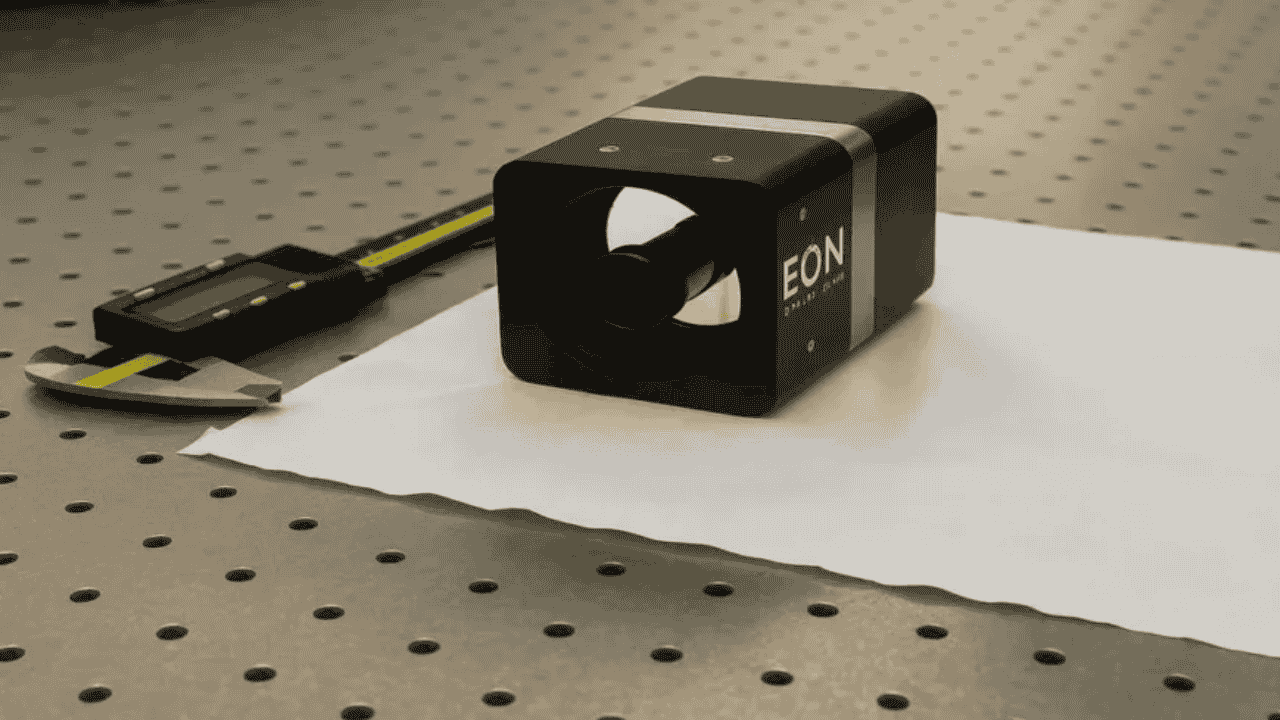
EON Space Labs, a Hyderabad-based deep-tech startup, has successfully completed NASA-standard thermo-vacuum testing of MIRA (Multi-Imaging Resolution Apparatus), India's first indigenously designed and certified space telescope.
Key Technical Specifications:
Weight: 502 grams (approximately the weight of a sugar packet)
Efficiency: 3-4 times lighter than traditional space telescopes
Launch Date: December 2025 (heritage space flight mission)
Certification: Meets NASA stringent standards for space-readiness, temperature stability, vacuum tolerance, and operational reliability
Testing Credentials: Why This Matters
MIRA underwent rigorous testing at an NABL-accredited facility in Ahmedabad, simulating the harshest orbital conditions:
Temperature Range: -20°C to +60°C (extreme thermal fluctuations)
Vacuum Levels: Below 10⁻⁵ torr (ultra-high vacuum conditions)
Performance Outcome: Zero optical drift, negligible outgassing, and no structural deformation
The telescope successfully demonstrated autonomous imaging and telemetry transmission from orbit conditions, proving its capability to function independently in space.
Cost Revolution: Breaking the Payload Economy
Why the weight matters financially:
Traditional space telescope launch costs range from $10,000 to $20,000 per kilogram (approximately ₹8.92 lakh to ₹17.85 lakh). MIRA's 502-gram lightweight design dramatically reduces payload deployment expenses, making high-resolution space imaging accessible to more missions—both commercial and strategic.
Dual-Use Technology: Defense and Commercial Applications
MIRA has been engineered for dual-use capability:
Defense Applications: Strategic surveillance, border monitoring, and reconnaissance missions
Commercial Applications: Earth observation, disaster assessment, agricultural monitoring, and climate research
AI-Enabled System: Features an advanced optical system capable of functioning even under space's most challenging conditions
The Indian Engineering Triumph
Co-founder Sanjay Kumar emphasized the historic significance: "This is a defining moment for us. This certification proves that ultra-complex, high-precision imaging platforms can now be built and certified entirely from within India."
Why This Represents Atma Nirbhar Bharat (Self-Reliance):
Before MIRA, India relied on foreign space telescopes for strategic missions. This development marks India's entry into the elite group of nations capable of designing, manufacturing, and certifying advanced space hardware domestically—a critical step toward Atmanirbhar Bharat and Space Independence.
Indrajaal Ranger: India's First Mobile Anti-Drone Combat Vehicle
Addressing a Critical National Security Gap
Indrajaal Drone Defence has launched Indrajaal Ranger, the nation's first fully mobile, AI-enabled anti-drone patrol vehicle (ADPV).
The Problem It Solves:
India's western and northern borders face an escalating crisis: drone-based smuggling of drugs, weapons, and explosives. According to recent reports, ISI-linked networks and criminal cartels are using unmanned aerial vehicles as their primary logistical tool, with Pakistan-origin drones consistently intercepted in Indian territory.
Ranger's Combat Capabilities
| Capability | Specification |
|---|---|
| Detection Range | Up to 10 kilometers |
| Mitigation/Neutralization Range | Up to 4 kilometers |
| Platform | All-terrain 4×4 chassis (mobile combat vehicle) |
| AI System | Autonomous threat assessment and tracking |
| Counter-Measures | Cyber takeover, soft-kill technologies, interceptor drones |
| Operational Mode | On-the-move detection and interception |
Autonomy Engine: SkyOS Technology
Powered by Indrajaal's proprietary SkyOS autonomy engine, the Ranger fuses multi-sensor intelligence into a unified C5ISRT framework (Command, Control, Communications, Computers, Intelligence, Surveillance, Reconnaissance, and Targeting).
Functional Areas of Deployment:
Border roads and frontier zones
Agricultural belts near international boundaries
Critical national infrastructure
Dense urban areas vulnerable to drone surveillance
Canal systems and isolated regions
Strategic Impact: Beyond Border Security
CEO Kiran Raju stated: "Each drone neutralised translates to lives protected and India's internal security strengthened. This is our primary mission at Indrajaal—to defend freedom."
Breaking Down the Threat:
The Rs. 3-lakh-crore drug-trafficking network in India operates partially through drone smuggling routes. By disrupting these logistical channels, the Ranger can:
Prevent narcotics from endangering Indian youth
Block illicit weapons entry into urban centers
Protect vulnerable border communities
Weaken recruitment pipelines of extremist networks
Reduce operational burden on BSF and police units through automation
Operational Status
The company has already achieved operational certification: it has received ARDTC (Army Research & Development Tactical Committee) certification for deploying Counter-UAS systems and is positioned for national-level rollouts.
Comparative Analysis: India's Innovation Ecosystem
| Factor | MIRA Space Telescope | Indrajaal Ranger |
|---|---|---|
| Launch/Deployment | December 2025 (orbit mission) | Already operational, recent launch (Nov 2025) |
| Developer | EON Space Labs (Hyderabad) | Indrajaal Drone Defence (Hyderabad) |
| Application Scope | Dual-use (defense + commercial) | Primarily defense and border security |
| Technology Focus | High-precision electro-optical imaging | Autonomous threat assessment + neutralization |
| Global Impact | Earth observation, astronomy | Counter-UAS warfare, border defense |
| Cost Efficiency | Reduces per-kg payload costs by 60-80% | Reduces manual patrol inefficiencies through AI |
Geographical and Strategic Significance
Why Both Are Hyderabad-Based: India's Aerospace Cluster
Both innovations emerge from Hyderabad, India's growing aerospace and defense hub, home to:
ISRO facilities and research centers
Private defense contractors
Emerging deep-tech startups
A pool of aerospace engineers and technicians
This concentration reflects India's strategic focus on decentralizing space and defense manufacturing beyond traditional clusters.
Border Security Context
The western frontier (Pakistan border) and northern frontier (China, Pakistan) are critical areas where these technologies will be deployed. The smuggling routes exploit traditional ground-based surveillance gaps—exactly where mobile, AI-enabled systems like the Ranger become game-changers.
Examination Relevance: Why This Matters for Your UPSC Preparation
Relevant UPSC Topics and Subjects
Current Affairs & National Security:
India's defense modernization and autonomous systems
Border security challenges: drug trafficking, weapons smuggling, terrorism
Drone warfare and counter-UAS strategies
National security policy and emerging threats
Science & Technology for IAS:
Indigenous space technology development
Miniaturization in aerospace engineering
AI in autonomous systems and defense
Dual-use technology policy
Economic & Infrastructure:
Atmanirbhar Bharat initiative and self-reliance in space
Cost-efficiency in satellite payloads
Startup ecosystem and deep-tech innovation
Global space economy and market potential
Geography & Geopolitics:
Border security dynamics (Pakistan, China frontiers)
ISI-linked smuggling networks
Cross-border drone threats
Regional security challenges in South Asia
Expected UPSC Question Patterns
Based on examination trends, potential questions include:
Preliminary (UPSC-CSE Tier-1):
Which Indian startup developed the MIRA space telescope? (Factual knowledge)
What is the weight of MIRA, India's mini space telescope? (Numerical recall)
Indrajaal Ranger is designed to address which security threat? (Issue-based)
Mains (UPSC-CSE Tier-2):
Discuss India's progress in miniaturized space technology and its implications for Atmanirbhar Bharat (Analytical)
Evaluate the role of AI-enabled autonomous systems in addressing India's border security challenges (Evaluative)
How can dual-use technologies like MIRA contribute to India's space diplomacy and global positioning? (Strategic)
Related Topics for Comprehensive UPSC Preparation
To strengthen your preparation, connect these innovations with:
Indian Space Program: ISRO's Small Satellite Launch Vehicle (SSLV), commercial space policy
Defense Technologies: Counter-terrorism strategy, unmanned systems in Indian defense
Policy Framework: National Geospatial Policy, Space Activity Bill, Drone Regulations
Global Context: Space treaties, dual-use technology export controls, international space cooperation
Why This Matters for Your Exam Preparation
For UPSC Aspirants:
Current Affairs Relevance: Both innovations are recent (November 2025), making them highly probable for UPSC Mains 2025 or 2026 current affairs segments.
Multidisciplinary Integration: These developments bridge Science & Technology, Defense & Security, and Economic Development—all critical UPSC subject areas.
Atmanirbhar Bharat Narrative: Both represent India's self-reliant capability-building, a recurring theme in UPSC examinations reflecting government priorities.
Policy & Strategy Insights: Understanding these innovations demonstrates awareness of:
India's space diplomacy and global positioning
Border security evolution and technological solutions
Startup ecosystem's role in national security
Defense manufacturing within India (Make in India)
Interview Preparation: These topics provide excellent material for:
Demonstrating awareness of cutting-edge Indian innovations
Discussing national security challenges comprehensively
Showing understanding of technology's role in governance
For Other Competitive Exams:
Similar technologies and strategic concepts appear in:
AFCAT and CDS (defense-focused exams)
CAPF (paramilitary recruitment)
State PSC current affairs sections
Banking and business exams (economic implications)
Quick Reference: Key Facts for Memorization
| Fact | Detail | Exam Relevance |
|---|---|---|
| MIRA Weight | 502 grams | Factual recall (Prelims) |
| Launch Window | December 2025 | Current affairs (Mains) |
| Testing Standards | NASA-compliant | Technical credibility (Mains) |
| Temperature Range Tested | -20°C to +60°C | Technical specification |
| Ranger Detection Range | 10 km | Operational capability |
| Ranger Neutralization Range | 4 km | Tactical specification |
| Developer Company | EON Space Labs | Attribution (Prelims) |
| Hyderabad Location | Both innovations | Geographic pattern |
Conclusion: A Defining Moment for India's Technology Sovereignty
MIRA and Indrajaal Ranger represent more than technological achievements—they symbolize India's transition from importer to innovator in critical domains. As aspirants preparing for India's premier civil services examination, understanding these developments equips you to discuss:
India's role in the global space economy
Emerging security challenges and technological responses
The synergy between innovation, entrepreneurship, and national security
Policy frameworks supporting indigenous capability development
Stay updated on these technologies as they progress through operational phases. December 2025's MIRA launch and ongoing Ranger deployments will generate follow-up news coverage—valuable for your current affairs preparation through 2026 and beyond.