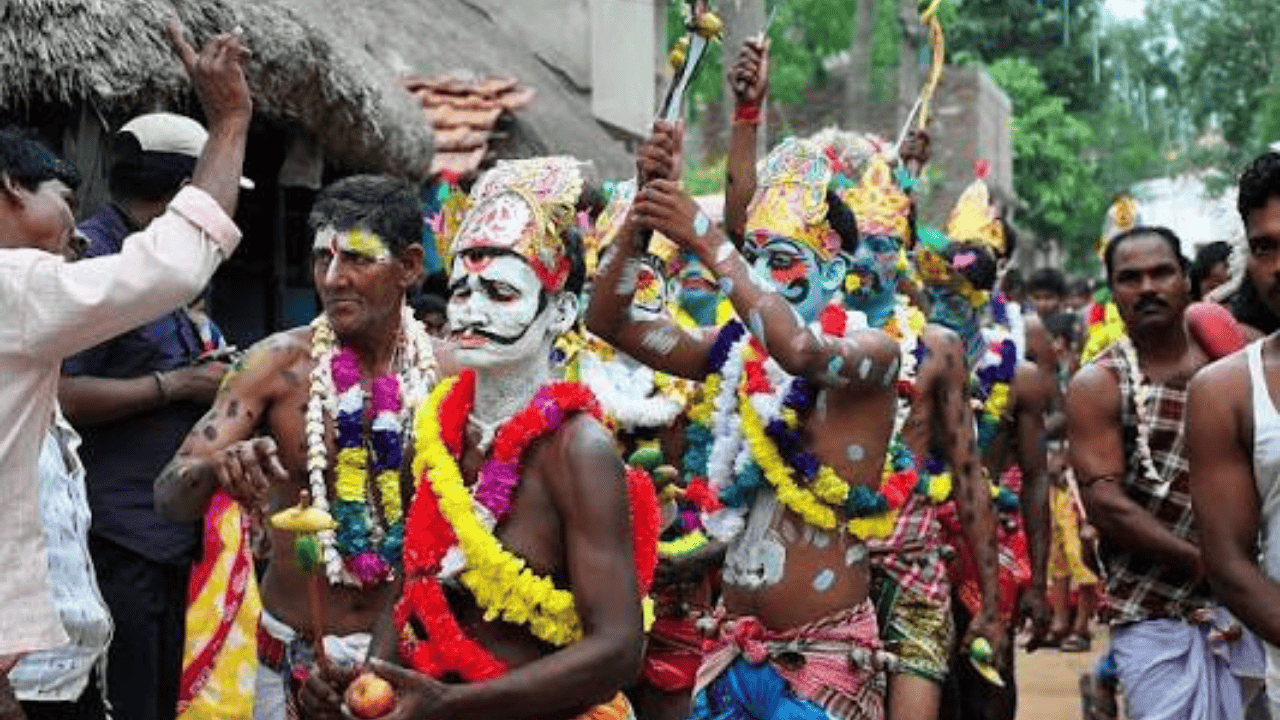
Indian culture is world-renowned for its diversity and depth. Every corner of the country is a center for some unique tradition or festival. Folk festivals prevalent in rural India, in particular, are not only symbols of religious faith but also reflections of the socio-economic structure and history of that region. In this context, the Gajan Festival of West Bengal is an event known for its rigorous penance, agricultural beliefs, and social inclusivity. In this special current affairs analysis by Atharva Examwise, we will discuss the various dimensions of the Gajan Festival along with the significant national and international developments of April 17, 2026, which are extremely important for UPSC and other State PSCs.
Gajan Festival: A Unique Confluence of Faith, Penance, and Folk Culture
The Gajan Festival is a folk festival primarily celebrated in the rural areas of West Bengal. This festival is organized at the end of 'Chaitra' (the last month of the Bengali calendar) and concludes with Charak Puja on the day of Chaitra Sankranti. The central theme of Gajan is attaining spiritual satisfaction through self-inflicted pain, devotion, and sacrifice.
Etymology and Meaning of the Word 'Gajan'
There are two major views among scholars regarding the origin of the word 'Gajan'. The first view is that the word is derived from the Bengali word 'Garjan', which means 'roar' or a loud sound. The loud cries made by the Sanyasis (monks) while invoking Lord Shiva during the festival may be the basis for this name. The second view is more sociological; according to this, 'Gajan' is a combination of 'Ga' (meaning village) and 'Jan' (meaning common people). Thus, the literal meaning of Gajan is 'the festival of the village people'.
Primary Deities of the Festival: Shiva, Neel, and Dharmaraj
The Gajan Festival is primarily associated with three deities—Shiva, Neel, and Dharmaraj.
| Name of Deity | Role and Significance in Gajan | Associated Beliefs |
|---|---|---|
| Lord Shiva | Gajan is often called 'Shiber Gajan'. Here, Shiva is seen as a poor Bengali householder and farmer rather than a destroyer. | On this day, Shiva's marriage to Harakali is believed to take place, and the Sanyasis act as his wedding guests. |
| Neel (Nilavati) | Neel Puja is an integral part of Gajan, celebrated just before the Sankranti. | Married women primarily perform Neel Puja for the welfare and long life of their children. |
| Dharmaraj (Dharmathakur) | 'Dharmer Gajan' is mainly prevalent in the Bankura and Birbhum districts. | Dharmaraj is considered the deity of justice and fertility. He is often associated with the remnants of Buddhism. |
Historical and Religious Background: Transition from Buddhism to Hinduism
Historians believe that the roots of Gajan lie in the decline of Buddhism in Bengal and its subsequent absorption into Hinduism. It is believed that Buddhist monks who converted to Hinduism to escape persecution brought their Tantric methods and rigorous rituals of penance with them. Over time, these rituals integrated with the worship of Shiva and Dharmaraj, evolving into the current form of Gajan.
Relationship of Gajan Festival with Agriculture and Fertility
Gajan is not merely a religious ritual; it is a pre-harvest folk festival. In the 'Rarh' region of Bengal, which becomes extremely dry and hot in the month of Chaitra, this festival holds special significance.
Restoration of Soil Fertility: The main objective of Gajan is to bring back moisture and fertility to the soil so that the coming year yields a good harvest.
Symbolism of the Agricultural Cycle: The rituals of the festival are linked to various stages of agriculture. Body piercing (Baanphonra) is considered a symbol of plowing the land, while Charak Puja represents seed sowing and the continuity of the crop cycle.
Gratitude toward Nature: Farmers pray to Lord Shiva for rain, happiness, and peace. They believe that the pain caused to the soil (Mother Earth) during agriculture is atoned for by the Sanyasis through self-inflicted pain.
Gajan of Kurmun: A Unique and Macabre Tradition
Kurmun village in the Bardhaman district remains a subject of global discussion due to its Gajan festival. The rituals here are more fierce and 'macabre' compared to other parts of West Bengal.
Dance with Human Remains and Skulls
The most distinctive feature of the Kurmun Gajan is the use of human remains, especially skulls.
Collection of Remains: A few days before the festival, Sanyasis collect human skulls and sometimes the bodies of deceased infants from local crematoriums and graveyards.
Religious Belief: The Sanyasis believe that the more skulls they collect, the more successful the ritual will be, bringing greater protection and good fortune to the village.
Ritual Performance: In a state of spiritual trance, the Sanyasis dance through the village streets holding these skulls in their hands or hanging them on sticks.
Social Acceptance: While this may seem terrifying to the outside world, for the villagers of Kurmun, it is a centuries-old tradition viewed with deep reverence.
Various Forms of Rigorous Physical Penance
During Gajan, devotees—known as 'Bhaktyas' or 'Gajan Sanyasis'—fast for several days and renounce worldly pleasures.
| Name of Ritual | Description | Significance |
|---|---|---|
| Baanphonra | Piercing long iron rods through the tongue, lips, or other body parts. | A demonstration of the Sanyasi's indomitable courage and devotion. |
| Charak Puja | Devotees are suspended from a tall wooden pole using hooks pierced through their back skin and rotated. | Represents the rotation of the Earth and the continuity of the life cycle. |
| Kantajhanp | Jumping from a high platform onto a bed of thorns or sharp weapons. | A symbol of faith in divine power; it is believed that Shiva's blessing protects them from injury. |
| Crucifixion | Devotees are tied to wooden crosses, nails or rods are pierced through their limbs, and they are paraded through the village. | A symbol of sacrifice and spiritual climax. |
Ethno-Medicine and the Mystery of 'Kala Puspa'
The most astonishing aspect of these dangerous Gajan rituals is that despite suffering serious injuries, the devotees recover very quickly and do not fall victim to infections. A special medicinal plant known locally as 'Kala Puspa' or 'Kalo Puspo' is said to contribute to this.
Healing Process: Immediately after the iron rods are removed, these leaves are given to the devotees to chew or are applied to the wounds.
Effect: The leaf miraculously stops bleeding and reduces pain. Devotees recover completely within two to three days.
Botanical Identity: Although called 'Kala Puspa' in folk songs, according to ethno-botany, it could be a species of 'Apang' (Achyranthes aspera), 'Ashok Lata' (Eupatorium odoratum), or 'Shankhapushpi', known for their anti-septic properties.
Role of Gajan in Social Structure: A Great Social Leveler
From the perspective of the UPSC Mains examination, the sociological study of the Gajan Festival is extremely important. This festival challenges the traditional caste system of Bengal.
Dominance of Lower Castes: Gajan is primarily celebrated by communities traditionally marginalized in Brahmanical society, such as the Bauri, Bagdi, Dom, and Hadi.
Sanyasis as Priests: During the festival, these Sanyasis wear the sacred thread (Janeu) and are accorded a spiritual status equivalent to Brahmins. Even upper-caste villagers seek blessings from these Sanyasis.
Reversal of Gender Roles: Men often dress as Goddess Durga or Kali and inflict pain upon themselves to feel the labor pain of women, referred to as the "penance of masculinity".
This festival acts as a bridge between the 'Little Tradition' and the 'Great Tradition', where folk beliefs are seamlessly woven with mythological narratives.
Daily GK Update: April 17, 2026
For competitive exam preparation, culture alone is not enough; a grip on current affairs is mandatory. Here are some important news items from April 17, 2026:
131st Constitutional Amendment Bill and Delimitation
The Government of India has introduced the 131st Constitutional Amendment Bill, 2026, to increase the number of seats in the Lok Sabha.
Increase in Seats: According to the proposed bill, the membership of the Lok Sabha may be increased from 543 to 850.
Articles 81 and 82: This amendment will change Article 81 (Composition of the Lok Sabha) and Article 82 (Delimitation). Now, it will not be necessary to wait for the first census after 2026 for delimitation.
Women's Reservation: This bill will also accelerate the implementation of the 106th Constitutional Amendment Act, 2023 (Nari Shakti Vandan Adhiniyam), allowing for 33% women's reservation to be implemented immediately after delimitation.
International Events: US-Iran and West Asia Crisis
Nuclear Dust: US President Donald Trump has claimed that Iran has agreed to hand over 'nuclear dust' destroyed in airstrikes last year as a step toward reducing its nuclear capability.
Israel-Lebanon Talks: An agreement has been reached to start direct talks between Israel and Lebanon to end the ongoing conflict with Hezbollah.
Energy Crisis: The IMF has warned that the ongoing war in West Asia could turn into the largest energy crisis of modern times, affecting the global growth rate of 2026.
Important Appointments and Economic News
Bihar Deputy Chief Ministers: Along with Samrat Chaudhary, JDU's Bijendra Prasad Yadav and Vijay Kumar Chaudhary have taken the oath as Deputy Chief Ministers of Bihar.
India-China Trade: In the financial year 2025-26, China has once again overtaken the US to become India's largest trading partner, although India's trade deficit has reached a record level of $112 billion.
Patent Applications: There has been a massive 30.2% increase in patent filings in India, placing India 6th in global rankings.
Science and Environment
Dillenia nagalim: A new species of plant has been discovered in the Kamjong district of Manipur, named in honor of the Naga community.
Painted Leopard Gecko: This rare reptile was spotted in Bastar, Chhattisgarh; it was scientifically described in 2022 from the Eastern Ghats of Andhra Pradesh and Odisha.
Important Days
World Hemophilia Day: Observed every year on April 17. The theme for 2026 is "Diagnosis: First Step to Care".
World Heritage Day: Will be celebrated on April 18.
Major Harvest Festivals of India: A Comparative Table
Questions about various state harvest festivals and their timing are frequently asked in the UPSC Prelims. The following table is useful for a quick revision:
| Festival Name | Associated State | Timing | Significance |
|---|---|---|---|
| Baisakhi | Punjab, Haryana | April 13/14 | Harvesting of Rabi crops and the day of the establishment of the Khalsa Panth. |
| Puthandu | Tamil Nadu | Mid-April | Tamil New Year and the day the Sun enters the sign of Aries. |
| Vishu | Kerala | Mid-April | Malayali New Year, known for the famous 'Vishukkani'. |
| Bohag Bihu | Assam | Second week of April | Assamese New Year and the beginning of the sowing season. |
| Nabanna | West Bengal | Nov/Dec | Celebration of the new paddy harvest. |
| Gudi Padwa | Maharashtra | March/April | First day of the month of Chaitra, marking the end of the Rabi harvest. |
| Pongal | Tamil Nadu | Jan (4 days) | Festival to express gratitude to the Sun God and cattle. |
Important Figures in Art & Culture and Recent Developments
Raja Ravi Varma: Recently, one of his paintings sold for Rs 167 crore, reflecting the strength of the Indian art market.
Banu Mushtaq: The famous Kannada writer has received the 2025 International Booker Prize for her book 'Heart Lamp'. This is the first Kannada work to win the Booker.
Dr. Jayant Narlikar: He is in the news for his contribution to astrophysics and the 'Hoyle-Narlikar Theory of Gravity'.
Strengthen Your Preparation with Atharva Examwise
If you are serious about UPSC or State Service examinations, understanding these subtle links between folk culture and current affairs is mandatory. Topics like the Gajan Festival are relevant not only for Art and Culture (GS Paper 1) but also provide rich material for Sociology and Essay writing.
Read our other analyses on Atharva Examwise:
Bagurumba Dance of Assam and the Cultural Heritage of the Bodo Tribe
Discovery of the rare 'False Tiger Moth' in Singhbhum and Biodiversity
Why this matters for your exam preparation
The Gajan Festival and the updates for April 17, 2026, are important for the following reasons:
GS Paper 1 (Art and Culture): Gajan Festival falls under "various aspects of India's cultural heritage." Its roots in the confluence of Buddhism and Shaivism are an excellent example of the evolution and transformation of religions. The rituals of Kurmun help in understanding Regional Cultural Variation.
GS Paper 1 (Indian Society): This festival is an important 'case study' for studying 'Social Mobility' and inclusivity within the caste system.
GS Paper 2 (Polity): The 131st Constitutional Amendment Bill will bring historic changes to the membership of the Lok Sabha and the process of delimitation. Delimitation and women's reservation are directly related to electoral reforms and the politics of representation.
GS Paper 3 (Environment & Science): Discoveries of new species like Dillenia nagalim are important for the biodiversity section. The medicinal use of 'Kala Puspa' underscores the importance of conserving Traditional Knowledge.
Ethics & Essay: Intense deliberations can be held on 'Faith vs. Logic' and the 'Ethical Dimensions of Self-Inflicted Pain' in the Gajan Festival. It is helpful in understanding the values of sacrifice, devotion, and community unity.
Atharva Examwise constantly strives to provide you with exam-focused, accurate, and deeply analyzed current affairs to make your path to success easier.