
UPSC Current Affairs October 2026: Daily GK Update on Kimkhab Traditional Textile and Banarasi Brocade | Atharva Examwise Current News
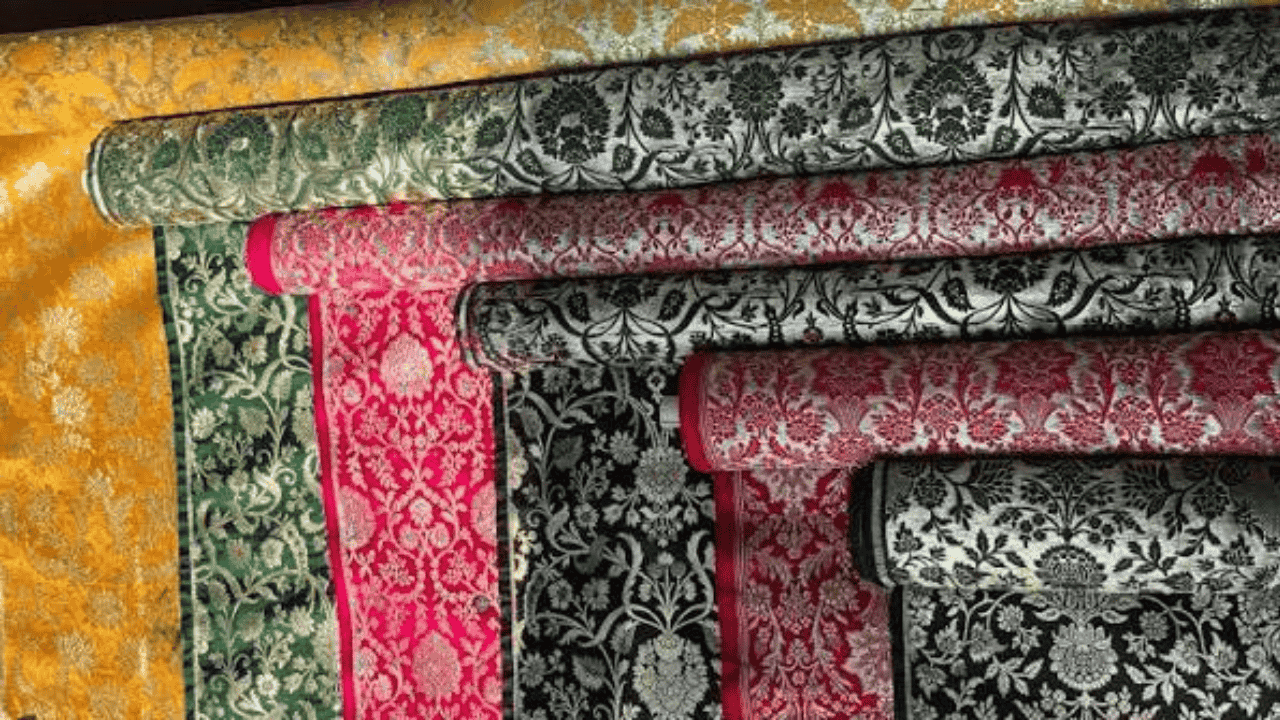
The intersection of traditional artisanal craftsmanship, geographical intellectual property protections, and central industrial welfare policies forms a critical pillar of India's cultural preservation and rural economic growth. Among the country’s most celebrated textile heritages is Kimkhab (also known as Kinkhab, Kinkhwab, or Kamkhwab), an ancient brocade art of weaving heavy, ornate fabrics using gold, silver, and silk threads. This subject represents a vital element of competitive exam news today. Understanding the historical context, technical fabric classifications, geographical indications, and state-led support frameworks surrounding this craft is essential for comprehensive civil services preparation.
Etymological Framework and Historical Foundations
The historical trajectory of Kimkhab reflects a rich synthesis of indigenous Sanskrit terms and Persian linguistic traditions, mirroring the cross-cultural movements that shaped the subcontinent's textile landscape.
Linguistic Interpretations of Kimkhab
The term Kimkhab carries multiple etymological interpretations, each highlighting a distinct dimension of the fabric's material reality and cultural value:
| Linguistic Root / Term | Language / Origin | Literal Meaning | Technical and Material Significance |
|---|---|---|---|
| Kim + Khab | Persian / Hindustani [cite: Input Data] | Rare ("दुर्लभ") + Dream ("स्वप्न") [cite: Input Data] | Denotes an object of such supreme beauty and craftsmanship that it resembles a rare dream [cite: Input Data]. |
| Kin + Khwab | Persian | Gold + Dream | Reflects the profuse use of gold threads (zar-baft) that weave a shimmering "golden dream". |
| Kam-khwab | Persian | Less ("कम") + Sleep ("नींद") | Refers to the stiff, heavily metallic texture of the fabric, which makes it rough and physically prevents sleep. |
| Kam + Khwab | Persian / Hindustani | Little + Dream | Implies a fabric so fabulous that a person could not even conceive of or dream about it without seeing it first. |
| Hiranya | Sanskrit (Vedas) | Cloth of Gold | Represented the earliest scriptural record of gold-woven textiles in ancient India. |
| Puspapata | Sanskrit (Gupta Era) | Flower-woven cloth | Classical terminology referring to floral designs woven directly into the fabric. |
Historical Evolution and Royal Patronage
The practice of weaving gold-brocaded textiles in India is deeply rooted in antiquity. The Rig Veda (c. 1500 BC) contains references to Hiranya, while Buddhist records highlight Kaśika vastra, a highly valued fabric crafted from gold and silk in ancient Varanasi.
The craft reached its zenith during the Mughal Empire (1556–1707) under the direct patronage of the imperial court. The influx of Persian master weavers, such as Ghias Naqshaband, during the reign of Emperor Akbar introduced botanical motifs like poppies, rosettes, stylized pinecones, and dense creepers (bel), which largely replaced earlier animal and bird patterns to align with Islamic geometric design philosophies.
Historically, Kimkhab was also produced as a cheaper, localized replica of Chinese jacquard patterns arriving from Tibet, which featured predominantly Buddhist-inspired designs. These designs were subsequently adapted into the signature Mughal-Indian fusion style.
Modern State Diplomacy
During both the Mughal era and the British Raj, Kimkhab remained a premium export commodity and a symbol of state prestige. A modern manifestation of this diplomatic role occurred on February 25, 1961, during the first state visit of Queen Elizabeth II to Varanasi. She was received by Prime Minister Jawaharlal Nehru and rode an elephant in a grand ceremonial procession hosted by the Maharaja of Benares from Nandeshar Palace to Balua Ghat.
To mark the occasion, she was presented with a special garment of Varanasi's Kimkhab embroidery as a state gift [cite: Input Data, 13, 16]. Decades later, during Prime Minister Narendra Modi's 2015 visit to the United Kingdom, he gifted her archival photographs of that 1961 procession alongside traditional Tanchoi stoles from Varanasi, reinforcing the enduring role of handloom in international diplomacy.
Technical Classifications and Weaving Architecture
Kimkhab is distinct from other silk brocades due to its dense, raised, and embossed texture. The metallic zari thread is woven so densely that the underlying silk background is virtually concealed.
The complexity and structural strength of the textile are classified through two parameters: the physical warp layers and the metallic composition.
Warp Density Classifications
The structural quality and thickness of Kimkhab are determined by the multi-layered warp system configured on the traditional handloom:
Tipara: Woven with a three-layered warp thread structure.
Chaupara: Woven with a four-layered warp thread structure.
Satpara: The most heavy, premium quality, featuring a seven-layered warp structure that yields a thick, highly durable fabric fit for ceremonial canopies, royal sherwanis, and luxury home decor [cite: Input Data, 8, 49, 52].
Compositional and Pattern Variations
The weft inserted to construct the design is made of gold, silver, colored silk threads, or a blend of all three:
Tashi Kimkhwab: Woven entirely of precious metals without exposing the silk base. The background is formed of gold thread (badla), while the top pattern is woven in silver thread, creating a brilliant, dual-metallic aesthetic.
Katan Kimkhab: Utilizes Katan silk as the base warp. Katan silk consists of pure silk filaments twisted together to provide a highly refined, firm, yet soft structure.
Silk-Enhanced Brocades: Uses colored silk threads sparingly to highlight and frame the metallic zari work.
Geographical Protection and Regional Variations
Varanasi in Uttar Pradesh is the premier global hub for Kimkhab, but the craft is also historically woven in parts of Gujarat and Maharashtra [cite: Input Data, 8].
The Banarasi Brocade GI Shield
To defend the traditional handloom weavers against cheap imitation fabrics manufactured in other regions, a legal framework was established via intellectual property registration. On September 4, 2009, "Banaras Brocades and Sarees" was granted the Geographical Indication (GI) tag under the Geographical Indications of Goods (Registration and Protection) Act, 1999.
This certification establishes that only sarees and brocades produced within six specific districts of Uttar Pradesh can legally be marketed as "Banarasi":
Varanasi
Chandauli
Jaunpur
Mirzapur
Azamgarh
Sant Ravidas Nagar (Bhadohi)
Within these districts, distinct varieties are woven, each categorized by material composition and design style:
| Saree / Fabric Type | Material Composition | Signature Styling and Weaving Technique |
|---|---|---|
| Katan Silk | 100% pure silk warp and weft made of twisted filaments. | Heaviest and most expensive pure silk base, highly valued for bridal wear. |
| Organza (Kora) | Sheer, fine silk thread combined with zari. | Translucent, lightweight, and stiff texture with individual floating motifs. |
| Georgette | Highly twisted crêpe silk warp and weft. | Slightly crinkled surface with a soft, fluid, and comfortable drape. |
| Shattir | Silk warp combined with synthetic or art-silk weft. | A lighter, cost-effective alternative that retains the look of traditional brocade. |
| Tanchoi | Single or double warp with multi-colored weft threads. | Satin-weave technique displaying intricate, miniature-style floral and bird patterns. |
| Kadhua Weave | Premium handloom technique under the Banarasi GI. | Each motif is woven individually without loose threads running along the back, indicating top-tier craftsmanship. |
Varanasi Kimkhab vs. Ashavali Brocade and Himroo
While the Varanasi cluster dominates, comparing it with Gujarat's Ashavali Brocade and Maharashtra’s Himroo highlights the diverse landscape of Indian weaving:
| Comparative Parameter | Varanasi Kimkhab (Uttar Pradesh) [cite: Input Data, 8] | Ashavali Brocade (Gujarat) | Aurangabad Himroo (Maharashtra) |
|---|---|---|---|
| Primary Centers | Varanasi and adjoining Ganga-Jamuna districts [cite: Input Data, 21]. | Ahmedabad (historically named Ashaval). | Aurangabad (Chhatrapati Sambhajinagar). |
| Raw Material Base | Pure silk warp integrated with extensive gold and silver zari [cite: Input Data, 12]. | Matka silk paired with pure metallic gold and silver zari. | Cotton threads blended with fine silk or art-silk wefts. |
| Visual Texture | Extremely dense, embossed, and heavy metallic cover. | Translucent, enameled Meenakari effect showcasing vibrant colors. | Softer, lighter texture replicating the luxurious visual finish of Kimkhab. |
| Key Motifs | Poppies, peacocks, roots, creepers (bel), hunting scenes (shikargah). | Flowing botanical grids, minute patterns, and stylized animal figures. | Intricate geometric layouts, floral trails, and Islamic lattice panels. |
| GI & Listing Status | Protected under the Banaras Brocades GI Tag since 2009. | Handloom heritage of Gujarat, recognized by UNESCO. | Historically developed as a highly affordable alternative to Kimkhab. |
Macroeconomic Landscape and Central Policy Interventions
The Indian Textile and Apparel (T&A) sector serves as a key driver of employment, manufacturing output, and export value. The macroeconomic significance of this sector is highlighted by key parameters:
Contribution to National GDP: Consistently accounts for approximately 2% of India's total Gross Domestic Product.
Share in Manufacturing GVA: Represents nearly 11% of India's manufacturing Gross Value Added, indicating its role in industrial productivity.
National Export Share: Contributes 8.63% to India's global export basket.
Export Growth Performance: Reached an estimated export valuation of USD 37.75 billion in FY25, rising from USD 35.87 billion in FY24.
Livelihood Generation: Generates direct employment for over 45 million people, making it the second-largest employment generator in the country after agriculture.
To modernize this labor-intensive sector and preserve dwindling traditional crafts, the government has launched several schemes.
1. One District One Product (ODOP) Scheme
Under the state-led ODOP initiative of Uttar Pradesh, the Banarasi Silk Saree is designated as the primary product for Varanasi. This has facilitated the establishment of Common Facility Centres (CFCs), which provide weavers with modern looms, design CAD software, and streamlined marketing channels.
At the Mahakumbh 2025 ODOP exhibition, which spanned over 6,000 square meters, Kashi’s GI products, including wooden toys and Banarasi brocades, were presented to a global audience under the leadership of GI expert Dr. Rajnikant, who noted that 34 of UP's 75 showcased GI products belong to the Kashi region itself.
2. PM Vishwakarma Yojana
Launched on September 17, 2023, by the Ministry of MSME, this central sector scheme provides end-to-end institutional support to artisans and craftspeople who work with their hands.
The scheme targets 18 traditional trades, offering recognition via PM Vishwakarma Certificates, basic (5–7 days) and advanced (15 days) skill training with a daily stipend of ₹500, a toolkit incentive of ₹15,000 via e-vouchers, and collateral-free enterprise development loans of up to ₹3 lakh at a concessional interest rate of 5%. As of late 2025, the scheme had successfully registered over 3 million artisans, helping to formalize the artisanal workforce.
PM Vishwakarma Support Flow: Artisan Registration ──> PMVK ID Card ──> Skill Upgrade (Stipend ₹500/day) ──> Toolkit E-Voucher (₹15,000) ──> Collateral-Free Loans (Up to ₹3 Lakh)
3. National Handloom Development Programme (NHDP)
The NHDP provides targeted infrastructural support, raw material supply, and marketing channels to handloom cooperatives and Self-Help Groups (SHGs).
The scheme has received enhanced fiscal allocations, with an outlay of ₹1,500 crore under the Integrated Programme for Textile Sector in the Union Budget 2026–27. To improve direct-to-consumer linkages, the government launched the IndiaHandmade e-commerce portal, removing intermediary commissions and increasing profit margins for weavers.
4. Handloom Mark Standards (Labelling and Display) Regulations, 2025
Proposed by the Ministry of Textiles under the Textiles Committee Act, 1963, these draft regulations transition the erstwhile voluntary Handloom Mark Scheme (introduced in 2006) into a mandatory, legally enforceable certification and traceability regime.
Notified to the WTO's Committee on Technical Barriers to Trade on March 11, 2026, the regulations propose October 1, 2026, as the date of entry into force.
Key obligations under this framework include:
Mandatory Labeling: Any product marketed, displayed, or sold as "Handloom" in India must carry a valid Handloom Mark Label featuring a unique serial number and advanced security features.
Traceability for Traders: Non-registered traders and retail brands are legally required to maintain strict documentation tracing every handloom product back to its specific weaver or loom of origin.
Enforcement Powers: The regional offices of the Textiles Committee (ROTC) hold the authority to conduct audits, seize unlabeled products, and recommend prosecution under the Bhartiya Nyaya Sanhita (BNS) for counterfeiting or deceptive labeling.
Why this matters for your exam preparation
For candidates preparing for the UPSC Civil Services and other state public service commissions, the analysis of Kimkhab and the broader handloom ecosystem is highly relevant across multiple syllabus segments:
General Studies Paper I (Art and Culture)
Classical and Medieval Indian Textiles: Questions frequently target the historical evolution of weaving styles (Hiranya, Puspapata, and Mushajjar), the influence of Persian artisans under Mughal patronage, and the synthesis of Buddhist and Islamic motifs.
Intangible Cultural Heritage: Candidates must understand the documentation and preservation of heritage weaves under international bodies like UNESCO.
General Studies Paper II (Governance and Public Policy)
Welfare Schemes for Vulnerable Sections: Evaluating the socio-economic impact, structural challenges, and execution of central schemes like the PM Vishwakarma Yojana, NHDP, and weavers' health insurance initiatives.
Regulatory Reforms: Analyzing the transition from voluntary certification to mandatory tracing under the Handloom Mark Standards Regulations of 2025 as a mechanism to protect the rural workforce.
General Studies Paper III (Economic Development & Intellectual Property)
Intellectual Property Rights (IPR): The legal provisions, registration process, and socio-economic benefits of Geographical Indications (GI) under the TRIPS Agreement of the WTO.
Industrial Policy and Exports: The role of micro, small, and medium enterprises (MSMEs) in boosting rural livelihoods, generating women's employment, and increasing national exports under programs like One District One Product (ODOP).
To access detailed notes on related topics such as GI tags of Uttar Pradesh and the latest updates on intellectual property rights, candidates can consult the Atharva Examwise Current News and the Atharva For All Current Affairs archives.