
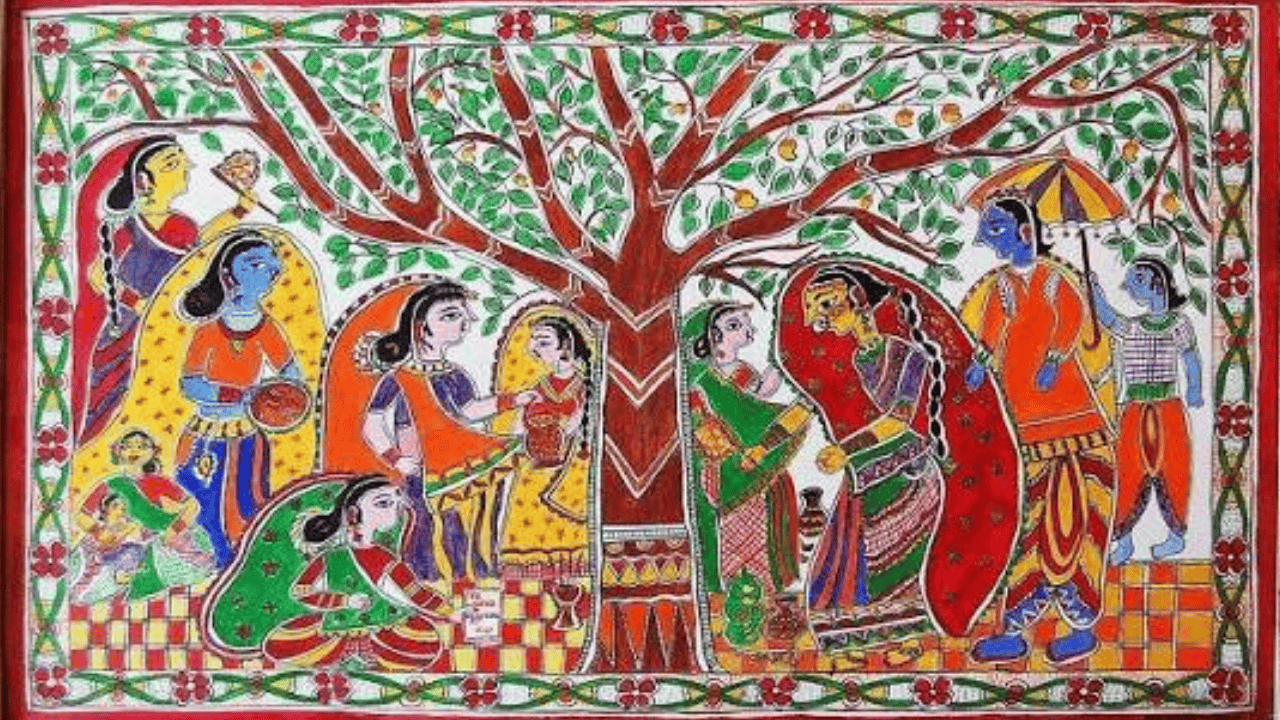
UPSC Current Affairs October 2026: Master Mithila Kachni Painting for Competitive Exam News Today
Traditional Mithila Kachni Art in Competitive Exam News Today
In the curriculum of the Civil Services Examination administered by the Union Public Service Commission (UPSC) and state-level examinations like the Bihar Public Service Commission (BPSC), the study of Indian heritage, particularly vernacular art, remains a crucial area of focus. Under the Indian Heritage and Culture segment of the General Studies Paper I syllabus, traditional painting schools are consistently highlighted. Tracking these cultural developments through the Atharva Examwise current news portal provides aspirants with the rigorous, multi-dimensional analysis required to answer complex questions regarding regional art forms, geographical indications, and heritage conservation policies.
Among the most celebrated indigenous art traditions of the Indian subcontinent is Madhubani painting—also designated as Mithila art—which originated in the Madhubani and Darbhanga districts of northern Bihar and extends contiguous roots into the ancient plains of Nepal. Historically preserved on domestic surfaces by the women of the region, this art has transitioned from localized ritualistic wall art (Bhitti Chitra) into a globally recognized secular medium.
A complete understanding of this tradition requires studying its five distinctive sub-styles: Bharni, Kachni, Tantrik, Godna, and Kohbar. Within this taxonomy, the Kachni style is distinguished by its strict linear discipline, monochromatic elegance, and abstract complexity. It represents a highly technical form of visual expression that stands in sharp contrast to the color-filled styles of the region.
The Aesthetic and Technical Syntax of Kachni Painting
The term Kachni translates literally to "line art" or "line drawing," defining the central focus of this sub-style. Unlike the vibrant, color-saturated Bharni style, Kachni is characterized by its reliance on fine, unbroken lines and a minimalist color palette. Artists working in the Kachni idiom traditionally restrict their palette to monochrome black ink or dual-tone schemes, occasionally using subtle accents of deep red, green, or yellow derived from natural minerals, flowers, and plant extracts.
[ Foundational Drawing / Outline ] | +---------------------+---------------------+ | | | [ Leheri ] [ Sidi ] [ Dhi ] (Wavy Patterns) (Straight Shading) (Cross-Hatching) | | | +---------------------+---------------------+ | [ Depth and Texture ]
The "poetry of lines" in Kachni means that depth, shading, and texture are achieved without the use of flat, solid color blocks. Instead, the artist fills empty spaces and outlines using a variety of sophisticated techniques:
Hatching: Utilizing parallel lines of varying density to convey light, shadow, and structural volume.
Cross-Hatching: Overlaying perpendicular or intersecting lines to build rich, layered textures within geometric forms.
Stippling: Applying countless micro-dots of ink to create gradient transitions and delicate visual weight.
Traditionally, these drawings are executed using simple, hand-crafted instruments such as thin bamboo pens (bamboo slivers), pointed wooden sticks, twigs, or matchsticks. This process requires a steady hand, precise spatial awareness, and a high degree of patience.
The visual layout of Kachni relies on three specific linear structures:
Leheri (Wavy Lines): Undulating lines that mimic the movement of water, breeze, and vegetative curves, used to add rhythm to borders and organic figures.
Sidi (Straight Lines): Parallel vertical or horizontal lines that provide structural stability and form the base grids of garments and geometric backdrops.
Dhi (Repeated and Intersecting Lines): Intricate, layered cross-hatching used to represent depth and create the elaborate double-lined borders that define traditional Madhubani compositions.
These linear elements allow the Kachni style to convey deep spiritual devotion and portray scenes of rural life with a clean, minimalist aesthetic.
Socio-Cultural Classifications and the Styles of Madhubani Painting
Historically, the five sub-styles of Madhubani art reflected the caste-based stratification of the Mithila region, with specific communities practicing distinct techniques. The Bharni and Tantrik styles were traditionally practiced by upper-caste Brahmin women, who focused on rich, solid color fills depicting classical Puranic deities like Krishna, Shiva, and Durga. The Kachni style was primarily preserved by women of the Kayastha community, who emphasized literary precision and intricate line patterns. Meanwhile, marginalized communities, such as the Dusadhs, developed the Godna (tattoo-inspired) and Geru styles, utilizing repetitive geometric motifs and natural elements to represent local tribal legends and deities.
In contemporary practice, these caste boundaries have largely dissolved. Modern artisans across the region train in and produce all five styles, transforming the art into a unified, secular medium of expression.
For the daily GK update on competitive exam preparation, the structural differences among these five styles are compared below:
| Madhubani Sub-Style | Primary Technical Features | Traditional Socio-Cultural Roots | Core Iconographic Themes |
|---|---|---|---|
Kachni [cite: 8, 10] | Fine, unbroken line work; monochrome or dual-tone; relies on hatching, cross-hatching, and stippling for shading; double-lined borders. | Kayastha Community | Devotional motifs (Radha-Krishna, Shiva-Parvati), stylized flora, fauna (fish, peacocks), and daily rural life. |
Bharni [cite: 8, 12] | Saturated, vibrant color fills (reds, blues, yellows); bold, black outlines; highly symmetrical patterns. | Brahmin Community | Classical Hindu mythology, epic battles from the Ramayana and Mahabharata, and court scenes. |
Tantrik [cite: 8, 11] | Precise sacred geometry; concentric circles, triangles, and mandalas; earthy color palettes. | Brahmin Community | Esoteric texts, cosmic energy diagrams, and representations of fierce deities (Kali, Durga). |
Godna [cite: 8, 11] | Repetitive geometric patterns inspired by tribal body tattoos; minimalist layout; monochromatic soot-based ink. | Dalit / Dusadh Communities | Nature spirits, the "Tree of Life," local wildlife, and the legends of tribal hero Raja Shailesh. |
Kohbar [cite: 8, 16] | Symbolic wall murals created for bridal chambers; highly dense arrangements of fertility and prosperity icons. | Universal Mithila Tradition | Lotus flowers (female energy), bamboo groves (male lineage), breeding fish, turtles, and sacred matrimonial unions. |
Historical Trajectory: Mythological Origins to Modern GI Registration
The origins of Mithila art are deeply rooted in local folklore. According to regional tradition, King Janaka of Videha ordered the families of his kingdom to paint their homes to decorate the city of Mithila for the wedding of his daughter, Sita, to Lord Rama. While these mythological roots remain central to its identity, historical records trace the continuous practice of domestic wall paintings by Mithila women back to at least the 14th century, primarily to mark marriages and lifecycle rituals.
[ Ancient Mythological Origins ] (Decorating Mithila for Sita-Rama Wedding) | v [ Centuries of Domestic Wall Art ] (Bhitti Chitra & Aripan on mud surfaces) [cite: 5, 7] | v [ The Famine Shift (1960s) ] (Government distributes paper to create portable art) | v [ National & Global Acclaim ] (Exhibitions and the rise of master artists) [cite: 5, 20] | v [ Intellectual Property Protection ] (Geographical Indication Status in 2007)
The transformation of Madhubani painting from an ephemeral domestic custom into a portable commercial art form occurred during the 1960s. A severe drought and subsequent famine struck the state of Bihar, severely impacting the agricultural economy. To create alternative, non-agricultural sources of household income, the All India Handicrafts Board and the Government of India launched an intervention. They distributed handmade paper, canvases, and cloth to the women of Mithila, encouraging them to transfer their traditional wall designs onto portable mediums for public sale. This shift democratized the art form, allowing local women to generate direct income and introduce their work to global audiences.
To protect the regional authenticity of this art from commercial replication, the Director of Industries, Government of Bihar, filed for its intellectual property protection. Madhubani Painting was officially granted the Geographical Indication (GI) Tag in 2007. Under Application Number 37 (Class 16 - Handicrafts), the registration legally ensures that only paintings made by registered artisans within the traditional boundaries of the Mithila region (specifically Madhubani and Darbhanga districts of Bihar) can be marketed as authentic Madhubani Paintings. The official filing details can be referenced through the Intellectual Property India GI Registry.
The Legacy of Padma Shri Ganga Devi and Living Heritage Conservation
The modern development of the Kachni style is closely tied to the life and work of the master painter Ganga Devi (1928–1991). Born in Chatra village, Madhubani, into a Kayastha family, she learned the traditional line drawing techniques from her mother, using soot mixed with goat's milk on paper sheets salvaged from old school notebooks. Despite facing extreme personal hardships, including poverty and abandonment, Ganga Devi went on to popularize the Kachni style internationally.
Notable Artistic Series and Conceptual Innovations
Ganga Devi's work is celebrated for its precise line control, subtle natural color palettes, and innovative division of space to show narrative progression over time. Her major works include:
The Ramayana Series: A detailed rendering of the epic, utilizing subtle colors and intricate line work to depict sacred events.
The Manav Jeevan (Life of Mankind) Series: A narrative cycle documenting the lifecycle of a rural woman, from birth and puberty through marriage, pregnancy, and aging.
The USA and Travel Series: A visual travelogue of her visits to Western countries, where she translated modern sights like skyscrapers, motor vehicles, and airplanes into the traditional iconographic language of Kachni.
The Cancer Series: A series created during her hospital stays, capturing the visual reality of chemotherapy, sterile hospital rooms, and the isolation of terminal illness.
For her contributions to the preservation and promotion of Indian folk art, the Government of India honored Ganga Devi with the National Master Craftsman Award, followed by the Padma Shri in 1984.
The 2015 Kohbar Ghar Preservation Dispute
In the late 1980s, while undergoing chemotherapy in New Delhi, Ganga Devi completed an artist residency at the National Crafts Museum in Pragati Maidan. Over several months, she painted a complete, ceiling-to-floor Kohbar Ghar (bridal nuptial chamber) mural directly onto the walls of a museum room. This mural represented the only complete iconographic rendering of a traditional Mithila marriage room in a public museum.
In early 2015, during a modernization and rejuvenation project by the Ministry of Textiles, the museum administration whitewashed the room, entirely destroying Ganga Devi's hand-painted murals. The incident sparked widespread criticism from art historians and curators, who condemned the destruction of an irreplaceable piece of modern folk heritage. The preservation dispute highlighted a critical challenge in India's cultural policy: balancing modern institutional upkeep with the active preservation of living folk and tribal art.
High-Yield Key Facts and Exam-Relevant Data
For candidates seeking high-volume SEO keywords and precise study details under the competitive exam news today section, the following list outlines the core data points:
Geographical Origin: Mithila region, primarily Madhubani and Darbhanga districts of Bihar, India, and adjacent areas of Nepal.
Aesthetic Sub-Styles: Five distinct styles—Bharni (filled color), Kachni (fine line art), Tantrik (esoteric symbols), Godna (tattoo-inspired), and Kohbar (nuptial chamber murals).
Kachni Shading Techniques: Exclusively employs fine monochrome or dual-tone lines using hatching, cross-hatching, and stippling rather than solid color fills.
Linear Motifs: Utilizes Leheri (wavy lines), Sidi (straight lines), and Dhi (repeated/intersecting lines).
Natural Color Sourced From: Black from soot/burnt barley, yellow from turmeric/banyan leaf milk, blue from indigo, red from kusum juice/clay, green from bel leaves, white from rice powder, and orange from palash flowers.
Geographical Indication (GI) Status: Registered in 2007, under Application No. 37, Class 16 (Handicrafts) by the Government of Bihar.
Pioneering Figures: Ganga Devi (Padma Shri 1984, known for Kachni style), Sita Devi (Shilp Guru 2006, popularized Bharni style), and Mahasundari Devi.
Major Institutional Landmarks: The National Crafts Museum in New Delhi, which formerly housed Ganga Devi's signature Kohbar Ghar mural.
Why this matters for your exam preparation
For serious civil services aspirants, tracking regional art and culture is a highly efficient way to secure marks in both preliminary and mains papers. This topic holds significant relevance across multiple sections of the syllabus:
General Studies Paper I (Indian Heritage and Culture)
UPSC syllabus guidelines emphasize the study of ancient and medieval art forms, literature, and architecture. Aspirants should be prepared for analytical questions comparing classical court traditions with rural folk arts. Understanding the shift in Madhubani art from domestic wall murals to paper during the 1960s famine provides a strong case study of how external economic factors can reshape traditional art forms.
General Studies Paper I & BPSC Paper (Regional Art of Bihar)
For candidates appearing in state-level public services examinations like the BPSC, Bihar’s regional folk arts—including Madhubani, Patna Qalam, and Manjusha paintings—are regularly tested. A clear understanding of the technical differences between sub-styles like Bharni and Kachni is essential for high-scoring answers.
General Studies Paper II (Government Policies and Interventions)
The administrative processes surrounding Geographical Indication (GI) registration, under the Geographical Indications of Goods (Registration and Protection) Act, 1999, are frequently assessed. Candidates must understand the legal protections, economic benefits for rural artisans, and ground-level challenges in enforcing GI tags.
GS Paper IV (Ethics) and Essay Paper (Cultural Heritage Preservation)
The demolition of Ganga Devi's historic mural at the National Crafts Museum serves as a useful ethical case study on the preservation of indigenous heritage versus administrative modernization. This topic can be integrated into essays on preserving national identity, managing cultural institutions, and supporting rural women's empowerment through traditional crafts.