
UPSC Current Affairs June 8, 2026: Daily GK Update on Pyroprocessing | Atharva Examwise Current News and Competitive Exam News Today
High-temperature thermal processing is a cornerstone of modern industrial manufacturing and advanced energy sectors. Among these, pyroprocessing has emerged as a high-yield topic for civil services aspirants, featuring regularly in mains answer-writing evaluations and national competitive examinations. Defined as a dry, highly energy-intensive process, pyroprocessing utilizes extreme temperatures to physically or chemically alter solid feedstocks.
This technology is utilized extensively across three primary industrial sectors: cement manufacturing, extractive metallurgy, and nuclear power generation. For serious aspirants preparing with Atharva Examwise, mastering the underlying chemical, mechanical, and strategic dimensions of pyroprocessing is essential for addressing multidisciplinary questions in both science and technology and environmental studies.
The Physical and Chemical Mechanics of Pyroprocessing
The fundamental objective of pyroprocessing is to induce phase changes, thermal decomposition, or chemical transformations in solid materials without relying on aqueous solutions. Because the process operates entirely in dry environments, it requires massive thermal inputs to overcome the thermodynamic barriers of solid-state reactions. These reactions are typically carried out in specialized, refractory-lined containment vessels, such as rotary kilns, fluidized bed reactors, or high-temperature electrorefining cells, depending on the industrial application.
Pyroprocessing in Heavy Industries: Cement and Metallurgy
Cement Production: Sintering and Clinkerization
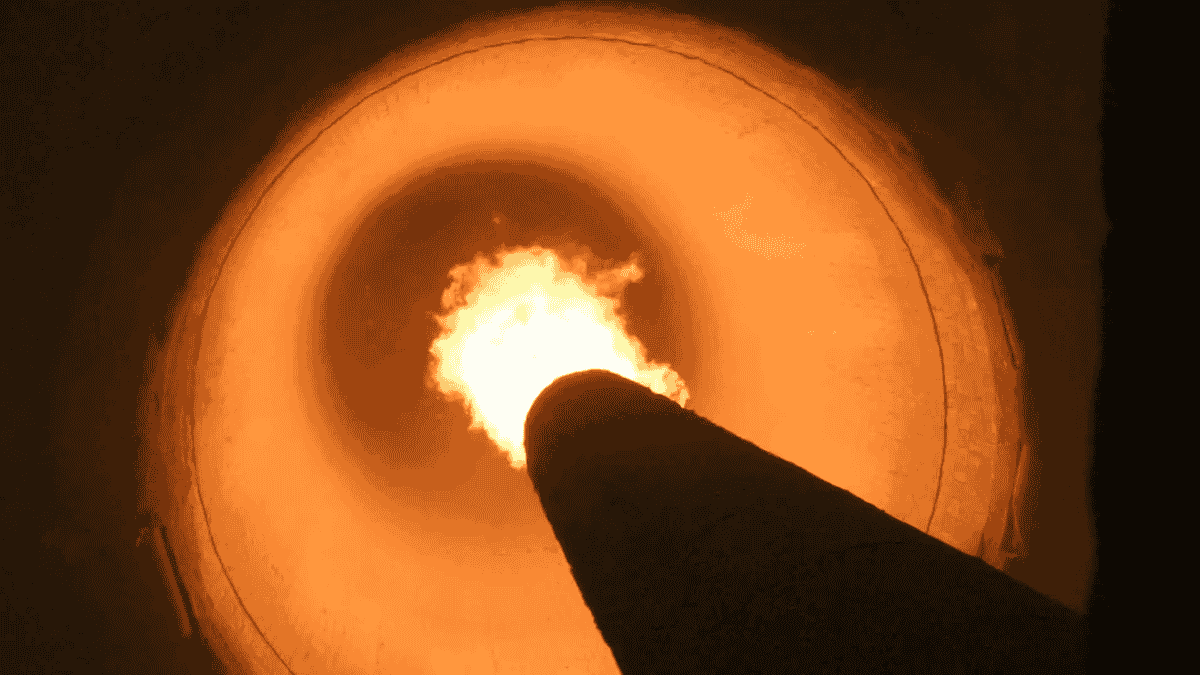
Globally, the cement-making industry represents the largest and most energy-intensive user of pyroprocessing systems. Inside a modern dry-process cement plant, pyroprocessing is the technological core that determines operational throughput and specific heat consumption.
Raw Material Feeding: The process begins by introducing finely ground limestone (CaCO3), clay, and iron-bearing raw materials into a multi-stage cyclone preheater tower.
Decomposition (Calcination): As the gravity-fed raw meal descends through the preheater and enters the rotary kiln, the temperature rises to approximately 900∘C. At this point, the limestone undergoes calcination, a chemical decomposition that releases carbon dioxide (CO2) to yield calcium oxide (CaO, or lime).
Clinker Formation: As the material advances deeper into the burning zone of the rotary kiln, temperatures reach approximately 1450∘C. This extreme heat causes the mixture to partially melt, prompting a series of mineralogical transitions where calcium silicates fuse into marble-sized nodules known as clinker.
Cooling and Final Grinding: The clinker is rapidly cooled in a grate or cross-bar cooling system to stabilize its mineral phases, after which it is finely ground with gypsum to produce finished Portland cement.
Because of the extreme temperatures required to melt these minerals, the pyroprocessing kiln represents the largest energy sink in cement plants, accounting for more than 80% of total plant energy consumption.
Comparative Carbon Intensity of Clinker Pyroprocessing
The specific carbon emissions associated with clinker pyroprocessing vary by country due to raw material composition, energy structures, and kiln efficiencies. The table below outlines the Pyroprocessing Carbon Emission Numbers (PCEN) across representative nations :
| Country | Pyroprocessing Carbon Emission Number (PCEN) | Primary Factors and Structural Constraints |
|---|---|---|
| China | 884 kg CO2/t clinker | High volume production; heavy reliance on coal-fired rotary kilns. |
| United States | 886 kg CO2/t clinker | High regionalization of raw material sourcing; higher relative emission intensity. |
| Australia | 828 kg CO2/t clinker | Implementation of advanced preheater stages and alternative raw materials. |
| Turkey | 913 kg CO2/t clinker | Specific mineral impurities in local limestone; fossil fuel combustion ratios. |
Metallurgical Extractions and Refining
In the metallurgical sector, pyroprocessing isolates pure metals from their natural ores via several high-temperature thermal stages:
Roasting: Sulfide metal ores, such as zinc sulfide (ZnS), are heated in the presence of air. This thermal process converts the sulfides into solid metal oxides while releasing gaseous sulfur dioxide (SO2).
Smelting: The roasted metal oxide is melted at extreme temperatures to separate the target metal from the surrounding waste impurities. The lighter silica and alumina impurities react with fluxing agents to form a molten layer of slag, which is skimmed off, leaving behind the purified molten metal.
Calcination: Similar to cement preparation, metallurgical calcination involves heating limestone or other carbonate minerals to yield pure oxides (like lime), which act as crucial metallurgical fluxing agents during steelmaking.
Decarbonization Pathways and Environmental Imperatives
Cement manufacturing accounts for approximately 8% of global anthropogenic carbon dioxide emissions, with more than 90% of these emissions originating directly from the pyroprocessing stage. Managing this carbon footprint is a critical priority for sustainable development :
Process vs. Combustion Split: Approximately 60% of pyroprocessing emissions are process-driven, resulting directly from the calcination chemical reaction that releases gaseous CO2 from limestone. The remaining 40% of emissions stem from fuel combustion required to maintain the 1450∘C kiln temperature.
Alternative Feedstocks and Binders: Utilizing industrial leftovers, fly ash from thermal power plants, or metallurgical slag as alternative feedstocks reduces the volume of virgin limestone needed, directly mitigating process-driven calcination emissions.
Alternative Fuel Substitution: Cement plants are increasingly substituting traditional coal and petroleum coke with alternative fuels like municipal refuse-derived fuel (RDF), chopped waste tires, biomass, and hydrogen to decarbonize the combustion portion.
Artificial Intelligence Optimization: Deployed process-optimization software utilizes real-time machine learning models to analyze airflow, temperature profiles, and fuel feed rates. This eliminates conservative temperature setpoints and prevents overburning, yielding rapid, scalable energy savings without structural modifications.
Carbon Capture and Sequestration (CCS): Because kiln exhaust has a high CO2 concentration (typically 25 mol% compared to 14 mol% in coal plants), cement plants are prime candidates for post-combustion carbon capture. This process relies on monoethanolamine (MEA) or other advanced solvent scrubbing systems to capture up to 95% of the emitted CO2, which is then compressed to 11 MPa for deep geological storage.
The Nuclear Pyroprocessing Paradigm
In the nuclear industry, pyroprocessing refers to an advanced, dry electrometallurgical method developed during the 1980s and 1990s to reprocess and recycle spent nuclear fuel.
Spent Nuclear Fuel ---> Mechanical Chopping ---> Molten LiCl-KCl Salt Bath (500°C) | Electric Current | +------------------------+------------------------+ | | Uranium Deposited on Cathode Transuranic Elements & Actinides (Recovered for Fuel) (Recycled for Fast Reactors)
The Electrometallurgical Process
Unlike traditional chemical-solvent extraction, nuclear pyroprocessing operates using high-temperature molten salt electrochemistry :
Decladding and Preparation: Spent fuel rods are mechanically chopped into small segments to expose the metallic or oxide core.
Molten Electrolyte Submersion: The fuel segments are loaded into porous steel anode baskets and immersed in a molten salt bath, typically a eutectic mixture of lithium chloride and potassium chloride (LiCl-KCl) maintained at temperatures of 500∘C or more.
Electrorefining: An electric current is passed through the molten salt electrolyte. Based on their unique electrochemical potentials, the different elements within the spent fuel dissolve from the anode and deposit selectively at the cathode.
Cathode Product Recovery: Uranium is deposited onto a solid metal cathode, while transuranics (plutonium and minor actinides) are recovered at a liquid cadmium cathode or separate liquid metal streams. High-level waste fission products (such as cesium, strontium, and iodine) remain dissolved in the spent electrolyte, which is eventually passed through zeolite columns and vitrified into glass-bonded sodalite ceramic wastes.
Proliferation Resistance and Security
Traditional aqueous reprocessing isolates pure plutonium, raising concerns over nuclear weapons proliferation. Pyroprocessing offers high proliferation resistance because plutonium cannot be separated from highly radioactive minor actinides (like neptunium, americium, and curium) under standard electrochemical settings. This mixed product is highly self-shielding due to its intense radioactivity, making it extremely dangerous to divert or handle without heavy shielding. This ensures that recycled fuel remains strictly within the civilian power reactor stream.
DUPIC: An Alternative Dry Recycling Concept
The Direct Use of spent PWR fuel in CANDU (DUPIC) technique represents another non-aqueous recycling concept. Under the DUPIC process, spent pressurized water reactor (PWR) fuel is dry-processed and refabricated directly into heavy water reactor fuel bundles without separating any chemical elements. This keeps the uranium, plutonium, minor actinides, and fission products bound together, realizing up to 25% more energy from the initial fuel, decreasing a country's spent fuel disposal volume by 70%, and cutting fresh uranium mining requirements by 30%.
Comparative Matrix of Reprocessing Technologies
To master this segment for(https://www.atharvaexamwise.com/upsc-current-affairs) examinations, aspirants must understand how advanced pyrochemical methods compare to standard commercial wet-extraction processes :
| Comparative Parameter | PUREX Process | UREX Process | Pyroprocessing |
|---|---|---|---|
| Technological Standard | Hydrometallurgical (Aqueous) | Hydrometallurgical (Modified Aqueous) | Electrometallurgical (Anhydrous) |
| Primary Reagents | Nitric acid (HNO3) and tributyl phosphate (TBP) in kerosene | Nitric acid with acetohydroxamic acid (AHA) modifier | Molten LiCl-KCl eutectic salt bath |
| Separated Streams | Independent pure Uranium and pure Plutonium products | Separates ~99.9% Uranium and >95% Technetium; leaves Plutonium mixed with fission products | Co-deposits Uranium, Plutonium, and minor actinides together |
| Chemical Reductants | Historically ferrous sulfamate; alternatively hydrazine-stabilized ferrous nitrate or hydroxylamine | Uses acetohydroxamic acid (AHA) or hydroxyethylhydrazine (HEH) for neptunium/plutonium partition | Non-aqueous; utilizes liquid cadmium-lithium (Cd-Li) or uranium-cadmium (U-Cd) alloys |
| Proliferation Risk | High; isolates pure weapons-usable plutonium | Low; prevents the isolated extraction of plutonium | Very Low; plutonium remains bound to highly radioactive minor actinides |
| Ideal Fuel Compatibility | Oxide fuels from conventional Light Water Reactors (LWRs) | Spent fuels from conventional commercial thermal power reactors | Metallic alloy fuels and high-burnup fast breeder reactor fuels |
| Operating Temperature | Ambient to moderate temperatures | Ambient to moderate temperatures | High temperatures (500∘C to 950∘C) |
Global Strategic Fuel Cycle Policies
National nuclear fuel cycle strategies vary based on domestic resource constraints, policy objectives, and geological disposal capabilities :
United States: With an inventory of roughly 80,000 tons of commercial spent nuclear fuel stored in pools and dry casks, the nation has prohibited commercial aqueous reprocessing since 1977 due to proliferation concerns. Current research focuses on Generation IV fast neutron reactors (FNRs). Significant funding is directed toward GE Hitachi's PRISM, the Versatile Test Reactor, and the Natrium design. The US successfully demonstrated fuel cycle integration by pyrochemical processing of fuel irradiated in the 62.5 MWt Experimental Breeder Reactor II (EBR-II).
South Korea: As the world's fifth-largest producer of nuclear energy—relying on nuclear plants for 26% of its electricity generation—the country has severe on-site spent fuel storage constraints. Consequently, South Korea actively studies pyroprocessing to reduce high-level waste volumes, navigating complex regional geopolitical dynamics.
France: Operating the world's largest nuclear share and commercial reprocessing capacity, France has utilized "mono-recycling" in pressurized water reactors (PWRs) since the 1980s, reducing its annual natural uranium requirements by 25%. In March 2026, the French Nuclear Policy Council launched a new program to develop a fully closed cycle. This strategy aims to implement PWR multi-recycling in the medium term, transitioning to fast reactors by 2100 to eliminate the need for natural uranium imports.
Japan: Active studies continue on advanced fast reactors and pyrochemical recycling technologies to manage high-level wastes and optimize resource utilization.
India's Closed Nuclear Fuel Cycle: Pyroprocessing and the Three-Stage Program
India's nuclear program is governed by the Atomic Energy Regulatory Board (AERB) and is based on a closed fuel cycle to maximize resource utilization and minimize long-lived radioactive waste. The(https://www.atharvaexamwise.com/three-stage-nuclear-programme) comprises :
Stage 1: Pressurized Heavy Water Reactors (PHWRs) burning natural uranium to generate electricity and produce plutonium-239.
Stage 2: Sodium-Cooled Fast Breeder Reactors (FBRs) utilizing plutonium to breed more fuel and utilize India's modest uranium resources.
Stage 3: Advanced thorium-based reactors utilizing immense domestic thorium reserves to breed and burn fissile uranium-233 (U233).
STAGE 1 (PHWRs) ---> Natural Uranium ---> Plutonium-239 Produced | v STAGE 2 (FBRs) ---> Plutonium Fuel ---> Breeds Fuel & Burns Actinides (Requires Pyroprocessing) | v STAGE 3 (AHWRs) ---> Thorium-232 ---> Breeds & Burns Uranium-233
The Fast Reactor Bottleneck and the Role of Pyroprocessing
To achieve rapid growth in Stage 2, India must minimize the out-of-pile fuel cycle time—the time spent cooling, reprocessing, and refabricating fuel. Traditional aqueous PUREX solvent extraction requires spent fuel to cool for several years; otherwise, intense radiation fields degrade the organic solvents.
Because pyroprocessing utilizes inorganic molten salts that are highly radiation-resistant, it can reprocess "hot" spent fuel with very short cooling times, dramatically reducing the doubling time of fast breeder reactors. Furthermore, pyroprocessing is highly compatible with the advanced metallic alloy fuels (U-Pu-Zr) slated for future commercial fast reactors.
Indigenous Technological Breakthroughs at IGCAR Kalpakkam
The(https://grokipedia.com/page/Indira_Gandhi_Centre_for_Atomic_Research) at Kalpakkam, Tamil Nadu, is the primary R&D hub developing these technologies :
Fast Breeder Test Reactor (FBTR): Commissioned on October 18, 1985, the 40 MWt FBTR was initially fueled with a unique mixed carbide fuel (Mark I: U0.3Pu0.7C; Mark II: U0.45Pu0.55C). This fuel performed exceptionally well, exceeding a burnup of 100,000 MWd/Te, with peak test pins reaching 165 GWd/t.
FBTR-II Planning: The Atomic Energy Commission (AEC) has granted in-principle approval for a 100-120 MWth FBTR-II. This new test reactor will feature associated facilities for metallic fuel fabrication, post-irradiation examination, and a co-located pyrochemical reprocessing plant to validate metal fuel at a 1-to-1 scale.
The KAMINI Reactor: Kalpakkam's 30 kWt KAMINI reactor remains the only operational reactor in the world utilizing driver fuel consisting of indigenously bred uranium-233 (U233).
CORAL Facility Campaigns: The Compact Reprocessing of Advanced Fuels in Lead Cells (CORAL) is a heavily shielded, alpha-tight facility designed to reprocess high-burnup carbide fuels. The facility successfully completed its 67th campaign and initiated its 68th campaign.
DFRP Achievements: Since hot commissioning in April 2024, the Demonstration Fast Reactor Fuel Reprocessing Plant (DFRP) has completed campaigns processing FBTR fuel at a burnup of 155 GWd/ton. Significantly, DFRP demonstrated the recovery of 1,800 mg of neptunium-237 (Np237) from the PUREX stream—a source material needed to produce plutonium-238 (Pu238) for space-based Radioisotope Thermoelectric Generators (RTGs)—alongside curium-244 (Cm244).
Engineering-Scale Pyroprocessing: Under the Chemical Facilities & Engineering Division (CFED), IGCAR demonstrated the vacuum distillation of potassium chloride (KCl) salt at 950∘C and 10 torr inside a specialized containment box. A 2 kg fresh U-Zr sodium-bonded fuel pin was mechanically cut, the bond sodium was distilled, and 1.6 kg of pure metallic uranium was retrieved via electrorefining.
Materials and Salt Purification: IGCAR fabricated a salt handling system to produce 1,000 kg of high-purity LiCl-KCl eutectic salt mixture, successfully lowering moisture content below 50 ppm to prevent corrosion. To withstand the high-temperature chloride environment, scientists synthesized Pyrolytic Graphite (PyG) coatings on high-density graphite substrates via chemical vapor deposition (CVD) at 1800–2200°C, and evaluated plasma-sprayed yttria-stabilized zirconia (YSZ) on SS 316L, alongside the corrosion behavior of Sanicro-25 steel at 500∘C.
Why This Matters for Your Exam Preparation
To secure high marks in competitive examinations, aspirants must analyze how pyroprocessing aligns with different sections of the syllabus:
UPSC Civil Services Examination (CSE) Syllabus Integration
GS Paper III (Science and Technology): Questions regularly target "developments and their applications and effects in everyday life". Candidates must be ready to detail the differences between hydrometallurgical (PUREX, UREX) and pyrochemical fuel cycles, explain how pyroprocessing functions as a dry process, and outline how it secures India's transition to a thorium-based energy economy.
GS Paper III (Environment & Climate Change): Pyroprocessing in the cement industry is a prime case study for industrial decarbonization, carbon footprint accounting (PCEN), carbon capture technologies (CCUS), and the process versus combustion emissions split.
GS Paper III (Economic Development & Infrastructure): Highly applicable to discussions regarding heavy industry modernization, energy security, and the domestic manufacturing push under Atmanirbhar Bharat.
UPSC Prelims Relevance: High probability of multiple-choice questions focusing on:
The temperatures and mineral transformations in clinkerization (900∘C calcination, 1450∘C sintering).
The composition of the molten salt electrolyte (LiCl-KCl eutectic salt).
The fuel composition of FBTR (mixed carbide Mark I and Mark II) and KAMINI (U233 driver fuel).
The relative proliferation resistance of pyroprocessing versus PUREX.
Atharva Examwise Mains Answer-Writing Strategy
When tackling a 10- or 15-mark GS-3 Mains question on this topic:
Define and Classify: Begin with a precise scientific definition of pyroprocessing, emphasizing its dry, high-temperature, and energy-intensive nature.
Use High-Impact Comparison Tables: Rather than writing lengthy paragraphs, integrate a clean comparison table (like the PUREX vs. UREX vs. Pyroprocessing matrix) to demonstrate structured, expert-level technical knowledge.
Explain the Indian Context: Connect the chemical and physical benefits of pyroprocessing (radiation resistance, metallic fuel compatibility) directly to the strategic need to reduce fuel doubling times in India's Fast Breeder Reactors, establishing a clear link to Stage 3 thorium utilization.
Balance with Decarbonization: Show multi-dimensional thinking by noting that while pyroprocessing is a strategic asset for clean energy in the nuclear sector, it presents a major carbon-abatement challenge in the cement sector that requires mitigation via AI-driven process controls and CCUS.