
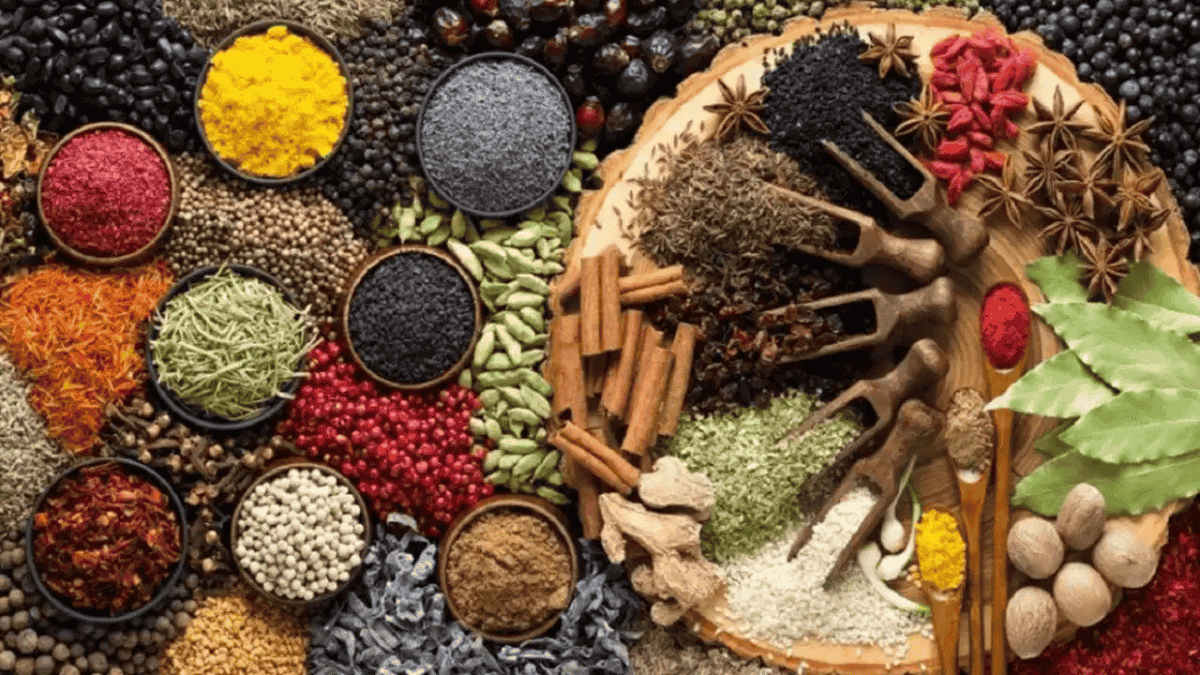
UPSC Current Affairs June 8, 2026: India's Record Spice Exports and Biodiversity Wealth | Daily GK Update
Historically known as the "Land of Spices", India remains the largest producer, consumer, and exporter of spices globally. Currently, around 25% of the total spices consumed worldwide are grown in India alone, reaching the kitchens of over 180 countries. If you are preparing for current affairs of June 8, 2026, this analysis will prove highly significant for the Agriculture, Economy, and Biodiversity sections of General Studies Paper 3 (GS Paper 3) in the Civil Services Mains examination.
According to the latest Atharva Examwise current news, India has set an all-time record by exporting 17.99 lakh tonnes of spices and allied products valued at ₹39,994.48 crore (approximately 4.72 billion US Dollars) in the financial year 2024-25. Furthermore, India's geographical wealth is not limited to spices; it is one of the world's 17 Mega-Biodiverse countries, home to 15,000 species of medicinal plants.
This article presents an in-depth analysis of this entire sector from the perspective of daily GK updates and UPSC current affairs.
India's Spice Export Sector: A Statistical Analysis
Over the past decade, India's spice exports have witnessed extraordinary growth. Compared to the year 2013-14, the country's spice exports have nearly doubled in terms of volume by the year 2024-25.
To understand this growth rate of spice exports, observe the following table:
| Parameter | Financial Year 2013-14 | Financial Year 2024-25 | Total Growth of the Decade (%) |
|---|---|---|---|
| Total Export Volume | 8,17,250 Metric Tonnes | 17,99,000 Metric Tonnes | ~88% growth |
| Total Export Value (USD) | $2.26 Billion | $4.72 Billion | ~97% growth |
| Total Export Value (INR) | Not Available | ₹39,994.48 Crore | - |
To further clarify this statistical growth, data from the Spices Board of India shows that compared to the financial year 2023-24 (15.40 lakh tonnes valued at ₹36,958.80 crore), a growth of 17% in export volume and 8% in rupee value was recorded in the year 2024-25.
Key Facts for Competitive Exams
Under today's competitive exam news, the following data points can be directly used in Preliminary and Mains examination answers:
Top Producing States: In the financial year 2023-24, Madhya Pradesh emerged as India's largest spice-producing state with 3.63 million tonnes. It is followed by Gujarat (1.29 million tonnes) and Andhra Pradesh (1.28 million tonnes).
States' Contribution to Exports: Gujarat tops the country with a 23.53% share in total export value, followed by Kerala and Andhra Pradesh. Karnataka is the sixth largest spice-producing state in the country, primarily exporting black pepper, small cardamom, Byadgi chilli, turmeric, and ginger.
Export Diversity: Currently, 52 different types of spices and their products are exported from India, coming directly under the regulation of the Spices Board.
Major Export Destinations: More than 60% of India's total spice exports go to just 10 countries, including China, the USA, UAE, Bangladesh, Thailand, Malaysia, the UK, Saudi Arabia, Indonesia, and Germany.
Commodity-wise Exports: Red chilli is India's most exported spice, covering more than 25% of the total export volume. In the financial year 2023-24, the total export value of chilli was $1,508.94 million, followed by cumin ($700.23 million) and mint products/oleoresins ($498.01 million) respectively.
Structural and Geopolitical Challenges Facing the Export Sector
Although India has achieved historic figures in spice exports, the country faces challenges on multiple fronts to maintain its share in the global market in the future.
1. Geopolitical Sensitivity and Supply Chain Disruptions
The impact of global conflicts is clearly visible on Indian agro-trade. For instance, the West Asia crisis and the Russia-Ukraine war have caused disruptions in major maritime trade routes, particularly the Strait of Hormuz. Consequently, in March 2026, India's monthly spice export dropped to 1.57 lakh tonnes from 2.34 lakh tonnes in March 2025 (a decline of approximately 33%). Due to this disruption, shipments of around 77,117 tonnes of major crops like black pepper, cumin, turmeric, and cardamom could not be sent to Europe and Commonwealth of Independent States (CIS) countries on time, resulting in a foreign exchange loss of ₹854.37 crore and reducing annual revenue to ₹39,140 crore.
2. Low Value Addition
India controls nearly 25% of the global spice market ($20 billion). However, in the highly profitable "seasoning and spice blends" sector (Seasoning Market valued at $14 billion), India's share is only 0.7%, while China holds 12% and the USA holds 11%. The primary reason for this is that only 48% of India's total spice exports consist of value-added products like oleoresins, extracts, and nutraceuticals; the remaining 52% is raw and unprocessed spice. To achieve the export target of $10 billion by 2030, it is imperative to increase the export of value-added products from 48% to 70%.
3. Non-Tariff Barriers and Rigidity of Quality Standards
Serious questions have been raised over quality standards due to the detection of Ethylene Oxide (ETO) residues in Indian spice brands in countries like Singapore, Hong Kong, and the European Union (EU). Around 12% of domestic samples were found to be non-standard in FSSAI tests. For acceptability in export markets, exporters must now undergo rigorous chemical testing, where the Ethylene Oxide level must be less than 0.01 ppm. For this, advanced steam sterilization units and GC-MS (Gas Chromatography-Mass Spectrometry) labs are being set up.
4. Climate Change and Rising Global Competition
India's traditional monopoly is facing stiff competition from countries like China and Vietnam:
China's Influence: China has now emerged as a major competitor in the cumin and chilli sectors. It imports raw chilli from India, processes it, and re-exports it as "Paprika" and "Teja" varieties. Meanwhile, due to adverse weather conditions in India, the acreage of chilli has declined by 35% and that of cumin by 7-8%.
Vietnam's Influence: Vietnam has become a global leader in black pepper, exporting over $1.1 billion worth of black pepper in the year 2024.
Policy Efforts and Government Schemes
The government has launched several key initiatives to make the Indian spice sector globally competitive:
SPICED Scheme: Launched by the Spices Board, the SPICED (Sustainability in Spice Sector through Progressive, Innovative, and Collaborative Interventions for Export Development) scheme aims to improve post-harvest quality, promote organic farming, and directly connect Farmer Producer Organizations (FPOs) with exporters.
Spices Parks: To facilitate processing and quality testing, Spices Parks have been developed as infrastructure in various parts of the country. However, in major parks like Guntur (Andhra Pradesh), only 20-30 units out of more than 100 plots are active, highlighting the problem of underutilization.
Trade Agreements: Under the India-UAE Comprehensive Economic Partnership Agreement (CEPA), the import duty on major Indian spices like cumin has been reduced to 0%, facilitating smooth exports to Gulf nations.
India's Biodiversity Wealth and Medicinal Plants
Along with spice production, India's rich biodiversity is another major economic and strategic strength. Despite occupying only 2.4% of the world's land area, India is home to nearly 7-8% of the world's recorded species, earning it a place among the world's 17 "Mega-Biodiverse" countries.
Use in Traditional Medicine Systems
Out of the 15,000 medicinal plant species found in the country, around 8,000 species are utilized in various traditional medicine systems:
| Traditional Medical System | Species of Medicinal Plants Used |
|---|---|
| Ayurveda | ~7,000 species |
| Unani | ~700 species |
| Siddha | ~600 species |
| Modern Medicine | ~30 species |
The annual domestic demand for medicinal plants in India exceeds 5,12,000 metric tonnes, and India is the second-largest exporter of medicinal plants globally.
National Medicinal Plants Board (NMPB) and Conservation Measures
Central Scheme and Budget: The National Medicinal Plants Board (NMPB) under the Ministry of AYUSH is running a Central Sector Scheme for the conservation and sustainable management of medicinal plants with a total financial outlay of ₹322.41 crore for the financial years 2021-2026.
In-situ Conservation: To protect plants in their natural habitats, 115 Medicinal Plants Conservation and Development Areas (MPCAs) have been established across the country. Additionally, 9,361 gene accessions of medicinal and aromatic plants are safeguarded in the National Seed Gene Bank (NBPGR, New Delhi).
Digital Initiative (e-CHARAK): To ensure market transparency among farmers, collectors, and traders, the "e-CHARAK" mobile app and web portal are operational. It provides fortnightly market prices for 100 medicinal plants from 25 major herbal mandis in local languages.
World Wildlife Day 2026: The theme for World Wildlife Day celebrated on March 3, 2026, was "Medicinal and Aromatic Plants: Conserving Health, Heritage and Livelihoods", highlighting the importance of plants in human health and livelihood. Candidates can refer to (https://www.un.org/en/observances/world-wildlife-day) for more information.
Conservation of Heritage through Geographical Indications (GI Tags)
India utilizes Geographical Indications (GI Tags) under Intellectual Property Rights to maintain the authenticity of its medicinal and agricultural wealth:
Navara Rice: This rice from the Palakkad district of Kerala is famous in Ayurveda as "Shashtikashali". It is used in Panchakarma's "Navarakizhi" therapy to treat rheumatic pains and neurological disorders.
Green Cardamom: Under this, Kerala's "Alleppey Green Cardamom" and Karnataka's "Coorg Green Cardamom" enjoy GI protection.
Ganjam Kewda Flower: This flower from Odisha is used in traditional medicines for eye diseases and respiratory disorders.
Kashmir Saffron: Renowned as "Kumkum" in Ayurveda, this product is used for healing wounds and treating skin disorders.
Nagauri Ashwagandha: This adaptogenic herb from the Nagaur region of Rajasthan was granted GI registration (Application No. 1143) on November 24, 2025.
Why This Matters for Your Exam Preparation
This topic holds multidimensional relevance from the perspective of competitive examinations, especially the UPSC Civil Services Examination:
GS Paper 3 (Indian Economy and Agriculture): India's export structure, balance of trade, and agricultural value chain are direct parts of the Mains syllabus. Points such as the need for value addition in spice exports (increasing from 48% to 70%) and rising competition from China provide solid arguments in Mains answers.
GS Paper 3 (Biodiversity and Environment): Questions based on India's status as a mega-biodiverse nation, governmental mechanisms for in-situ and ex-situ conservation of medicinal plants (NMPB schemes, gene banks), and the adverse impacts of climate change on crop production (like chilli and cumin) can be asked in the environment section.
GS Paper 2 (International Relations and Government Policies): The impact of global geopolitics (such as the West Asia or Strait of Hormuz crises) on domestic agricultural exports helps explain how global unrest directly affects farmers' income at the grassroots level. Moreover, GI tagging (like Nagauri Ashwagandha) clarifies the role of Intellectual Property Rights (IPR) in protecting traditional knowledge and fostering rural development.
Candidates can connect with the (https://www.atharvaexamwise.com/upsc-current-affairs) section to give an edge to their preparation and track competitive exam news today for daily important updates.