
UPSC Current Affairs June 2, 2026: Madhya Pradesh's New Coal Gasification Policy | Atharva Examwise Daily GK Update
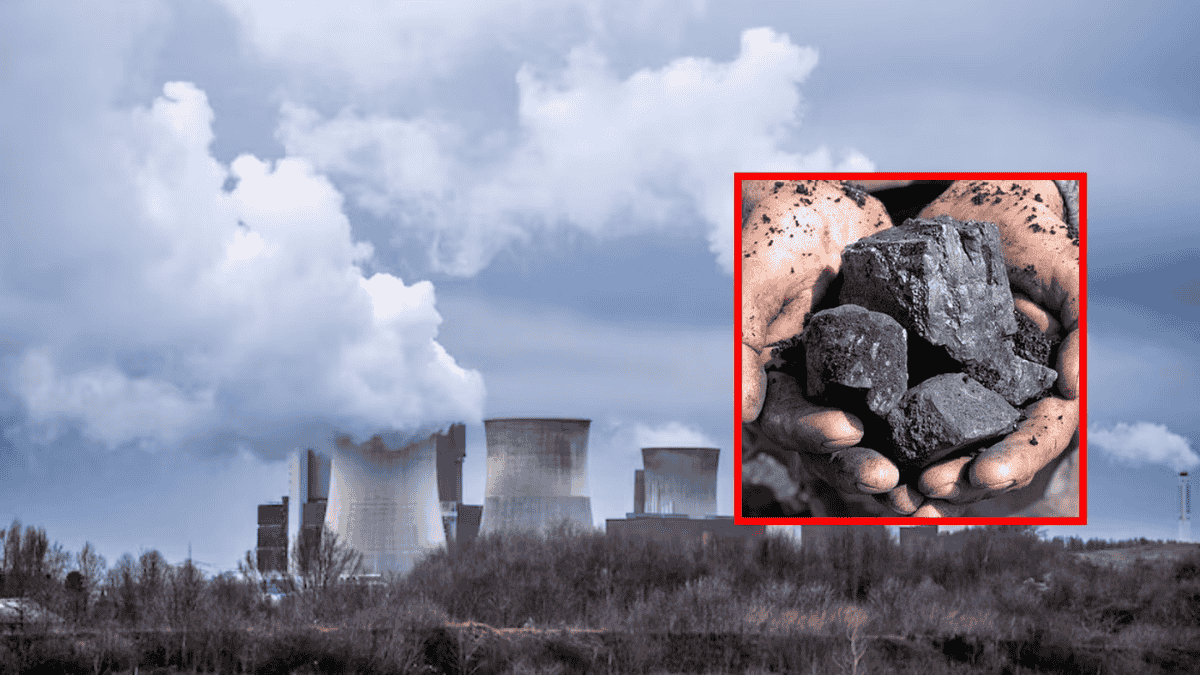
The Madhya Pradesh government has decided to formulate a dedicated 'Coal Gasification Policy' to leverage the state's vast coal reserves and accelerate industrial development through coal gasification. The Madhya Pradesh Industrial Development Corporation (MPIDC) has been designated as the nodal agency for formulating this policy. Under the directions of the Chief Minister's Office and Neeraj Mandloi, Additional Chief Secretary of the Energy Department, MPIDC will draft the policy for Madhya Pradesh after conducting an in-depth study of coal gasification policies in other states.
This policy will not only strengthen the state's economy but will also provide a new impetus to power, fertilizer, chemical, and methanol-based industries. Madhya Pradesh's move is considered highly strategic in light of the central government's National Coal Gasification Mission and the recently approved ₹37,500 crore financial incentive scheme.
This topic is highly significant for serious candidates preparing for competitive exams. For daily updates on such vital issues, you can visit Atharva Examwise Current News, which provides the latest and exam-oriented study material.
What is Coal Gasification and How Does it Work?
Traditionally, coal is used in power plants by burning it directly, which causes massive air pollution and carbon emissions. In contrast, coal gasification is a clean coal technology where coal, instead of being burned directly, is converted into useful gas through a chemical process.
In this process, coal is partially oxidized with a controlled amount of oxygen and steam under high temperature and pressure. This results in a versatile gas mixture called synthetic gas or syngas. Syngas is primarily a mixture of carbon monoxide ($\text{CO}$) and hydrogen ($\text{H}_2$). Along with these, small amounts of carbon dioxide ($\text{CO}_2$), methane ($\text{CH}_4$), and water vapor are also present.
The process flow layout above tracks the industrial transformation where raw coal undergoes milling and pre-treatment before entering the entrained flow gasifier alongside steam and oxygen to generate clean syngas.
Chemical Equations
The core partial oxidation reaction converts the carbon inside coal into syngas components:
$$3\text{C (Coal)} + \text{O}_2 + \text{H}_2\text{O} \rightarrow \text{H}_2 + 3\text{CO}$$
To increase the hydrogen yield for fuel or chemical synthesis, a secondary Water-Gas Shift reaction is performed:
$$\text{CO} + \text{H}_2\text{O} \rightarrow \text{CO}_2 + \text{H}_2$$
After the purification and treatment of syngas, it is utilized to manufacture various value-added products:
Fertilizers: Production of urea and ammonia, which form the backbone of the agricultural sector.
Methanol and Dimethyl Ether: Clean fuels and solvents used across chemical industries.
Synthetic Natural Gas (SNG): Serves as an effective alternative to imported Liquefied Natural Gas (LNG).
Hydrogen: An excellent source for clean energy and fuel cell technology.
Coal Reserves in Madhya Pradesh and Regional Distribution
Madhya Pradesh is one of India's richest coal-producing states, ranking third in terms of total coal reserves in the country. The state's total estimated coal reserve is approximately 33 billion tonnes, out of which 14.6 billion tonnes of coal are concentrated across just 7 major districts.
The district-wise and coalfield-wise breakdown of coal reserves in Madhya Pradesh is structured below:
| District / Coalfield | Estimated Coal Reserves | Key Features and Development Potential |
|---|---|---|
| Singrauli | 9.12 billion tonnes (9,121 million tonnes) | The largest coalfield in the state; contains thick seams like Jhingurda and Purewa, which are rich in semi-coking coal. |
| Sohagpur (Shahdol) | 4.06 billion tonnes (4,064 million tonnes) | The largest coalfield in Madhya Pradesh by area; operated by South Eastern Coalfields Limited (SECL). |
| Umaria | ~181.29 million tonnes | Part of the Son Valley region; reserves of non-coking coal with high moisture (7-10%) and ash (18-29%), making it highly suitable for gasification. |
| Anuppur | Millions of tonnes of active reserves | Part of the Kotma sub-basin of the Sohagpur coalfield; several active mines operated by SECL are functional here. |
| Shahdol | Major part of Sohagpur Coalfield | Gondwana-era deposits; low-rank and high-volatile non-coking coal, ideal for thermal gas manufacturing. |
| Betul | Around 1 billion tonnes of potential resources | Part of the Pathakheda coalfield; serves as the main coal supply source for the Satpura Thermal Power Station located in Sarni. |
| Chhindwara | Estimated resources of around 500 million tonnes | Part of the Pench-Kanhan coalfield in the Satpura region; some reserves of semi-coking coal are present. |
Additionally, Coal India Limited (CIL) has successfully acquired the Khattali Chhoti Graphite Block in Madhya Pradesh through an e-auction, which will boost the exploration and development of critical minerals within the state.
National Coal Gasification Mission and Central Policies
Madhya Pradesh's gasification policy will play a crucial role in achieving the targets of the Government of India's National Coal Gasification Mission (2021). Under this mission, the central government has set an ambitious target to gasify 100 million tonnes of coal by the year 2030.
To achieve this national target, the Government of India has introduced the following key policy reforms and financial schemes:
New Incentive Scheme of ₹37,500 Crore: The Union Cabinet has approved a financial outlay of ₹37,500 crore for surface coal/lignite gasification projects, targeting the gasification of 75 million tonnes of coal. Under this scheme, financial incentives of up to 20% of the plant and machinery cost will be provided.
Incentive Capping: The incentive amount under the scheme is capped at a maximum of ₹5,000 crore for any single project, ₹9,000 crore for a single product (excluding Synthetic Natural Gas and Urea), and a maximum of ₹12,000 crore combined for all projects under a single corporate group.
Previous Scheme of ₹8,500 Crore: In January 2024, the government approved an ₹8,500 crore incentive scheme for government Public Sector Undertakings (PSUs) and the private sector, under which eight projects worth ₹6,233 crore are currently under construction.
50% Rebate in Revenue Share: A 50% rebate in revenue share has been provided for coal used in gasification during commercial coal block auctions, provided that at least 10% of total coal production from the block is routed to gasification.
Extension in Coal Linkage Period: The duration of coal linkage under the 'Syngas Production' sub-sector has been extended to 30 years, providing long-term policy stability to investors.
For detailed analytical breakdowns based on the latest policy updates and economic indicators, candidates can refer directly to official government press releases on PIB.
Major Coal Gasification Projects and Progress in India
Several mega-projects are currently being executed by both public and private sectors in the field of coal gasification across India:
Talcher Fertilizer Project, Odisha
Located in the Angul district of Odisha, Talcher Fertilizers Limited (TFL) is India's first coal gasification-based ammonia-urea project. This project is a Joint Venture (JV) consisting of GAIL, Coal India (CIL), Rashtriya Chemicals and Fertilizers (RCF), and Fertilizer Corporation of India Limited (FCIL).
Cost and Capacity: With an estimated setup cost of ₹13,277 crore, this project is designed to produce 1.27 million metric tonnes of neem-coated urea per annum.
Technology and Feedstock: The facility will utilize Air Liquide gasification technology and process 2.5 million tonnes of coal annually from Talcher mines, blended with up to 25% pet-coke to manage and balance high ash content.
Current Status: Due to technical and commercial disputes with the Chinese contractor Wuhuan Engineering, the project is running approximately 4 years behind schedule and is now expected to be operational by December 2027.
Other Government and Private Projects
The Government of India has approved several new joint ventures and stand-alone projects through Coal India Limited (CIL) and private entities:
| Project / Joint Venture | Location | Objective and Product | Estimated Timeline |
|---|---|---|---|
| Bharat Coal Gasification & Chemicals Limited (BCGCL) | Lakhanpur, Odisha | Joint Venture of CIL and BHEL; coal-based ammonium nitrate plant. | Year 2029-30 |
| Coal Gas India Limited (CGIL) | Bardhaman, West Bengal | Joint Venture of CIL and GAIL; coal-to-SNG plant. | Year 2029-30 |
| Western Coalfields Limited (WCL) Project | Chandrapur, Maharashtra | Coal India's standalone project; coal-to-SNG production. | Year 2029-30 |
| Jindal Steel Limited (JSL) Project | Angul, Odisha | Private sector project; gasification for Sponge Iron (DRI) production. | Year 2029-30 |
| Greta Energy & Metal Private Limited | Chandrapur, Maharashtra | Private sector project; gasification plant for DRI production. | Year 2029-30 |
| New Era Cleantech Solution | Chandrapur, Maharashtra | Private sector project; production of ammonium nitrate and hydrogen. | Year 2029-30 |
Strategic and Economic Importance: Import Substitution and Self-Reliance
India's current import dependence poses a serious challenge to the country's fiscal position and supply chain stability. In this scenario, coal gasification can prove to be a complete game-changer on multiple fronts:
Import Substitution: India currently relies on foreign imports for almost its entire ammonia requirements, 80-90% of its methanol, and about 20% of its urea requirements. Additionally, the country imports more than 50% of its natural gas (LNG) needs. By producing these chemicals domestically through coal gasification, India can save approximately ₹3 lakh crore in foreign exchange annually.
Employment and Regional Development: Under the new ₹37,500 crore incentive scheme, around 25 projects across the country's coal-producing regions are expected to generate over 50,000 direct and indirect employment opportunities.
Energy Security: Amid global geopolitical tensions and price volatility, India can secure its energy pathways by efficiently utilizing its massive domestic coal reserves (India holds 401 billion tonnes of coal and 47 billion tonnes of lignite reserves).
Environmental Sustainability: This process aligns perfectly with the roadmap of 'Viksit Bharat 2047' because it offers a viable and cleaner alternative to reduce greenhouse gas emissions compared to traditional coal combustion.
Why This Matters for Your Exam Preparation
Madhya Pradesh's new coal gasification policy and the central government's clean energy push are highly significant from the perspective of the Union Public Service Commission (UPSC) and State Public Service Commission (like MPPSC) examinations:
UPSC Prelims Focus Areas:
Geography: Direct questions can be framed around the geographical distribution of Gondwana-era coalfields (such as Singrauli, Sohagpur, Umaria, and Pench-Kanhan) and the differentiation of coal ranks (coking vs. non-coking).
Science & Technology (S&T): The structural components of syngas ($\text{CO}$ and $\text{H}_2$), the mechanisms of the water-gas shift reaction, and the technical chemical phases of the gasification process are core high-yield topics.
Government Schemes: Key financial and technical guidelines of the National Coal Gasification Mission (2021) and the newly updated structural provisions of the ₹37,500 crore incentive scheme.
UPSC Mains Focus Areas (GS Paper III):
Energy Security and Environment: Analytical questions like "Can coal gasification effectively serve as a 'Bridge Fuel' for India to achieve its 2070 Net-Zero carbon target?" carry a high probability of appearing.
Economic Development and Infrastructure: Evaluating the impact of this clean tech framework in reducing structural import dependencies, balancing the Current Account Deficit (CAD), and reinforcing the Atmanirbhar Bharat Abhiyan.
Disaster Management and Pollution Control: Assessing the tangible environmental benefits of chemical gasification over traditional open combustion, alongside its integration with Carbon Capture, Utilization, and Storage (CCUS) tech.
State Services Exam Focus Areas (MPPSC Mains - GS Paper III):
Targeted questions addressing the local economic impact of this state policy on Madhya Pradesh's mineral resource footprint, the executive nodal authority of MPIDC, and the industrial growth prospects centered around the Singrauli and Shahdol administrative divisions.