
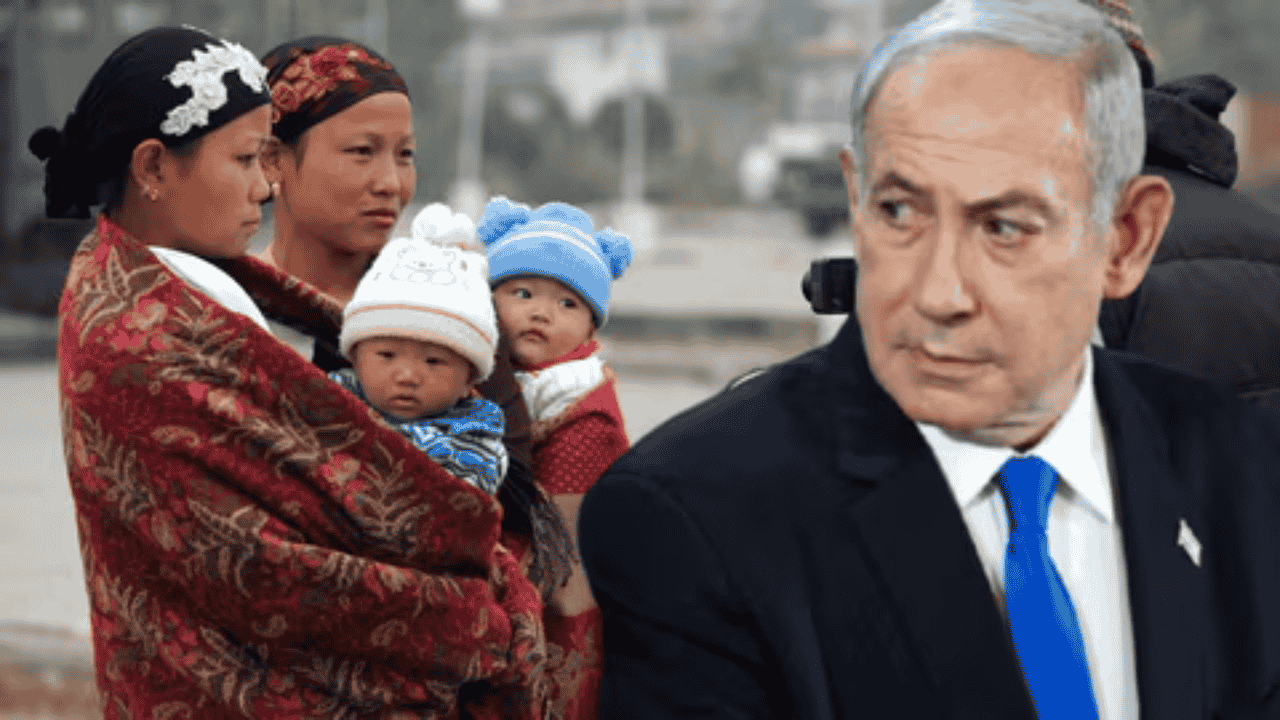
Israel Welcomes Bnei Menashe: Why 5,800 Lost Tribe Members From India's Northeast Are Making Aliyah in 2025
Understanding the Bnei Menashe: India's Lost Tribe
In one of the most fascinating geopolitical developments of recent times, the Israeli government formally approved a plan on November 23, 2025, to resettle approximately 5,800 members of the Bnei Menashe community from India's northeastern states of Manipur and Mizoram by 2030. This decision marks a historic culmination of decades-long efforts to bring home a community that has preserved its Jewish identity for centuries across the Indo-Burmese border region.
The Bnei Menashe (Hebrew: בני מנשה, meaning "Children of Manasseh") are an ethnic group primarily comprising Mizo, Kuki, and Chin tribal peoples who claim descent from the biblical Tribe of Manasseh—one of the Ten Lost Tribes of Israel exiled approximately 2,700 years ago (722 BCE) by the Assyrian Empire. Their oral traditions suggest an extraordinary migratory journey: expelled from ancient Israel, they reportedly traveled eastward through Persia, Afghanistan, Tibet, and China before eventually settling in the remote hills of northeastern India.
Key characteristics of the community:
Population in India: Approximately 5,800-6,000 remaining members
Primary locations: Manipur and Mizoram states
Ethnic composition: Primarily Mizo, Kuki, and Chin tribal groups
Religious practice: Preserved Jewish traditions through oral customs and rituals for centuries before formal Judaism adoption
Current status: Around 2,500 already settled in Israel; 4,000+ immigrated over the past two decades
The Lost Tribes of Israel: Historical Context
To understand the Bnei Menashe's claim, it's essential to grasp the biblical history of the Ten Lost Tribes. When the Assyrian Empire conquered the Kingdom of Israel around 720 BCE, they exiled the northern tribes (Reuben, Simeon, Dan, Naphtali, Gad, Asher, Issachar, Zebulun, Manasseh, and Ephraim) while the southern Kingdom of Judah survived until the Babylonian siege in 587 BCE.
The Ten Lost Tribes have captured imaginations for millennia, with numerous communities across the world claiming descent from them. The Bnei Menashe's claim gained credibility when, in 2005, Israel's Chief Rabbi Shlomo Amar officially recognized them as descendants of the Lost Tribe of Manasseh, formally opening the path for their immigration under Israel's Law of Return (1950) and Aliyah program.
Israel's 2025 Cabinet Decision: What Changed?
The November 2025 decision represents a significant acceleration of the Bnei Menashe immigration process. Here's what the cabinet approval stipulates:
| Parameter | Details |
|---|---|
| Total number approved | 5,800 individuals from India |
| Timeline | By 2030 in phases |
| First phase target | 1,200 arrivals by end of 2026 |
| Budget allocated | ₹27 million (approximately 90 million Israeli shekels) |
| Primary settlement area | Nof HaGalil (Upper Nazareth) and northern Galilee towns |
| Government support | Flights, Hebrew language classes (ulpan), housing, conversion programs, job placement assistance |
| Key ministries involved | Ministry of Aliyah and Integration, Chief Rabbinate, Population and Immigration Authority |
The decision was championed by Prime Minister Benjamin Netanyahu and Immigration Minister Ofir Sofer, who framed it as both a matter of religious repatriation and strategic national interest.
Why Israel Is Resettling the Bnei Menashe Now
Israel's decision involves multiple strategic, religious, and demographic objectives:
1. Religious Repatriation and Zionist Philosophy
The resettlement aligns with Israel's foundational Aliyah policy—the concept of "return to Zion"—which considers the gathering of Jews from the diaspora as a core national mission. PM Netanyahu described the move as an "important and Zionist decision," emphasizing the spiritual and ideological significance of bringing the Lost Tribe home.
2. Strengthening Northern Israel Against Security Threats
The Galilee region, where most newcomers will settle, has faced unprecedented challenges in recent years. This area:
Borders Lebanon and has been heavily targeted by Hezbollah attacks
Experienced mass exodus of Israeli residents in recent years (some towns lost up to 15% of their population between 2018-2023)
Contains a significant Arab minority population
Lacks adequate infrastructure, healthcare, and employment opportunities
By settling the Bnei Menashe in this region, Israel aims to achieve what researchers call "Judaizing the Galilee"—strengthening the Jewish demographic presence in this strategically critical but underdeveloped northern periphery.
3. Demographic Balancing and Population Strategy
The lower Galilee is demographically dominated by Arab communities, leading to concerns among Israeli policymakers about Jewish demographic decline. The Bnei Menashe resettlement serves as a counter-demographic strategy, ensuring continued Jewish majority in key northern areas.
4. Inclusive Immigration Policy
Israel views recognizing distant diaspora communities as part of its inclusive approach to Jewish identity. The resettlement demonstrates Israel's commitment to its Law of Return policy, which grants citizenship rights to all Jews worldwide.
Aliyah Policy: The Framework Behind This Decision
Aliyah (Hebrew: עלייה, "going up") is Israel's foundational immigration policy that facilitates the return of Jews to Israel from anywhere in the world. Established through the Law of Return (1950), this policy has been instrumental in:
Bringing over 3.2 million Jews to Israel since 1948
Establishing absorption programs for new immigrants
Providing language training, housing, and employment assistance
Recognizing various diaspora communities as legitimate Jewish populations
The Bnei Menashe resettlement represents one of the most geographically distant and historically unique applications of this policy, as the community has maintained Jewish identity through oral traditions rather than continuous institutional practice.
Impact on India's Northeast: Demographic and Social Implications
Population Changes in Manipur and Mizoram
The departure of 5,800 community members will have localized but significant impacts:
Mizoram: Approximately 300 members preparing to leave in early 2026; over 2,000 have already migrated
Manipur: Similar numbers of 300-400 expected in first waves
Community concentration: While the total represents a small percentage of the region's population, specific villages and localities could experience notable demographic shifts
Social and Cultural Considerations
Religious composition changes in some localities, particularly in areas with concentrated Bnei Menashe populations, may alter the religious and cultural dynamics. However, the majority of the community consists of Christians who had earlier adopted Jewish practices, so the overall Christian population of these states remains largely unaffected.
Government and Civil Society Response
The Ministry of External Affairs (MEA) welcomed Israel's decision, with spokesperson Randhir Jaiswal emphasizing that such people-to-people movements strengthen the "deep historical and cultural bonds" between India and Israel, reflecting India's broader geopolitical alignment with Israel.
The Conversion Process and Integration Program
One critical aspect of the resettlement involves formal Orthodox conversion. While the Bnei Menashe claim historical Jewish descent, Israeli rabbinical authorities require formal conversion according to Orthodox Jewish law before full integration into Israeli society.
Integration support includes:
Hebrew language intensive courses (Ulpan programs)
Orthodox conversion classes overseen by the Chief Rabbinate
Initial financial assistance for housing and settlement costs
Job placement and employment guidance
Social integration programs to facilitate community cohesion
Family reunification support (many have relatives already in Israel)
Approximately 3,000 community members with close relatives already in Israel will be prioritized for interviews by rabbinical delegations traveling to India.
Comparative Context: Other Jewish Diaspora Immigrations
The Bnei Menashe case is not unique in Israel's immigration history. Other diaspora communities that have made significant Aliyah include:
Yemenite Jews (1948-1950): ~50,000 migrated
Iraqi Jews (1951-1952): ~120,000 migrated
Moroccan Jews (1950s-1960s): ~250,000+ migrated
Soviet Jews (1990s-2000s): ~1 million migrated
Ethiopian Jews (1984-1991): ~14,000+ migrated
However, the Bnei Menashe case is particularly significant because this is the first time a community claiming descent from the Lost Tribes has received formal recognition and state-sponsored resettlement.
Settlement in Nof HaGalil: Strategic Geography
Nof HaGalil (Upper Nazareth) is a key hub for the resettlement. This northern Israeli city offers:
Proximity to the biblical Galilee region
Existing Bnei Menashe community infrastructure (facilitating chain migration)
Strategic location near the Lebanese border
Mixed Jewish-Arab demographic composition
Lower cost of living compared to central Israel
The choice of Nof HaGalil reflects Israel's broader strategy to strengthen Jewish demographic presence in northern peripheries while maintaining security buffer zones.
Timeline of Events
| Year | Event |
|---|---|
| 722 BCE | Biblical exile of Ten Tribes by Assyrian Empire (according to tradition) |
| 19th-20th centuries | Christian missionaries identify lost tribe connections among northeast Indian tribal groups |
| 1950s | Bnei Menashe community begins formal Judaism adoption |
| 2005 | Israeli Chief Rabbi officially recognizes Bnei Menashe as Lost Tribe descendants |
| 2003-2024 | Approximately 4,000+ Bnei Menashe immigrate to Israel in waves |
| November 23, 2025 | Israeli Cabinet approves resettlement of remaining 5,800 by 2030 |
| Early 2026 | First phase begins: ~1,200 expected to immigrate |
| 2030 | Target completion date for full community resettlement |
International Response and Geopolitical Implications
The resettlement has generated attention across multiple stakeholder groups:
Israel's perspective: The decision strengthens Israel's demographic strategy, reinforces Zionist ideology, and addresses security concerns in the north.
India's position: The MEA's welcoming statement emphasizes people-to-people movement and cultural ties, reflecting India's pragmatic approach to India-Israel relations without commenting on specific political dimensions.
Academic and media discourse: Scholars and journalists have highlighted the intersection of religious identity, nationalism, security strategy, and diaspora politics—making this case a microcosm of broader Middle Eastern geopolitical trends.
Local considerations in northeast India: Community leaders in Manipur and Mizoram view the resettlement as a fulfillment of centuries-long aspirations while adjusting to demographic changes in their regions.
Why This Matters for Your Exam Preparation
UPSC Current Affairs Connection
This news item is highly relevant for competitive exams for multiple reasons:
1. Geopolitics and International Relations
Israel-India relations: Demonstrates the deep cultural, religious, and strategic ties between India and Israel beyond traditional diplomatic frameworks
Lost Tribes mythology: Tests knowledge of biblical history and how religious narratives shape modern state policies
Middle East security: Connects to broader discussions about Israel's northern security strategy and Lebanon-Hezbollah conflict
Diaspora politics: Illustrates how nation-states actively engage with diaspora communities for strategic purposes
2. Current Affairs for General Studies Paper II (International Relations)
Likely UPSC question potential: "Discuss the strategic implications of Israel's Bnei Menashe resettlement program for northern Israeli security"
Connection to India's Middle East policy, Israel-Palestine context, and regional stability
3. Demographic and Social Geography (GS Paper I)
Population movements and diaspora
Religious identity and territorial claims
Demographic engineering strategies
Northeast India's international connections
4. Historical Narrative and Religious Studies
Understanding the Lost Tribes legend and its modern interpretations
How ancient historical claims inform contemporary political decisions
Religious movements and community identity formation
5. Cultural and Civilizational Aspects
India's plural religious landscape and inter-community dynamics
The unique position of Bnei Menashe in India's social fabric
Civilizational connections between India and the Middle East
Key Interview Questions Pattern
Expect UPSC to frame this in multi-dimensional questions:
"How do religious identity claims translate into state policy decisions? Analyze with reference to the Bnei Menashe example"
"Discuss the role of diasporas in shaping bilateral relations between nations"
"What are the geopolitical implications of demographic reshaping in strategically sensitive regions?"
Essay Potential
While not directly an essay topic, this issue could inform essays on:
"India's foreign policy in the Middle East"
"Religious minorities and state policies"
"Migration and demographic change in the 21st century"
Connecting to Broader UPSC Themes
India-Israel strategic partnership
Northeast India's international dimension
Religious nationalism and state-building
Security concerns in sensitive border regions
Key Facts to Remember
For exam preparation, retain these essential points:
5,800 Bnei Menashe members will resettle in Israel by 2030
They claim descent from the Tribe of Manasseh (Lost Tribe, exiled 722 BCE)
Formal recognition came in 2005 by Israeli Chief Rabbi
Settlement primarily in Nof HaGalil (Galilee region)
₹27 million budget allocated for resettlement support
Represents both religious repatriation and security strategy for Israel
India's MEA emphasized people-to-people movement strengthening cultural ties
Around 4,000+ already resettled; this approves remaining 5,800
Conclusion: A Return Thousands of Years in the Making
The Israeli Cabinet's November 2025 approval of the Bnei Menashe resettlement represents a convergence of religious philosophy, geopolitical strategy, and humanitarian concern. For a community that has preserved fragments of Jewish identity through oral traditions across centuries of displacement, the prospect of returning to the biblical homeland carries profound spiritual significance.
Simultaneously, from Israel's strategic perspective, the resettlement addresses critical demographic and security concerns in the contested northern Galilee region. As the first community officially recognized as Lost Tribe descendants to receive state-sponsored resettlement, the Bnei Menashe case opens new dimensions in understanding diaspora politics, religious nationalism, and the intersection of history with contemporary governance.
For UPSC and competitive exam aspirants, this story encapsulates essential themes in international relations, geopolitics, religious studies, and cultural dynamics—making it essential reading for comprehensive exam preparation. Stay tuned for updates as the first phase of immigration begins in early 2026.