
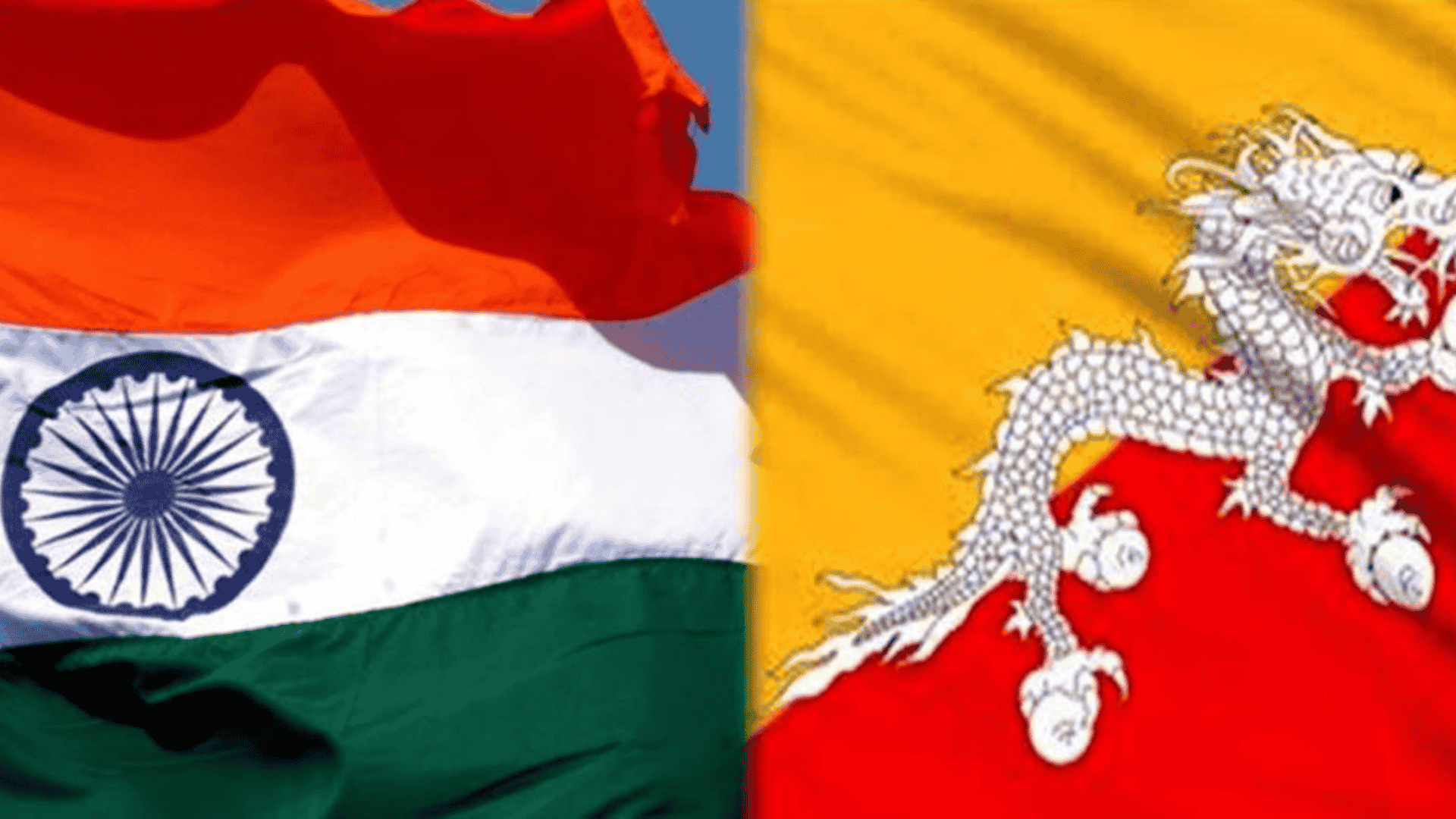
India-Bhutan Relations in 2025: Strategic Partnership Amid Chinese Challenge | UPSC Current Affairs
Introduction
India-Bhutan relations stand at a critical juncture as geopolitical tensions in South Asia intensify. With China's growing assertiveness in the region and ongoing border disputes involving Bhutan, India's strategic partnership with its smaller Himalayan neighbor has become more crucial than ever. PM Narendra Modi's recent visit to Bhutan underscores New Delhi's commitment to strengthening bilateral ties in the face of external challenges.
This article provides a comprehensive analysis of India-Bhutan relations, the Doklam dispute, and the broader strategic implications—essential knowledge for UPSC aspirants and competitive exam candidates.
Understanding India-Bhutan Strategic Relations
Historical Background and Diplomatic Ties
India and Bhutan share a unique relationship with deep historical roots:
1949: India-Bhutan Friendship and Cooperation Agreement established—predating formal diplomatic relations by nearly two decades
1968: Official diplomatic relations formally established between the two nations
1972: Death of the third King of Bhutan; India provided significant support during this transitional period
2008: Bhutan's transition to constitutional monarchy, with India actively supporting democratic transformation
2014 and 2019: PM Modi made Bhutan his first official visit after assuming office—demonstrating the priority India accords to this relationship
Why India Prioritizes Bhutan
India treats Bhutan as a special strategic partner due to several factors:
Geographic proximity: India shares a 699-kilometer border with Bhutan
Buffer state advantage: Bhutan acts as a strategic buffer between India and China
Shared security concerns: Both nations face pressure from Chinese territorial claims
Cultural affinity: Strong historical, cultural, and religious ties between the two peoples
Economic interdependence: Bhutan relies on India for security, defense, and economic support
The Doklam Dispute: India's Unwavering Support
What is Doklam?
Doklam is a tri-junction point where the borders of China, Bhutan, and India converge. This region holds immense strategic significance for India:
Location: Near the Siliguri Corridor (also known as the "Chicken Neck")—a narrow strip of Indian territory connecting mainland India to the northeastern states
Strategic importance: The Siliguri Corridor is vital for India's national security and connectivity to seven northeastern states
Vulnerability: The tri-junction point directly overlooks this critical corridor, making it a security-sensitive zone
The 2017 Standoff: India's Resolute Stand
In 2017, China attempted to construct a road in the Doklam region, which Bhutan claims as its territory:
Chinese claim: China asserts territorial rights over Doklam
Bhutan's position: Bhutan considers Doklam as part of its sovereign territory
India's response: India took an unprecedented stand, stationing troops in the disputed area alongside Bhutan
Duration: The 73-day standoff lasted from June to August 2017
Outcome: China withdrew without completing the road construction, marking a significant diplomatic and strategic victory for India
Current China-Bhutan Border Dispute
Despite the 2017 resolution, tensions persist:
Ongoing border disagreements between China and Bhutan remain unresolved
China continues to assert claims over multiple sectors of the Bhutan border
India consistently supports Bhutan's position in these territorial disputes
The dispute reflects China's broader expansionist strategy in the Eastern Hemisphere
PM Modi's 2025 Visit: Strengthening the Bond
Significance of the Recent Visit
PM Narendra Modi's visit to Bhutan represents a reaffirmation of India's strategic commitment:
First destination visits: Following his election victories in 2014 and 2019, Modi prioritized Bhutan as his first international destination
2024 pre-election visit: Before the 2024 general elections, Modi visited Bhutan, where he received Bhutan's highest civilian honor
Historic honor: Modi became the first foreign citizen to receive the prestigious award, symbolizing the extraordinary nature of India-Bhutan relations
Key Outcomes and Implications
The recent visit aims to:
Deepen defense and security cooperation between the two nations
Enhance economic and development partnership through hydroelectric projects
Strengthen cultural and people-to-people exchange
Coordinate diplomatic strategy against external challenges
Reaffirm India's commitment to supporting Bhutan against Chinese pressure
Strategic Context: The Chinese Challenge
Why China's Actions Matter for India
India's focus on Bhutan is directly linked to Chinese expansionism:
Belt and Road Initiative: China seeks to expand influence across the Indian subcontinent
Border disputes: China maintains territorial claims not only against Bhutan but also against India (LAC dispute)
Regional dominance: China aims to encircle India through strategic partnerships and territorial assertions
Siliguri Corridor vulnerability: Control or disruption of this corridor would isolate India's northeastern states
India's Strategic Response
India's multi-faceted approach includes:
Bilateral engagement: Strengthening India-Bhutan ties to prevent Chinese infiltration
Defense cooperation: Providing military support and security guarantees to Bhutan
Economic integration: Joint hydroelectric projects and development initiatives
Diplomatic coordination: Supporting Bhutan in international forums on border and sovereignty issues
Regional connectivity: Developing infrastructure projects linking India and Bhutan
India-Bhutan Cooperation Framework
Key Areas of Collaboration
| Area of Cooperation | Details |
|---|---|
| Defense & Security | Joint military exercises, intelligence sharing, defense procurement |
| Hydroelectric Projects | Bhutan supplies surplus hydropower to India; economically beneficial for both |
| Trade & Commerce | India is Bhutan's largest trading partner; preferential trade access |
| Infrastructure | Road networks, telecommunications, and connectivity projects |
| Education | Indian scholarships for Bhutanese students; capacity building |
| Cultural Exchange | Tourism, educational exchanges, religious and cultural programs |
Recent Bilateral Agreements
Enhanced defense cooperation protocols
Joint development initiatives for border regions
Technology transfer agreements
Capacity building in agriculture and rural development
Digital connectivity projects
Exam-Relevant Key Takeaways
Important Facts to Remember:
India-Bhutan Friendship Agreement signed in 1949
Formal diplomatic relations established in 1968
India shares a 699-kilometer border with Bhutan
Doklam is a tri-junction point where India, Bhutan, and China borders meet
The 2017 Doklam standoff lasted 73 days (June-August)
Doklam is located near the strategically critical Siliguri Corridor (Chicken Neck)
PM Modi received Bhutan's highest civilian honor, becoming the first foreign citizen to do so
China's continued expansionist pressure makes India-Bhutan ties increasingly important for regional stability
Why This Matters for Your Exam Preparation
UPSC Relevance
India-Bhutan relations are consistently featured in UPSC examinations due to their multifaceted importance:
For UPSC Prelims:
Expect direct factual questions on India-Bhutan agreements, border details, and geographical data
Questions on the Doklam dispute and strategic locations like Siliguri Corridor are high-probability topics
Current affairs updates on PM Modi's visits often appear in preliminary exams
For UPSC Mains:
GS-II (International Relations): Detailed essays on India's strategic partnerships, regional diplomacy, and China's expansionist policies
GS-III (Security): Analysis of India's border management, strategic depth, and defense cooperation frameworks
Answer writing should connect India-Bhutan relations to broader geopolitical strategies and India's "neighborhood first" policy
Relevance for Other Competitive Exams
SSC (CGL, CHSL, MTS): Current affairs sections feature India-Bhutan bilateral relations
Banking exams: General awareness sections include international relations and regional developments
State Civil Services: Regional and national security aspects relevant to northeastern India
Broader Learning Connections
Understanding India-Bhutan relations helps aspirants grasp:
India's regional strategy: How India manages smaller neighbors and balances geopolitical pressures
Chinese assertiveness: Pattern of Chinese expansionism affecting multiple countries
Strategic autonomy: How India maintains independent foreign policy despite external pressures
Border management: Complexities of managing multiple disputed borders in the Himalayan region
Development diplomacy: How economic cooperation strengthens political partnerships
Study Tips for Aspirants
Create a timeline of India-Bhutan relations from 1949 to present
Map out key locations: Doklam, Siliguri Corridor, tri-junction points, and border areas
Compare disputes: Analyze how India handles the Doklam dispute versus the Ladakh LAC dispute
Geopolitical connections: Link India-Bhutan ties to broader Indo-Pacific strategy and QUAD initiatives
Case study approach: Use India-Bhutan relations as a model for India's successful small-neighbor diplomacy
Related Articles to Explore
For comprehensive exam preparation, connect this article with:
India's "Neighborhood First" Policy and its implementation
LAC dispute: Understanding India-China border tensions
Siliguri Corridor: Strategic importance for India's northeast
China's Belt and Road Initiative and its impact on South Asia
India's strategic partnerships: QUAD, BIMSTEC, and regional alliances
Defense cooperation agreements: India's bilateral and multilateral frameworks
Conclusion
India-Bhutan relations represent a cornerstone of India's regional strategy in an increasingly multipolar world. As China's assertiveness grows, India's commitment to its smaller neighbors becomes ever more critical. PM Modi's emphasis on making Bhutan his first destination after assuming office twice demonstrates the priority accorded to this relationship. For UPSC and competitive exam aspirants, understanding these nuanced bilateral relations, the Doklam dispute, and their strategic implications is essential for scoring well in both prelims and mains examinations.
Keep tracking India-Bhutan developments for your daily current affairs preparation with Atharva Examwise—your trusted companion in UPSC and competitive exam success.