
US Minuteman-3 ICBM Test & "Doomsday Weapon": Current Affairs November 2025 | UPSC & Competitive Exam Guide
Introduction: The Minuteman-3 Test & Global Nuclear Tensions
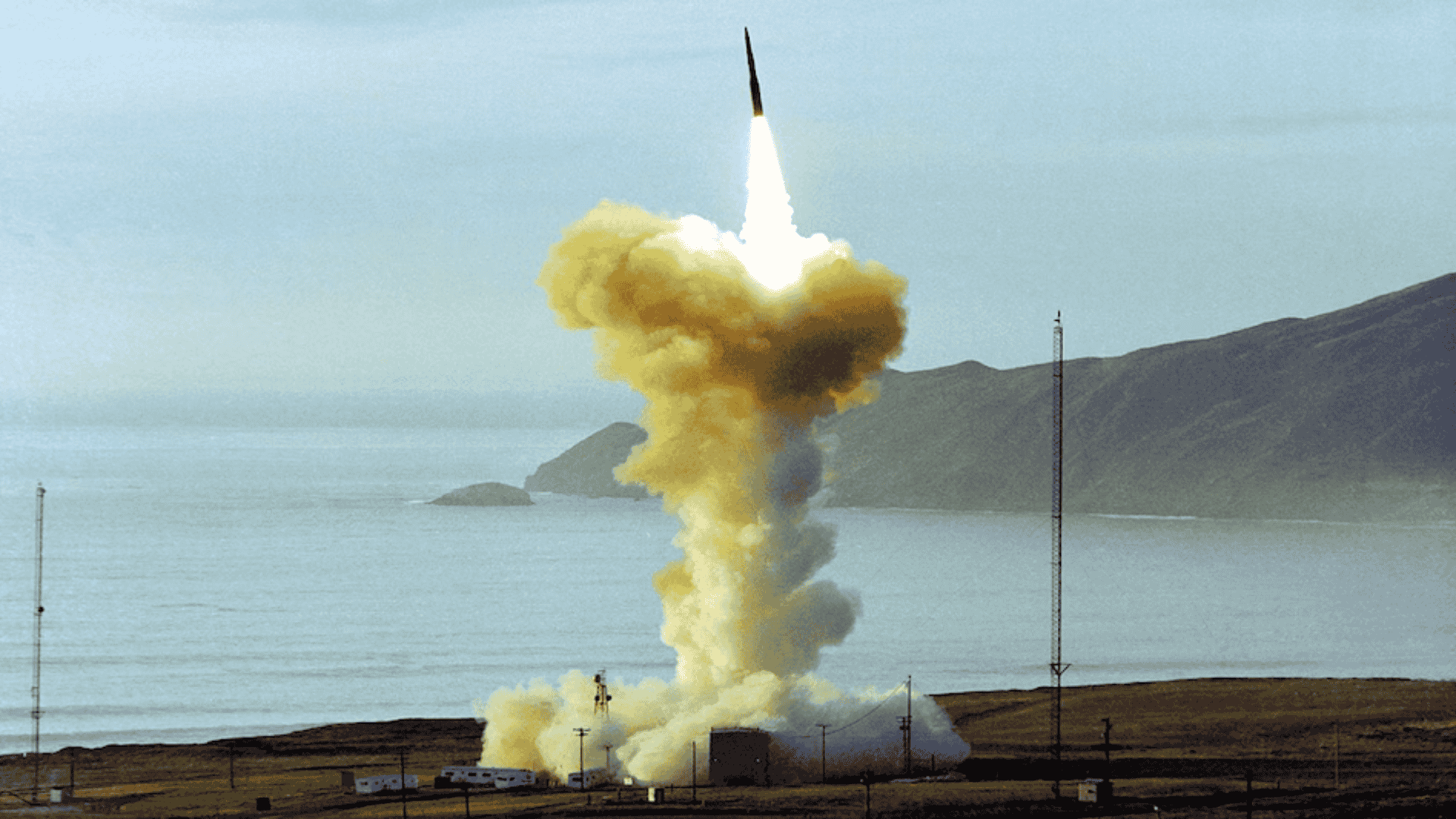
On November 5, 2025, the United States successfully tested its Minuteman-3 Intercontinental Ballistic Missile (ICBM) from Vandenberg Space Force Base in California—a development that has intensified global discussions about nuclear deterrence, strategic signaling, and international security. This test, officially designated as GT 254, comes merely days after President Donald Trump issued orders to the Pentagon to prepare for renewed nuclear weapons testing for the first time in over three decades.
The timing and significance of this missile test underscore a critical shift in global nuclear dynamics. With Russia, China, and other nuclear-armed nations closely monitoring developments, this event signals a potential reshaping of the international strategic balance. For UPSC aspirants and competitive exam candidates, understanding the Minuteman-3, the concept of nuclear triad, and deterrence theory is increasingly essential to your exam preparation.
What Is the Minuteman-3 Missile? Understanding the Backbone of US Nuclear Deterrence
The LGM-30G Minuteman-3 (or Minuteman-3) is a solid-fueled, three-stage Intercontinental Ballistic Missile that serves as the cornerstone of America's land-based nuclear deterrent. First deployed in the 1970s—specifically making its initial operational appearance during the Cold War era—this strategic weapon system continues to form the backbone of the United States' nuclear capability nearly five decades later.
Key Technical Specifications of Minuteman-3
The missile boasts impressive technical capabilities that have made it a mainstay of US strategic forces:
Range: Approximately 6,700 to 10,000+ kilometers (over 4,200–6,200 miles), enabling it to strike targets across continents from within US territory
Weight: More than 30 tons, making it a substantial strategic system
Length: Approximately 18 meters (59 feet)
Speed: Nearly 24,140 kilometers per hour (15,000 miles per hour), traveling at hypersonic velocities
Warhead Capacity: Can carry multiple independently targetable re-entry vehicles (MIRVs), meaning it can strike several different targets simultaneously with high precision
Accuracy: Equipped with modern guidance and propulsion systems ensuring pinpoint targeting
Deployment: Housed in hardened silos across five US states, with approximately 400 operational ICBMs currently maintained on continuous 24/7 alert since 1959
Launch Capability: Typically controlled by two-officer launch crews stationed in hardened underground launch control centers connected via secure, redundant communication systems
These specifications position the Minuteman-3 as one of the world's most formidable strategic weapons systems.
Why Is Minuteman-3 Called a "Doomsday Weapon"? The Nuclear Deterrence Concept
The term "Doomsday Weapon" (alternatively spelled "Doom's Day" or referenced as a "nuclear doomsday device") refers to weapons designed to cause such catastrophic destruction that they effectively end civilization or represent the ultimate tool of mutually assured destruction (MAD). Here's why Minuteman-3 carries this ominous designation:
The Concept of Mutually Assured Destruction (MAD)
The Minuteman-3's designation as a "Doomsday Weapon" stems from its role within the Cold War doctrine of Mutually Assured Destruction (MAD)—a strategic concept based on the assumption that:
No Defense Exists: Nuclear weapons are impossible to fully defend against due to their speed and destructive range
Second-Strike Capability: Even if one nation is hit first, it retains the ability to retaliate with overwhelming force
Catastrophic Consequences: Both parties would face annihilation, making the initiation of nuclear war irrational
Peace Through Terror: The fear of mutual annihilation paradoxically maintains peace by making war unthinkable
The Nuclear Triad: America's Three-Layered Deterrence System
To understand why Minuteman-3 is called a "Doomsday Weapon," you must understand the US Nuclear Triad—the three-pronged strategic deterrent system:
| Component | Delivery Method | Examples | Advantage |
|---|---|---|---|
| Land-Based (ICBMs) | Ground-launched from hardened silos | Minuteman-3 | Most responsive; difficult to target all simultaneously |
| Sea-Based (SLBMs) | Submarine-launched from ballistic missile submarines | Ohio-class SSBNs with Trident missiles | Most survivable; undetectable when submerged; ensures second-strike capability |
| Air-Based (ALCMs) | Strategic bombers carrying air-launched cruise missiles | B-52 Stratofortress; B-21 Raider with new ALCM-N missiles | Flexible deployment; can be recalled or repositioned |
The Minuteman-3 represents the land-based leg of this triad. This redundancy ensures that even if adversaries destroy most of America's nuclear forces, enough would survive to deliver a devastating retaliatory strike—the essence of deterrence.
Why "Doomsday"?
The Minuteman-3 earns this grim designation because:
Apocalyptic Destructive Capacity: Each missile can carry multiple warheads, and a single warhead can obliterate an entire city and surrounding regions
Inevitable Retaliation: The presence of such weapons guarantees that any nuclear attack on the US would result in proportional or greater devastation to the attacker
Strategic Stalemate: The possession of such weapons by multiple nations has created a strategic deadlock where nuclear war has become mutually unthinkable
Automatic Retaliation Systems: Some nations operate automated systems (like Russia's "Dead Hand" or Perimeter system) that can launch nuclear arsenals with minimal human intervention
The Recent Test: What Happened on November 5, 2025?
Test Details and Significance
On November 5, 2025, the US Air Force Global Strike Command successfully executed Test GT 254, launching an unarmed Minuteman-3 ICBM from Vandenberg Space Force Base in California. The missile traveled over 6,700 kilometers across the Pacific Ocean and arrived at its designated test site—the Army's Ronald Reagan Ballistic Missile Defense Test Site in the Marshall Islands.
Officially Scheduled, Politically Significant
Although US officials emphasized that this test had been scheduled months in advance, its timing proved particularly notable. The launch occurred just days after President Trump issued directives to the Pentagon to resume nuclear weapons testing—a policy shift of enormous strategic significance.
Why This Test Matters
The Minuteman-3 test serves multiple purposes:
Reliability Validation: Confirms the missile's continued operational readiness and mechanical reliability after decades of service
Deterrence Messaging: Demonstrates to adversaries that the US nuclear arsenal remains functional and deployable
Ally Reassurance: Signals to US allies (particularly in Europe, Asia-Pacific, and Middle East) that America's nuclear umbrella remains credible and effective
Strategic Signaling: Indicates US commitment to maintaining strategic superiority amid rising nuclear competition from China and Russia
Previous Recent Tests
This November 2025 test was not an isolated event. The US conducted additional Minuteman-3 tests on:
February 19, 2025
May 21, 2025
These regular tests demonstrate America's commitment to maintaining a functional, reliable nuclear deterrent without violating international treaties (as these were unarmed tests).
Context: Trump's Nuclear Testing Directive & Global Response
Trump's Call for Nuclear Testing
President Trump's recent order directing the Pentagon to prepare for nuclear weapons testing represents a significant policy departure. This marks the first such directive in over 30 years—since the US last conducted nuclear weapons tests in 1992 as part of the post-Cold War arms control framework.
Stated Rationale
The administration cited growing nuclear capabilities of China and Russia as justification for this policy shift. Specifically:
China's Expansion: China has reportedly added approximately 100 nuclear warheads in recent years, bringing its total arsenal to roughly 600 warheads
Russia's Modernization: Russia maintains approximately 5,459 nuclear warheads (compared to the US's ~5,177)
Strategic Imbalance: The Trump administration argues that renewed testing capacity is necessary to verify the reliability and strength of America's aging nuclear arsenal
Global Implications
This development has triggered international concern and potential escalation:
Russian Response: Russian President Vladimir Putin has similarly instructed his military to prepare for nuclear weapons testing
China's Posture: China continues rapid expansion of its nuclear arsenal with advanced delivery systems
International Treaties at Risk: The Comprehensive Nuclear Test Ban Treaty (CTBT) of 1996—which prohibits all nuclear explosions—could face collapse if major nuclear powers resume testing
Arms Race Dynamics: Experts warn that resumed testing could trigger a new global nuclear arms race, destabilizing the strategic balance established over decades of arms control negotiations
US Nuclear Arsenal in Global Context: Comparative Analysis
Understanding where Minuteman-3 fits within the broader global nuclear landscape is crucial for competitive exams:
| Nuclear Power | Total Warheads | Deployed Warheads | ICBMs | Notable Systems |
|---|---|---|---|---|
| United States | ~5,177 | 1,770 (est.) | 400 Minuteman-3s | Nuclear Triad; Modernization underway |
| Russia | ~5,459 | 1,912 (est.) | 333 ICBMs | Dead Hand system; Poseidon torpedo |
| China | ~600 | <10 (est.) | 462 ICBMs | DF-41 (longest range ICBM) |
| France | ~290 | 280 (est.) | Sea-based only | M51 submarine missiles |
| United Kingdom | ~225 | 120 (est.) | Sea-based only | Trident missiles |
| India | 160–200 (est.) | 0 (est.) | Agni series | No First Use policy |
| Pakistan | 170–190 (est.) | 0 (est.) | Ghauris & Shaheen | Growing arsenal |
| Israel | 90–200 (est.) | Unknown | Sea & air-based | Nuclear ambiguity policy |
| North Korea | 30–40 (est.) | 0 | Nodong/Musudan | Unpredictable posture |
Key Insight: The United States and Russia together account for approximately 85% of the world's nuclear warheads, highlighting the continuing importance of US-Russia strategic relations for global security.
America's Nuclear Modernization: From Minuteman-3 to LGM-35A Sentinel
While the Minuteman-3 remains operationally critical, the US military has initiated a comprehensive modernization program to update its strategic deterrent for 21st-century challenges.
The Sentinel Program: Next-Generation ICBM
The LGM-35A Sentinel ICBM is being developed as Minuteman-3's successor with significant enhancements:
Enhanced Range: Extended range capabilities surpassing Minuteman-3's current specifications
Cyber Resilience: Hardened against cyber attacks and electronic warfare
Modern Guidance Systems: Updated targeting and guidance technologies
Estimated Deployment: Scheduled to begin replacement operations around 2030, with full transition expected in subsequent years
Scope: Will gradually replace approximately 400 Minuteman-3 ICBMs and upgrade 450 ICBM launch facilities
This modernization reflects the US recognition that strategic deterrence must evolve to address contemporary threats including cyber warfare, hypersonic weapons, and advanced missile defense systems.
Other Modernization Initiatives
Beyond the Sentinel program, the US is also modernizing:
Columbia-Class Ballistic Missile Submarines: Replacing Ohio-class SSBNs for improved undersea deterrence
B-21 Raider Stealth Bomber: Advanced strategic bomber platform for the air leg of the triad
Advanced Cruise Missiles (ACM-N): New stealth nuclear cruise missiles for extended air-based deterrence capabilities
International Perspectives & Strategic Implications
Asia-Pacific Strategic Balance
Indian defense analysts express particular concern about the implications of renewed US nuclear testing for the Asia-Pacific region:
Regional Stability: US nuclear signaling could affect calculations by China and other regional powers
India's Position: As a regional power with its own nuclear capabilities, India must consider shifting strategic dynamics
Alliance Dynamics: US allies in the region (Japan, South Korea, Australia) view the Minuteman-3 test as reassurance of American strategic commitment
Russia's Counter-Signals
Russian President Putin's response demonstrates the inherent instability of nuclear competition:
Poseidon Torpedo: Russia has showcased its nuclear-powered, nuclear-armed Poseidon torpedo, described by Putin as capable of striking any global target
"Dead Hand" System: Russia's automated Perimeter system (nicknamed "Dead Hand") can theoretically launch the entire Russian nuclear arsenal without human command
Doctrine Revision: Russia recently modified its nuclear doctrine, lowering the threshold for nuclear weapons use
Escalation Concerns: Military experts worry such tit-for-tat signaling could miscalculate and lead to unintended escalation
China's Rapid Modernization
China's nuclear posture presents a different challenge:
Rapid Expansion: Adding approximately 100 warheads annually
Advanced Delivery Systems: Developing hypersonic glide vehicles and advanced ICBMs
Strategic Ambiguity: China maintains a less transparent nuclear doctrine compared to Russia and the US
ICBM Capability: The DF-41 ICBM reportedly has range exceeding 14,000 kilometers, capable of striking the continental US
India's Nuclear Deterrent: The Contrasting Approach
For UPSC candidates, understanding India's nuclear strategy offers instructive contrast to US capabilities:
India's Nuclear Triad Status
India achieved full operational nuclear triad status in 2018 with the deployment of INS Arihant, the first Indian nuclear-powered ballistic missile submarine (SSBN). This triad comprises:
| Component | Missiles/Platforms | Status |
|---|---|---|
| Land-Based (ICBMs) | Agni series (Agni-V, Agni-VI) | Operational; ranges up to 6,000+ km |
| Sea-Based (SLBMs) | K-15/K-4 on INS Arihant | Operational; deterrence patrols conducted |
| Air-Based | Rafale, Sukhoi Su-30MKI, Mirage 2000H, Jaguar | Operational; capable of nuclear delivery |
India's Nuclear Doctrine: "No First Use" (NFU)
Unlike the Minuteman-3's role in a deterrence system that historically permitted first-strike capability, India's official nuclear doctrine is based on "No First Use" (NFU)—a cardinal principle adopted in 2003:
Core Principles:
Nuclear weapons are for deterrence only—never as a first offensive tool
Will only be used in massive retaliation against nuclear attack
Civilian political control maintained through the Nuclear Command Authority
Commitment to non-proliferation despite not signing the NPT
Strategic Rationale for NFU
Moral-Strategic Position: Establishes India as a responsible nuclear power
International Standing: Supports India's argument against nuclear discrimination in international treaties
Regional Stability: Reduces escalation pressures in South Asia where Pakistan also possesses nuclear weapons
Second-Strike Capability: INS Arihant ensures India can absorb a first strike and still retaliate decisively
Current Debates on India's Nuclear Doctrine
Some strategic analysts argue India should consider Conditional No First Use (CNFU) allowing nuclear response to catastrophic conventional attacks. However, maintaining orthodox NFU remains the official policy.
The Broader Context: From Cold War to 2025
Historical Evolution of Nuclear Deterrence
Understanding why Minuteman-3 is called a "Doomsday Weapon" requires appreciating the historical trajectory:
Cold War Era (1950s–1989):
The concept of "Mutually Assured Destruction" became the dominant strategic framework
US-Soviet competition drove massive arsenal buildups
The Cuban Missile Crisis (1962) demonstrated the danger of nuclear brinkmanship
Arms control treaties (SALT I & II, START agreements) attempted to manage the competition
The Minuteman-3 became operational as a key stabilizing force in the strategic balance
Post-Cold War (1990–2020):
Nuclear weapons arsenals were significantly reduced through treaties
Focus shifted to non-proliferation and counterterrorism
Some argued nuclear weapons were becoming less relevant to modern security challenges
Regular arms control agreements kept nuclear competition in check
Contemporary Era (2020–Present):
US-China strategic competition intensifies
Russia's aggressive posture in Ukraine and Eastern Europe
Rise of new nuclear weapon states and potential proliferation
Debate over whether traditional deterrence theories remain applicable in the 21st century
Trump administration's policy shift signals potential return to nuclear competition rhetoric
Why This Matters for Your Exam Preparation
Relevance to UPSC Mains & Preliminary Exams
Understanding the Minuteman-3 missile test and the concept of "Doomsday Weapons" is highly relevant to multiple UPSC examination areas:
General Studies Paper II (International Relations)
Relevant Topics:
Nuclear weapons and strategic deterrence
US-China-Russia triangular relations
International arms control treaties (CTBT, NPT, New START)
Global power balance and multipolarity
Strategic partnerships and alliances
Sample Exam Questions (Based on Current Context):
"Discuss the implications of renewed US nuclear testing on global strategic stability."
"Analyze the role of nuclear deterrence in maintaining peace during the Cold War and its contemporary relevance."
"Compare the nuclear doctrines of major powers (US, Russia, China, India). What are the differences and why?"
"What is the nuclear triad? Explain its significance in strategic deterrence."
General Studies Paper III (Security)
Relevant Topics:
Nuclear weapons and national security strategies
Submarine-launched ballistic missile systems (SLBMs)
Cyber security threats to strategic systems
Defense acquisition and modernization programs
Arms control and verification mechanisms
Sample Exam Questions:
"Discuss India's nuclear deterrent and the role of INS Arihant in achieving full nuclear triad status."
"What are the security implications of advanced missile systems like the Minuteman-3?"
"Analyze the strategic importance of submarine-based nuclear forces."
For Competitive Exams (IFS, ISS, State Civil Services)
International Relations Focus: Candidates for IFS need comprehensive understanding of nuclear strategy, deterrence theory, and international arms control
Strategic Analysis: Civil service exams increasingly test ability to analyze geopolitical implications of military developments
Policy Knowledge: Understanding current military technologies helps answer questions on defense policy and international security
Key Concepts to Master for Exams
Nuclear Deterrence Theory
Mutually Assured Destruction (MAD)
Credible Minimum Deterrence (CMD)
Strategic stability and arms races
Nuclear Weapons Systems
ICBMs (range, accuracy, warhead capacity)
Submarine-launched ballistic missiles (SLBMs)
Strategic bombers and air-launched cruise missiles (ALCMs)
International Treaties & Agreements
Nuclear Non-Proliferation Treaty (NPT)
Comprehensive Test Ban Treaty (CTBT)
Strategic Arms Reduction Treaties (START, New START)
Intermediate-Range Nuclear Forces Treaty (INF)
Nuclear Doctrines
US doctrine of flexible response
Russia's escalate-to-de-escalate strategy
China's minimum deterrence
India's No First Use (NFU) policy
Regional Security Implications
Asia-Pacific balance of power
India-Pakistan nuclear dynamics
Japan and South Korea security alliances
AUKUS and strategic partnerships
Current Affairs Connection
This Minuteman-3 test story is particularly important right now because:
Trump Administration's Policy Shift: The directive to prepare for nuclear testing marks a significant policy departure affecting global security
Great Power Competition: Demonstrates escalating US-China-Russia competition
Regional Implications: Particularly relevant for aspirants studying Asia-Pacific strategy
Integration with Other Topics: Connects to discussions on defense spending, technological advancement, and international cooperation/conflict
How to Integrate This Into Your Preparation
For Prelims (UPSC General Studies Paper I):
Know the basic definitions: ICBM, nuclear triad, deterrence, MAD
Understand India's achievement of full nuclear triad status
Be aware of current global nuclear powers and their arsenals
For Mains (General Studies Papers II & III):
Develop critical analytical perspective on whether nuclear deterrence theory remains valid in 21st century
Analyze strategic implications for India of changing great power dynamics
Discuss arms control challenges and effectiveness
Evaluate India's NFU policy—arguments for and against flexibility
For Essay Papers:
Consider topics like "Peace Through Strength: The Role of Nuclear Deterrence in Contemporary International Relations"
Or "Disarmament Dilemmas: Can the World Move Beyond Nuclear Weapons?"
For Interview:
Be prepared to discuss how military modernization announcements like Sentinel ICBM affect strategic balance
Understand how India's strategic interests are affected by US-China nuclear competition
Conclusion: Strategic Signaling & Global Implications
The Minuteman-3 test of November 5, 2025, represents far more than a routine military exercise. It signals a potential shift in US nuclear policy strategy, reflects ongoing great power competition, and raises questions about the stability of international strategic frameworks built over decades of arms control negotiations.
Called a "Doomsday Weapon" because it represents humanity's capacity for mutually assured destruction, the Minuteman-3 has paradoxically served as a stabilizing force in international relations by ensuring that nuclear war remains unthinkable. As nuclear competition resurfaces as a central feature of great power relations, understanding these systems and the strategic theories underlying them becomes increasingly essential for informed citizenship and UPSC examination success.
The convergence of US nuclear signaling, Russian and Chinese responses, India's own strategic considerations, and renewed debate over arms control treaties creates a dynamic and important current affairs landscape. Aspirants must stay informed about these developments while grounding their understanding in sound strategic theory and historical context.
For comprehensive UPSC preparation on international relations and strategic affairs, regularly engage with:
Annual reports from defense think tanks
Strategic analyses from organizations like the Brookings Institution and CSIS
India's own defense ministry publications
UN Disarmament Affairs resources
Academic analyses of deterrence theory and strategic studies
Stay updated with Atharva Examwise for more current affairs analyses tailored to UPSC examination requirements.