Introduction: A Monumental Milestone in Indian Cinema
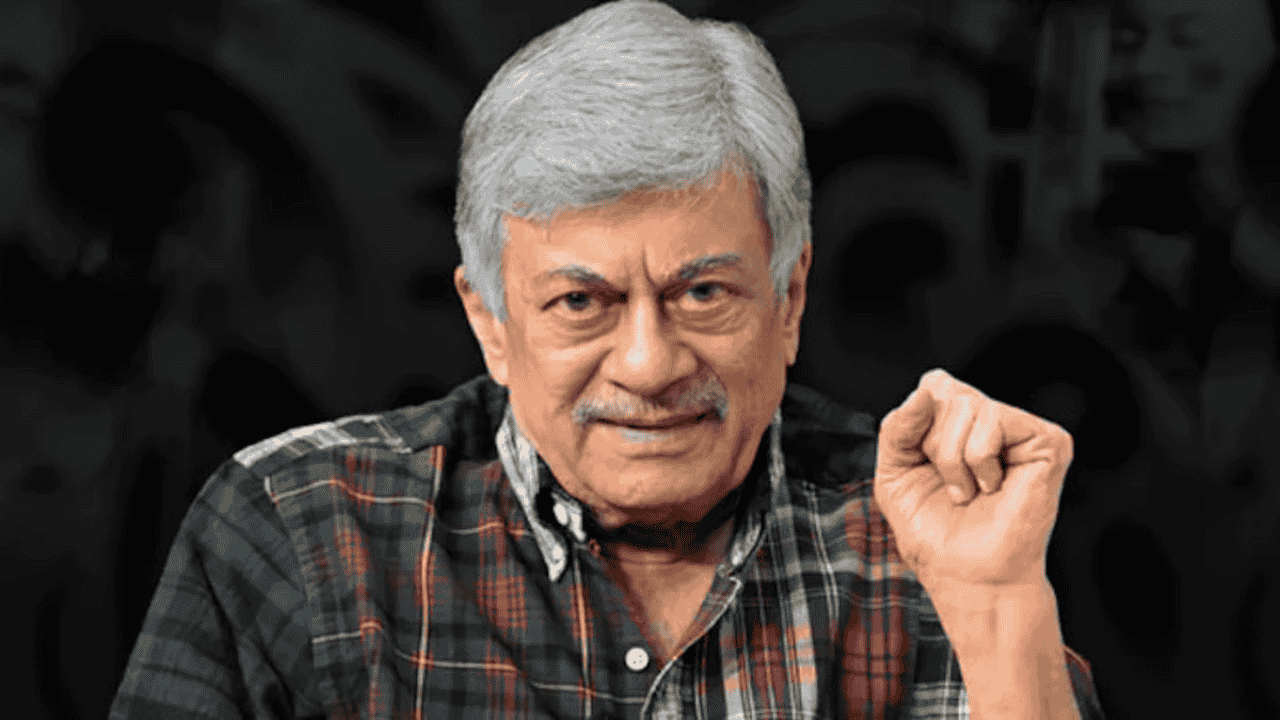
The landscape of Indian cultural heritage is punctuated by visionaries who have dedicated their lives to the evolution of the artistic medium. In a significant development for competitive exam news today, the Union Ministry of Information and Broadcasting announced on Wednesday, September 16, 2026, that veteran actor Anant Nag will be conferred the 2024 Dadasaheb Phalke Award. This announcement solidifies Nag’s position as a titan of both commercial and parallel cinema in India, recognizing a profound cinematic journey spanning over five decades.
The Dadasaheb Phalke Award, universally acknowledged as India's highest official recognition in the field of cinema, celebrates outstanding contributions to the growth and development of the Indian film industry. The 78-year-old actor will officially receive the honour at the 72nd National Film Awards ceremony, which is scheduled to take place on September 22, 2026, at Ekta Nagar in Kevadia, Gujarat.
For aspirants tracking the daily GK update, this development acts as a primary node connecting various vital themes in the UPSC syllabus, notably Indian Art and Culture, the history of regional cinema, and the institutional frameworks governing the preservation of India's audiovisual heritage.
Key Facts and Exam-Relevant Data
Awardee: Anant Nag (78-year-old veteran Kannada and Hindi cinema actor).
Award Name: Dadasaheb Phalke Award for the year 2024.
Ceremony Details: To be presented at the 72nd National Film Awards on September 22, 2026, in Ekta Nagar, Kevadia, Gujarat.
Significance for Regional Cinema: Anant Nag becomes only the second actor from the Kannada film industry to receive this prestigious award, arriving exactly 29 years after the legendary Dr. Rajkumar was honoured in 1995.
Filmography Scale: He has acted in over 300 films across multiple languages, with more than 250 of these being in Kannada.
Notable Masterpieces: His most celebrated works include Minchina Ota, Hamsageethe, Ankur, and the landmark television series Malgudi Days.
Prize Configuration: The award comprises a Swarna Kamal (Golden Lotus) medallion, a ceremonial shawl, and a cash prize of ₹1,000,000 (Ten Lakh Rupees).
Biographical Retrospective: The Genesis of Anant Nag’s Artistry
To fully grasp the magnitude of this Atharva Examwise current news, a thorough analytical review of Anant Nag’s biographical and professional trajectory is necessary. Born Anant S. Nagarakatte on September 4, 1948, in Mumbai, Maharashtra, his ancestral roots trace back to Shirali in the Uttara Kannada district of Karnataka. He was raised in traditional educational institutions run by mathas and ashrams, which instilled in him a deep proficiency in Sanskrit and classical texts.
An intriguing historical detail regarding Nag's early ambitions involves the Indian Armed Forces. Deeply influenced by the geopolitical events and nationalistic fervour surrounding the 1962 Sino-Indian War and the 1965 Indo-Pakistani War, a young Anant Nag harboured strong aspirations of serving the nation in the military. However, his applications were thwarted by strict physical parameters: he was rejected by the Indian Air Force due to a weak left eye, and subsequently rejected by the Indian Army due to being underweight. This redirection ultimately gifted the Indian cultural sphere one of its most versatile and enduring actors.
Theatre Roots and the Birth of a Parallel Cinema Icon
Nag’s artistic foundation was laid in the vibrant and intellectually rigorous theatre culture of Mumbai. During his education at St. Xavier's College, he was heavily influenced by English, Hindi, Marathi, and Konkani stage productions. He performed extensively under theatre stalwarts such as Satyadev Dubey, Girish Karnad, and Amol Palekar, who nurtured his naturalistic acting style—a stark contrast to the melodramatic and highly stylized acting prevalent in mainstream Indian cinema at the time.
He made his cinematic debut in the 1973 Kannada film Sankalpa, directed by P.V. Nanjaraje Urs. However, it was his introduction to the acclaimed filmmaker Shyam Benegal by Satyadev Dubey that catapulted Nag to national prominence. Nag rapidly became a defining face of the Indian Parallel Cinema movement in the 1970s, collaborating with Benegal to portray nuanced, often morally complex characters in defining socio-political dramas.
A Cinematic Pantheon: Major Milestones and Masterpieces
The evidence suggests that Anant Nag's filmography is a masterclass in versatility, bridging the gap between uncompromising art-house cinema and immensely popular mainstream entertainment.
Ankur (1974): Nag played a pivotal role in Benegal’s debut feature, an exploration of feudalism, patriarchy, and caste discrimination in rural India. Historical anecdotes reveal that Benegal originally wanted to title the film Seedling. Nag, leveraging his ashram upbringing and mastery of Sanskrit, suggested the perfect Hindi translation, Ankur, earning a cash reward of ₹1,000 from the director. The film became a massive critical success and heralded the arrival of the new wave in Hindi cinema.
Hamsageethe (1975): Nag's portrayal of a fiercely dedicated and obsessive disciple of Carnatic music in G.V. Iyer’s Kannada masterpiece earned the film the National Film Award for Best Feature Film in Kannada, cementing his reputation in his home state.
Nishant (1975): Set in pre-independence Telangana, this film critiqued the absolute power of the rural elite and the sexual exploitation of women. Nag starred alongside an ensemble cast that included Girish Karnad, Shabana Azmi, and Smita Patil. The film competed for the Palme d'Or at the 1976 Cannes Film Festival.
Manthan (1976): Based on the pioneering dairy cooperative movement (the White Revolution) in Gujarat, this film represented an unprecedented intersection of cinema and agrarian mobilization. It was famously crowdfunded by 500,000 farmers who contributed ₹2 each towards the production budget.
Minchina Ota (1980): Collaborating with his brilliant younger brother, the late actor-director Shankar Nag, Anant Nag ushered in an experimental golden era in Kannada cinema. Minchina Ota is celebrated as a landmark heist film that introduced novel narrative techniques to regional audiences.
Malgudi Days (1986): Nag reached millions of Indian households through his memorable leading role in this landmark television series directed by Shankar Nag, based on the literary works of R.K. Narayan. His portrayal of ordinary, relatable men became his signature.
Over a career spanning more than five decades, Nag has acted in over 300 films, with a staggering 250-plus features in Kannada. While he defined the parallel cinema movement, he concurrently became a box-office sensation in Karnataka through massive hit comedy films like Ganeshana Maduve, Gauri Ganesha, and Golmaal Radhakrishna.
Political Intersections and Later Recognition
The analysis of Nag's career also reveals a deep engagement with the socio-political fabric of India. Influenced by the Jayaprakash Narayan (JP) movement during its peak, Nag ventured into active politics. He served as a Member of the Karnataka Legislative Council from 1988 to 1994, and was later elected to the Karnataka Legislative Assembly from Malleshwaram, serving as the Bengaluru Development Minister in the J.H. Patel government. He distanced himself from electoral politics in 1996 following a security incident, choosing to refocus entirely on his artistic pursuits.
In recognition of his vast and varied contributions to the arts, the Government of India honoured him with the Padma Bhushan, the nation's third-highest civilian award, in 2025.
Explore related topics via the Atharva Examwise Guide to Indian Cinema History [Internal Link].
The Dadasaheb Phalke Award: Historical Context and Significance
The Dadasaheb Phalke Award is heavily tested in UPSC current affairs due to its cultural, historical, and institutional gravity. Instituted in 1969 by the Government of India, the award commemorates the birth centenary of Dhundiraj Govind Phalke (1870–1944).
Phalke, universally venerated as the "Father of Indian Cinema," was a multifaceted genius who worked as a photographer, stage playwright, and magician before turning to filmmaking. Notably, he had worked closely with the legendary painter Raja Ravi Varma, which deeply influenced his visual aesthetics. In 1913, Phalke wrote, produced, and directed Raja Harishchandra, which holds the distinction of being India's first full-length feature film. His technical and creative vision, achieved under the constraints of colonial rule, laid the foundation for what is today the most prolific film industry in the world.
The recipient of the award is selected annually by a distinguished committee comprising eminent personalities from the Indian film industry. The inaugural award was presented to Devika Rani, widely acknowledged as the "first lady of Indian cinema," during the 17th National Film Awards.
Exhaustive Record of Dadasaheb Phalke Award Recipients (1969–2024)
Understanding the chronology of the award provides aspirants with a timeline of cinematic evolution in India. The historical data maps the gradual decentralization of the award, moving from an early concentration on Hindi and Bengali cinema to a more inclusive recognition of the massive contributions made by South Indian and Assamese film industries.
| Year | NFA Ceremony | Recipient | Primary Film Industry | Notable Contributions & Context |
|---|---|---|---|---|
| 1969 | 17th NFA | Devika Rani | Hindi | First lady of Indian cinema; founded the pioneering Bombay Talkies in 1934. |
| 1970 | 18th NFA | Birendranath Sircar | Bengali | Founder of New Theatres in Calcutta; pioneer of organized studio systems. |
| 1971 | 19th NFA | Prithviraj Kapoor (Posthumous) | Hindi | Starred in India's first sound film, Alam Ara (1931); founded Prithvi Theatre. |
| 1972 | 20th NFA | Pankaj Mullick | Bengali / Hindi | Composer and singer; noted for the historic radio musical Mahishasuramardini. |
| 1973 | 21st NFA | Ruby Myers (Sulochana) | Hindi | Highest-paid actress of the silent era; debuted in Veer Bala (1925). |
| 1974 | 22nd NFA | B. N. Reddy | Telugu | First Indian film personality to receive a Doctor of Letters. |
| 1975 | 23rd NFA | Dhirendra Nath Ganguly | Bengali | Founder of the Bengali film industry; established multiple film companies. |
| 1976 | 24th NFA | Kanan Devi | Bengali | First lady of Bengali cinema; early female producer. |
| 1977 | 25th NFA | Nitin Bose | Bengali / Hindi | Introduced the revolutionary system of playback singing in 1935. |
| 1978 | 26th NFA | Raichand Boral | Bengali / Hindi | Pioneer of Indian film music; collaborated closely with Nitin Bose. |
| 1979 | 27th NFA | Sohrab Modi | Hindi | Renowned for historical epics and bringing Shakespearean classics to cinema. |
| 1980 | 28th NFA | Paidi Jairaj | Hindi / Telugu | Known for historical character portrayals; helped institute Filmfare Awards. |
| 1981 | 29th NFA | Naushad | Hindi | Introduced the technique of sound mixing to Indian cinema. |
| 1982 | 30th NFA | L. V. Prasad | Hindi/Tamil/Telugu | Contributed significantly as director, producer, and actor across multiple languages. |
| 1983 | 31st NFA | Durga Khote | Hindi / Marathi | Pioneer among female actors who broke societal taboos against acting. |
| 1984 | 32nd NFA | Satyajit Ray | Bengali | Global icon; director of The Apu Trilogy, spearhead of the parallel cinema movement. |
| 1985 | 33rd NFA | V. Shantaram | Hindi / Marathi | Visionary filmmaker known for socially relevant films addressing caste and gender. |
| 1986 | 34th NFA | B. Nagi Reddy | Telugu | Legendary producer of evergreen hits like Mayabazar. |
| 1987 | 35th NFA | Raj Kapoor | Hindi | Celebrated actor-director; gained unprecedented global popularity in the Soviet Union. |
| 1988 | 36th NFA | Ashok Kumar | Hindi | Iconic actor known for pioneering naturalistic acting in Hindi cinema. |
| 1989 | 37th NFA | Lata Mangeshkar | Hindi / Marathi | Legendary playback singer; universally regarded as the voice of the nation. |
| 1990 | 38th NFA | Akkineni Nageswara Rao | Telugu | Cornerstone of Telugu cinema with a career spanning seven decades. |
| 1991 | 39th NFA | Bhalji Pendharkar | Marathi | Renowned director, producer, and writer of historical epics. |
| 1992 | 40th NFA | Bhupen Hazarika | Assamese | Maestro of Assamese music and cinema; integrated folk traditions with modern media. |
| 1993 | 41st NFA | Majrooh Sultanpuri | Hindi | First lyricist to win the Dadasaheb Phalke Award. |
| 1994 | 42nd NFA | Dilip Kumar | Hindi | Method acting pioneer in India; widely revered as the "Tragedy King". |
| 1995 | 43rd NFA | Dr. Rajkumar | Kannada | Cultural ambassador of Karnataka; the first Kannada actor to win the award. |
| 1996 | 44th NFA | Sivaji Ganesan | Tamil | Master of dialogue delivery; first Indian actor to win Best Actor at an international fest. |
| 1997 | 45th NFA | Kavi Pradeep | Hindi | Renowned poet and songwriter; penned iconic patriotic anthems. |
| 1998 | 46th NFA | B. R. Chopra | Hindi | Eminent director and producer of socially conscious cinema and television. |
| 1999 | 47th NFA | Hrishikesh Mukherjee | Hindi | Master of "middle-of-the-road" cinema balancing art and commerce. |
| 2000 | 48th NFA | Asha Bhosle | Hindi / Marathi | Legendary playback singer known for her extreme vocal versatility. |
| 2001 | 49th NFA | Yash Chopra | Hindi | Iconic director who redefined romantic cinema and glamorous aesthetics. |
| 2002 | 50th NFA | Dev Anand | Hindi | Celebrated actor, writer, and director noted for his rapid-fire dialogue delivery. |
| 2003 | 51st NFA | Mrinal Sen | Bengali | Core architect of the Indian New Wave; known for radical political cinema. |
| 2004 | 52nd NFA | Adoor Gopalakrishnan | Malayalam | Visionary who elevated Malayalam parallel cinema to the global stage. |
| 2005 | 53rd NFA | Shyam Benegal | Hindi | Pioneer of parallel cinema; frequent collaborator with Anant Nag. |
| 2006 | 54th NFA | Tapan Sinha | Bengali / Hindi | Acclaimed for sensitive explorations of complex human relationships. |
| 2007 | 55th NFA | Manna Dey | Bengali / Hindi | Legendary playback singer with unmatched classical mastery. |
| 2008 | 56th NFA | V. K. Murthy | Hindi | First cinematographer to receive the award; worked closely with Guru Dutt. |
| 2009 | 57th NFA | D. Ramanaidu | Telugu | Guinness Record holder for producing the largest number of films. |
| 2010 | 58th NFA | K. Balachander | Tamil / Telugu | Revolutionary filmmaker known for bold social themes; mentored global stars. |
| 2011 | 59th NFA | Soumitra Chatterjee | Bengali | Famed collaborator of Satyajit Ray; exceptional stage and film actor. |
| 2012 | 60th NFA | Pran | Hindi | Iconic character actor and the defining villain of classical Hindi cinema. |
| 2013 | 61st NFA | Gulzar | Hindi | Renowned lyricist, poet, and sensitive director. |
| 2014 | 62nd NFA | Shashi Kapoor | Hindi | Actor and producer who actively bridged mainstream and parallel cinema. |
| 2015 | 63rd NFA | Manoj Kumar | Hindi | Known for his patriotic roles and nationalistic directorial ventures. |
| 2016 | 64th NFA | K. Viswanath | Telugu | Highlighted classical music, dance, and tradition through mainstream cinema. |
| 2017 | 65th NFA | Vinod Khanna (Posthumous) | Hindi | Leading mainstream actor of the 1970s and 80s. |
| 2018 | 66th NFA | Amitabh Bachchan | Hindi | The defining "Angry Young Man" and global superstar of Indian cinema. |
| 2019 | 67th NFA | Rajinikanth | Tamil | Cultural icon and one of the highest-grossing actors in Indian cinematic history. |
| 2020 | 68th NFA | Asha Parekh | Hindi | Leading actress of the 1960s and 1970s; successful producer and director. |
| 2021 | 69th NFA | Waheeda Rehman | Hindi | Legendary actress known for timeless classics like Guide and Pyaasa. |
| 2022 | 70th NFA | Mithun Chakraborty | Hindi / Bengali | Three-time National Award-winning actor and mainstream cultural phenomenon. |
| 2023 | 71st NFA | Mohanlal | Malayalam | Phenomenal actor who completely redefined naturalistic acting in Malayalam cinema. |
| 2024 | 72nd NFA | Anant Nag | Kannada / Hindi | Stalwart of parallel cinema and mainstream Kannada hits; 29 years after Dr. Rajkumar. |
Impact of South Indian Cinema on the Phalke Roster
The trajectory of the Dadasaheb Phalke Award clearly maps the gradual yet robust recognition of regional cinema at the national level. The early decades of the award were overwhelmingly dominated by the Bombay (Hindi) and Calcutta (Bengali) film industries, reflecting the centralization of media power. However, the inclusion of South Indian cinema legends underlines the polycentric nature of Indian film production and its immense cultural weight.
B.N. Reddy (1974) and L.V. Prasad (1982) brought the Telugu film industry's structural sophistication and narrative depth to national attention. The profound cultural significance of cinema in Dravidian politics and society is mirrored in the awards bestowed upon Tamil legends. Sivaji Ganesan (1996), celebrated for his unparalleled dialogue delivery, and K. Balachander (2010), a revolutionary filmmaker who tackled taboo social issues, paved the way for cultural icons like Rajinikanth (2019).
Similarly, the aesthetic, intellectual, and literary heft of Malayalam cinema was recognized through the visionary director Adoor Gopalakrishnan (2004) and the acting titan Mohanlal (2023). Kannada cinema finds its absolute pinnacle representations in Dr. Rajkumar (1995), a figure who transcended cinema to become the cultural conscience of Karnataka, and now, the latest laureate, Anant Nag (2024). The 29-year gap between the two Kannada laureates highlights the strict, highly competitive, and exceptional criteria required to achieve this lifelong honour.
The Parallel Cinema Movement: An Analytical Deep Dive
To comprehend the artistic legacy of figures like Anant Nag and his frequent collaborator Shyam Benegal (who received the Phalke Award in 2005), one must delve deeply into the Parallel Cinema movement. This movement is a crucial topic under the Indian Art and Culture syllabus for UPSC aspirants.
Also known as the New Indian Cinema, Alternative Cinema, or the Indian New Wave, Parallel Cinema originated in the state of West Bengal in the early 1950s. It emerged as a direct aesthetic, political, and ideological counterpoint to mainstream commercial "masala" films. Where mainstream cinema relied heavily on escapism, melodramatic plots, elaborate song-and-dance sequences, and star worship, Parallel Cinema sought unvarnished realism, sociopolitical introspection, and strict narrative economy.
Ideological Foundations and Characteristics
Neorealist Influence: Heavily inspired by the post-WWII Italian Neorealism movement (e.g., Vittorio De Sica’s Bicycle Thieves), filmmakers rejected the artificiality of the studio system. They utilized real locations, prioritized natural lighting, and often employed ambient sound to capture the authentic texture of Indian life.
Sociopolitical Thematics: The narratives explicitly tackled the harsh, often uncomfortable realities of post-independent India. The films became visual essays on extreme poverty, the rigid atrocities of the caste system, the exploitation of agrarian and landless labour, gender inequalities, and the friction between feudal traditions and modern democratic ideals.
Casting and Performance: Directors consciously shunned established superstars whose larger-than-life personas would shatter the illusion of reality. Instead, they favoured stage actors or fresh talent capable of naturalistic, understated performances. This creative crucible incubated the exceptional talents of Shabana Azmi, Smita Patil, Naseeruddin Shah, Om Puri, and Anant Nag.
The Visionaries of the Movement
The vanguard of this movement was established by the holy trinity of Bengali cinema: Satyajit Ray, Ritwik Ghatak, and Mrinal Sen. Ray’s Apu Trilogy (starting with Pather Panchali in 1955) brought unprecedented global acclaim to Indian cinema, proving that hyper-local, culturally specific stories possessed universal human resonance.
In the 1970s, the movement expanded its geographical and linguistic boundaries, penetrating heavily into Hindi and regional cinema, spearheaded by Shyam Benegal. Benegal’s "Uprising Trilogy"—comprising Ankur (1974), Nishant (1975), and Manthan (1976)—serves as a cinematic thesis on the evolution of subaltern consciousness. The evidence indicates a clear progression: in Ankur, the revolt against feudal patriarchy merely simmers beneath the surface; in Nishant, the systemic oppression by the rural elite culminates in a violent, chaotic, and bloody retribution by the villagers; by Manthan, the revolution matures into constructive, organized, and democratic collective power through the cooperative dairy movement.
Anant Nag’s integral presence in this trilogy renders his career inseparable from the historical arc of progressive Indian cinema. Without the institutional backing of entities like the National Film Development Corporation (NFDC), which provided the crucial funding mechanism for these non-commercial ventures, the Parallel Cinema movement could not have survived the monopolistic pressures of mainstream Bollywood. The legacy of Parallel Cinema continues to influence contemporary independent filmmaking and the nuanced, character-driven storytelling currently prevalent on modern Over-The-Top (OTT) digital platforms.
For a deeper dive into the intersection of society and film, see the Atharva Examwise Analysis of Indian Society and Cinema [External Reference/Link].
Institutional Pillars of Indian Cinema: NFA and NFHM
The structural backbone supporting the recognition and preservation of cinema in India comprises several vital government initiatives. These institutions feature prominently in both objective preliminary tests and subjective mains examination questions concerning cultural governance.
The National Film Awards (NFA)
Instituted in 1954, the National Film Awards stand as the most prestigious state-sponsored cinematic honours in the country. They were established to encourage the production of films of aesthetic and technical excellence and social relevance, thereby promoting respect and understanding for the diverse regional cultures of India.
Originally organized by the Directorate of Film Festivals (which began managing the awards in 1973), the overarching organizational responsibilities now largely fall under the expanded, amalgamated mandate of the National Film Development Corporation (NFDC).
The awards are divided into highly competitive major categories, including:
Swarna Kamal (Golden Lotus): Awarded for the highest achievements, such as Best Feature Film, Best Direction, and Best Children's Film.
Rajat Kamal (Silver Lotus): Awarded for specific acting, writing, and technical achievements.
The Dadasaheb Phalke Award is presented concurrently at this annual ceremony, historically by the President of India, emphasizing the state's highest validation of the cinematic arts.
The National Film Heritage Mission (NFHM)
While the National Film Awards celebrate contemporary achievements, the preservation of India's vast cinematic history is operationalized through the National Film Heritage Mission (NFHM). Launched in 2015 by the Ministry of Information and Broadcasting (MIB), the NFHM is an ambitious, well-funded government initiative executed under the aegis of the NFDC-National Film Archive of India (NFAI) based in Pune.
Celluloid film is a notoriously fragile medium. The analysis indicates that India has tragically lost a vast majority of its early cinematic output, including up to 70% to 80% of its silent films, due to the rapid chemical decomposition of nitrate and acetate film stock in unfavourable, humid tropical climates. The NFHM was established as a mission-mode project to halt this cultural erasure.
Core Objectives of the NFHM:
Assessment and Preventive Conservation: Conducting rigorous condition assessments of existing film reels to ascertain remaining physical viability and life expectancy.
Digitization: Under the current phase, the mission targets the high-resolution, archival-grade digitization of 5,113 feature and short films.
Restoration: Of the digitized assets, 2,253 landmark films will undergo exhaustive, frame-by-frame 2K or 4K picture and sound restoration.
Infrastructure Development: The construction of state-of-the-art archival and preservation vaults with strict temperature and humidity climate control to house original master negatives and positive prints.
The Prioritization Framework for Preservation: Given that India is the world's most prolific producer of films, selecting which films to salvage first presented a complex logistical and cultural challenge. The MIB and NFAI established a sophisticated Prioritization Framework involving Regional Film Selection Committees (RFSC) and a Central Sub-Committee (CSC). The selection is driven by four primary qualitative parameters:
Current Level of Access: Films that are virtually inaccessible to the public via digital, OTT, or physical media are heavily prioritized to bring them out of obscurity.
Historical Importance: Films documenting critical historical events, the independence struggle, the tragedy of partition, or representing crucial socio-political eras are fast-tracked.
Preservation Need: Films whose master negatives or earliest surviving elements are in critical stages of physical decay (such as vinegar syndrome) are rescued immediately.
Cinematic Experiments and Milestones: Films marking technical milestones (e.g., India's first sound film Alam Ara, the first colour film, the first Cinemascope film Kagaz Ka Phool) or demonstrating unique narrative experiments are preserved as academic benchmarks.
The success of the NFHM is vital not just for cinephiles but for historians and sociologists, as these films represent the primary audiovisual record of India's post-colonial evolution. Recently, beautifully restored documentary classics—including Mahatma: Life of Gandhi 1869–1948, Begum Akhtar, and Ravi Shankar—were showcased at the Mumbai International Film Festival (MIFF), proving the mission's efficacy in breathing vibrant life back into national heritage. The restoration of mainstream classics like Dev Anand's films and Waheeda Rehman's blockbusters further bridges the gap between state preservation and public consumption.
Why this matters for your exam preparation
Integrating this daily GK update regarding Anant Nag and the Dadasaheb Phalke Award into comprehensive study strategies is crucial for aspirants preparing for the Union Public Service Commission (UPSC) Civil Services Examination and various State Public Service Commissions (PSCs). The intersection of current events with static syllabus topics is a highly probable testing area.
General Studies Paper 1 (Indian Heritage and Culture): The evolution of Indian cinema, the transition from the silent era to the talkies, and the distinct thematic shifts brought about by the Parallel Cinema movement constitute significant segments of modern cultural history. The socio-political themes tackled by Shyam Benegal and enacted by Anant Nag (feudalism, caste discrimination, women's empowerment) provide excellent qualitative examples for Mains answers evaluating how art acts as a mirror to Indian society. Understanding the role of literature in cinema, as seen in Nag's Malgudi Days (based on R.K. Narayan), connects literary heritage to audiovisual media.
Prelims Factoids and Matching Questions: Preliminary examinations frequently test specific cinematic "firsts" (e.g., Raja Harishchandra as the first feature, Alam Ara as the first talkie), matching awardees to their specific fields or linguistic industries, and knowing the institutional framework (NFDC, NFAI, CBFC). The chronological details of the Dadasaheb Phalke Award—including Devika Rani as the first recipient, the 29-year gap between Kannada laureates Dr. Rajkumar and Anant Nag, and the specific configurations of the prize (Swarna Kamal, ₹10 Lakh)—must be memorized for statement-based questions.
General Studies Paper 2 & 3 (Governance, Institutions, and Technology): Understanding the role of the Ministry of Information and Broadcasting, the mandate of the National Film Development Corporation (NFDC), and the policy structure of the National Film Heritage Mission (NFHM) provides clear, actionable examples of state intervention in preserving cultural capital. Furthermore, the technological aspects of the NFHM (2K/4K digitization, chemical preservation of celluloid) touch upon the application of modern technology to historical conservation.
The selection of Anant Nag for the 2024 Dadasaheb Phalke Award is a celebration of artistic endurance, stylistic versatility, and regional linguistic pride. By thoroughly studying the parameters of this award, the institutional efforts to preserve such legacies, and the historical cinema movements that produced such artists, aspirants can significantly reinforce their holistic grasp of India's dynamic cultural continuum.