Introduction to the Evolving Global Order
The contemporary geopolitical landscape is witnessing a profound transition from a unipolar system into a multipolar, intricately networked world order. As evidenced by the recent conclusion of the BRICS 2026 Summit hosted under India's Chairship, nations are increasingly relying on plurilateral and minilateral groupings to navigate complex global challenges. For serious aspirants based in academic hubs like Delhi or Indore, and preparing for the UPSC Civil Services Examination or MPPSC, parsing through competitive exam news today requires a deep, interconnected understanding of India's strategic participation in these international forums.
India's foreign policy has definitively evolved from the Cold War-era framework of "Non-Alignment" into a pragmatic, issue-based strategy known as "Multi-Alignment". This approach, characterized by strategic autonomy and "platform diplomacy," allows New Delhi to engage simultaneously with competing power blocs without becoming entangled in formal military alliances. By acting as a "Vishwa Mitra" (friend of the world), India balances its strategic defense partnerships with Western powers in the Indo-Pacific against its continental engagements in Eurasia.
This comprehensive Daily GK update for September 16, 2026, provides an exhaustive analysis of five critical groupings: the Group of Twenty (G20), the Shanghai Cooperation Organisation (SCO), the Quadrilateral Security Dialogue (QUAD), the Bay of Bengal Initiative for Multi-Sectoral Technical and Economic Cooperation (BIMSTEC), and the East Asia Summit (EAS). Their distinct mandates—ranging from macroeconomic stability and maritime security to counter-terrorism and regional connectivity—form the core of General Studies Paper II (International Relations). For a continuous stream of relevant insights, aspirants can always refer to the Atharva Examwise Current Affairs portal.
1. Group of Twenty (G20): The Premier Forum for International Economic Cooperation
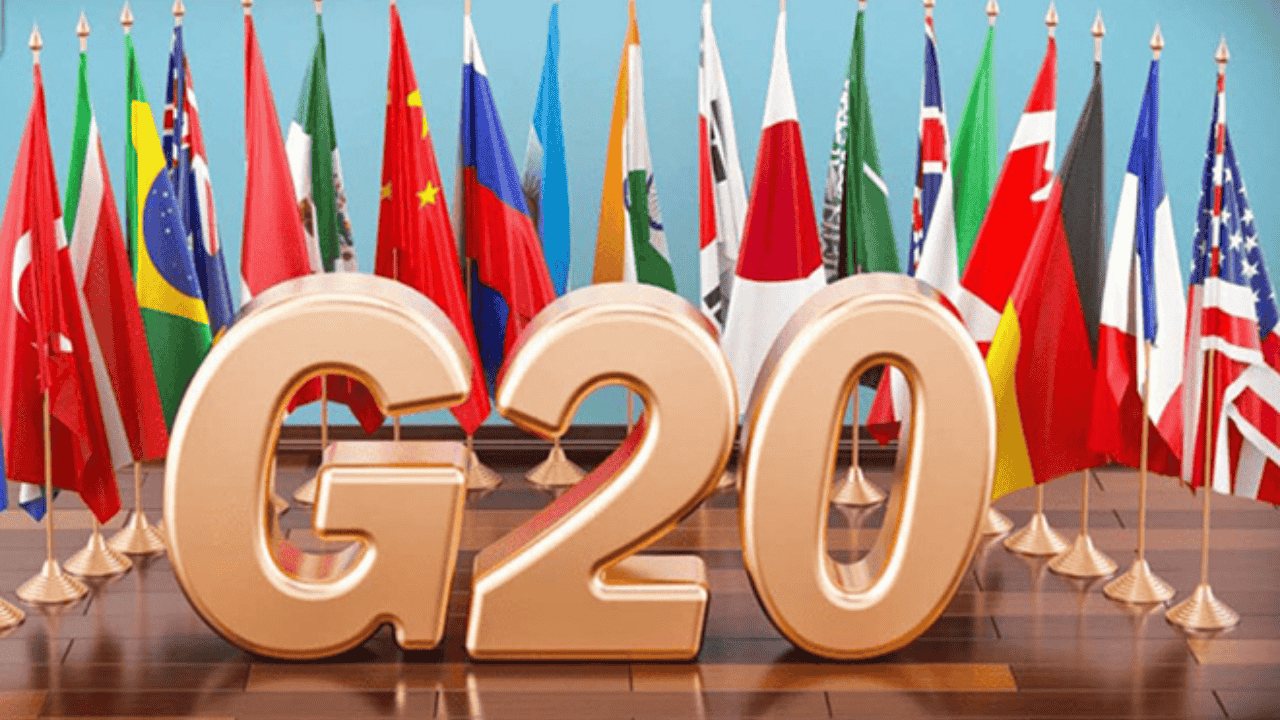
The Group of Twenty (G20) stands as the world's primary platform for macroeconomic coordination, representing the largest advanced and emerging economies. Its mandate has steadily expanded from narrow financial regulation to encompassing the broader dimensions of sustainable development, climate finance, and inclusive growth.
Historical Evolution and Mandate
The G20 was established in 1999 in the wake of the Asian Financial Crisis, initially serving as a technical forum for Finance Ministers and Central Bank Governors to discuss international financial stability. However, the 2008 Global Financial Crisis demonstrated that technocratic coordination was insufficient in the face of systemic economic collapse. This necessitated political consensus at the highest level, elevating the G20 to an annual summit of Heads of State and Government.
The G20 does not possess a permanent secretariat or a legally binding charter; instead, its agenda is driven by a rotating presidency, supported by the "Troika"—the previous, current, and upcoming host countries. The forum operates on two primary tracks:
The Finance Track: Led by Finance Ministers and Central Bank Governors, focusing on fiscal policy, infrastructure financing, debt sustainability, and international taxation reforms.
The Sherpa Track: Led by the personal emissaries of the leaders, focusing on broader socio-economic issues such as anti-corruption, agriculture, digital economy, and climate transitions.
Membership and the Global South Expansion
The G20 traditionally consisted of 19 sovereign states and the European Union. However, in a historic milestone during India's 2023 Presidency, the African Union (AU) was admitted as a permanent member. This monumental expansion means the G20 now represents 55 African nations, effectively speaking for approximately 85% of the global GDP, over 75% of global trade, and nearly 80% of the world's population.
The current core membership comprises Argentina, Australia, Brazil, Canada, China, France, Germany, India, Indonesia, Italy, Japan, Republic of Korea, Mexico, Russia, Saudi Arabia, South Africa, Turkey, the United Kingdom, and the United States, alongside the European Union and the African Union.
The Global South Continuum: India to South Africa (2023-2025)
The G20 is currently experiencing an unprecedented four-year succession of presidencies held by Global South nations: Indonesia (2022), India (2023), Brazil (2024), and South Africa (2025). This continuum ensures that the developmental priorities of emerging economies remain firmly anchored on the global agenda.
During its 2023 Presidency (under the theme Vasudhaiva Kutumbakam - One Earth, One Family, One Future), India successfully positioned itself as the "Voice of the Global South". Key achievements included the launch of the Global Biofuel Alliance, the conceptualization of the India-Middle East-Europe Economic Corridor (IMEC), and the establishment of a Digital Public Infrastructure (DPI) repository to democratize technology access across developing nations.
Building heavily on this momentum, the 2025 South African Presidency convened the historic first-ever G20 Leaders' Summit on African soil in Johannesburg. Operating under the theme "Solidarity, Equality, Sustainability," the South African agenda structurally prioritized the following:
Inclusive Economic Growth and Inequality Reduction: South Africa advocated for the establishment of a permanent global panel on inequality, seeking systemic reforms in global financing frameworks to reverse the growing disparities between the Global North and South. Task forces were dedicated to industrialization and job creation.
Debt Sustainability: Addressing the systemic debt crisis that is paralyzing low-income countries, particularly in Sub-Saharan Africa. The South African presidency pushed for sustainable solutions to liquidity challenges and sovereign credit rating transparency, recognizing that high debt burdens prevent vulnerable nations from investing in climate resilience and infrastructure.
Just Energy Transition and Critical Minerals: Moving away from historical extractive economic models, the G20 under South Africa focused on ensuring equitable beneficiation, local value addition, and technology transfer for African nations rich in critical minerals essential for the green transition.
Disaster Resilience: Elevating the discourse around climate-induced natural disasters, emphasizing parametric insurance, catastrophe bonds, and early warning systems, particularly for Small Island Developing States (SIDS) and Least Developed Countries (LDCs).
To further grasp how global economic architectures are shifting, aspirants can explore the UPSC Current Affairs August 2026 update on FDI and supply chain resilience.
2. Shanghai Cooperation Organisation (SCO): The Eurasian Security and Economic Axis
While the G20 focuses on global macroeconomic governance, the Shanghai Cooperation Organisation (SCO) is a trans-regional Eurasian political, economic, and military organization that represents the primary geopolitical counterweight to Western-led alliances.
Origins and Expansion
The SCO evolved from the "Shanghai Five" mechanism, formed in 1996 by China, Russia, Kazakhstan, Kyrgyzstan, and Tajikistan to demilitarize borders and resolve territorial disputes following the collapse of the Soviet Union. In 2001, with the inclusion of Uzbekistan, the organization was formally chartered and renamed the SCO.
The organization has since undergone significant strategic expansion, transforming its character from a localized border-management tool into a vast geopolitical entity. India and Pakistan were admitted as full members at the historic Astana Summit in 2017. Recognizing the geopolitical shifts in Eurasia, the SCO admitted Iran in 2023 and Belarus in 2024, bringing the total core membership to 10 nations: India, China, Pakistan, Kazakhstan, Russia, Kyrgyzstan, Tajikistan, Uzbekistan, Iran, and Belarus.
Core Mandate and Institutional Structure
The SCO's primary focus is maintaining regional security, specifically countering what its charter defines as the "Three Evils": Terrorism, Separatism, and Extremism. The organization operates through two highly active permanent bodies:
The SCO Secretariat: Based in Beijing, China, managing the daily administrative, diplomatic, and informational functions of the organization.
The Regional Anti-Terrorist Structure (RATS): Headquartered in Tashkent, Uzbekistan, serving as a vital intelligence-sharing, military exercise coordination, and counter-terrorism hub.
Beyond security, the SCO heavily emphasizes economic cooperation, energy connectivity, and cultural exchange among Eurasian nations.
India's Strategic Calculations in the SCO
India's membership in the SCO is a classic demonstration of its multi-alignment strategy. It allows New Delhi to maintain a robust continental presence, balancing its maritime minilateral engagements in the Indo-Pacific. Key Indian priorities within the SCO framework include:
Counter-Terrorism and Security: India consistently utilizes the RATS platform to build regional consensus against state-sponsored terrorism, terror financing, and radicalization, often implicitly targeting cross-border terrorism emanating from Pakistan. The SCO provides a rare multilateral forum where Indian and Pakistani military and intelligence officials interact.
Central Asian Connectivity: With direct land access to the resource-rich Central Asian Republics blocked by Pakistan, India leverages the SCO to promote alternative transit routes. This includes advocating for the International North-South Transport Corridor (INSTC) and the strategic Chabahar Port in Iran, bypassing Pakistani territory entirely.
Sovereignty Concerns and the BRI: India has uniquely maintained its strategic autonomy within the SCO by consistently refusing to endorse China's Belt and Road Initiative (BRI). India cites severe violations of territorial integrity, specifically regarding the China-Pakistan Economic Corridor (CPEC), which passes through Pakistan-Occupied Kashmir (POK).
Table: Comparing Key Connectivity Corridors Relevant to India
| Corridor Initiative | Primary Backer | Key Route / Geography | Strategic Implication for India |
|---|---|---|---|
| Belt and Road Initiative (BRI) / CPEC | China | Gwadar (Pakistan) to Xinjiang (China) via POK | Opposed by India due to sovereignty violations in POK. |
| INSTC | India, Russia, Iran | Mumbai to Moscow via Chabahar (Iran) and Central Asia | India's counter-strategy to bypass Pakistan and access Eurasian markets. |
| IMEC | India, US, UAE, EU | Mumbai to Europe via the UAE, Saudi Arabia, and Israel | A geoeconomic counter to the BRI; currently facing delays due to West Asian conflicts. |
3. Quadrilateral Security Dialogue (QUAD): Securing the Indo-Pacific
In stark contrast to the continental focus of the SCO, the Quadrilateral Security Dialogue (QUAD) is a maritime-centric minilateral grouping comprising India, the United States, Japan, and Australia.
Evolution of the QUAD
The origins of the QUAD trace back to the collaborative disaster relief and humanitarian assistance efforts of the "Tsunami Core Group" following the devastating 2004 Indian Ocean earthquake. In 2007, Japanese Prime Minister Shinzo Abe formalized the dialogue, pushing for a "Democratic Security Diamond." However, the initiative quickly dissolved due to Australian withdrawal and intense Chinese diplomatic pressure characterizing it as an "Asian NATO".
The aggressive expansionism of China in the South China Sea, the militarization of artificial islands, and broader geopolitical shifts in the Indo-Pacific necessitated the QUAD's revival in 2017. By 2021, the grouping was elevated to the Leaders' Summit level, transforming from a loose consultative dialogue into a formidable pillar of the Indo-Pacific security architecture.
Objectives and Non-Military Nature
The QUAD is united by a shared vision of a "Free, Open, and Inclusive Indo-Pacific" (FOIP), grounded in respect for international law, specifically the United Nations Convention on the Law of the Sea (UNCLOS).
It is crucial for UPSC aspirants to understand that the QUAD is not a formal military alliance, nor does it possess a mutual defense treaty or a permanent secretariat. To circumvent the optics of military containment and ease the concerns of ASEAN nations, the QUAD has diversified its agenda through specialized working groups focusing on the provision of global public goods:
Vaccine diplomacy and global health security.
Climate change mitigation and the establishment of green shipping corridors.
Resilient supply chains for semiconductors, rare earth elements, and critical technologies.
Cyber security, outer space cooperation, and disaster relief.
To understand India's military diversification beyond traditional suppliers, and the importance of technology supply chains, refer to the Atharva Examwise Daily GK Update on the India-US Critical Minerals Agreement.
The Indo-Pacific Partnership for Maritime Domain Awareness (IPMDA)
A cornerstone of the QUAD's recent security efforts is the Indo-Pacific Partnership for Maritime Domain Awareness (IPMDA), launched during the 2022 summit. The IPMDA provides an unclassified, near-real-time integrated maritime picture across the Pacific Islands, Southeast Asia, and the Indian Ocean.
In 2026, the QUAD expanded the IPMDA through the Indo-Pacific Maritime Surveillance Collaboration (IPMSC). This advanced initiative utilizes commercial satellite-based software, notably SeaVision, to track "dark shipping" (vessels operating with disabled automatic identification systems), combat illegal, unreported, and unregulated (IUU) fishing, and coordinate rapid humanitarian assistance. This initiative directly aligns with India's broader maritime doctrine, bridging technological gaps to enforce regional stability without aggressive military posturing.
Structured Comparison: QUAD vs. SCO
| Feature | QUAD (Quadrilateral Security Dialogue) | SCO (Shanghai Cooperation Organisation) |
|---|---|---|
| Geographic Focus | Indo-Pacific (Maritime Domain) | Eurasia (Continental Domain) |
| Core Membership | India, USA, Japan, Australia (4) | China, Russia, India, Pakistan, Iran, Central Asian Republics, Belarus (10) |
| Primary Objective | Free, Open, and Rules-based Indo-Pacific; technological resilience | Regional security, anti-terrorism (RATS), continental economic integration |
| Nature of Alliance | Informal strategic dialogue; plurilateral network; no secretariat | Formal charter; permanent secretariat in Beijing |
| Strategic Subtext | Implicitly designed to balance China's maritime assertiveness | Historically led by China and Russia; often viewed as a non-Western bloc |
4. BIMSTEC: The Bridge Between South and Southeast Asia
The Bay of Bengal Initiative for Multi-Sectoral Technical and Economic Cooperation (BIMSTEC) is a regional organization uniquely linking the littoral and adjacent areas of the Bay of Bengal, bridging South Asia with Southeast Asia.
Origin and the Pivot from SAARC
Founded through the Bangkok Declaration on June 6, 1997, BIMSTEC initially comprised Bangladesh, India, Sri Lanka, and Thailand under the acronym BIST-EC. With the inclusion of Myanmar later in 1997, and Nepal and Bhutan in 2004, it evolved into its current seven-member format, representing 1.7 billion people and a combined GDP of over $5 trillion.
Historically, India's primary neighborhood platform was the South Asian Association for Regional Cooperation (SAARC), founded in 1985. However, SAARC suffers from severe structural limitations. Its charter (Article X) requires absolute unanimity for decisions and strictly prohibits the discussion of bilateral or contentious disputes. This structural flaw allowed the persistent geopolitical hostility between India and Pakistan to paralyze the organization. Following the 2016 Uri terror attack and India's subsequent boycott of the Islamabad SAARC summit, the grouping became effectively dormant.
Consequently, India executed a decisive strategic pivot toward BIMSTEC. BIMSTEC presents a cooperative, trust-based environment free from the obstructive presence of Pakistan, enabling India to seamlessly integrate its "Neighbourhood First" and "Act East" policies.
The BIMSTEC Charter and Sectoral Reorganization (2024 Updates)
A monumental development for the grouping occurred recently: the BIMSTEC Charter, originally signed during the 5th Summit in Colombo in 2022, officially entered into force on May 20, 2024. This entry into force is a critical turning point for the organization, as it confers a formal international legal personality upon BIMSTEC, establishes a robust institutional framework, and paves the way for the admission of external observers and new members, transitioning it from a loose grouping into a formalized regional organization.
To streamline its operations and maximize efficiency, BIMSTEC reorganized its diverse areas of cooperation into seven highly focused pillars, with each pillar led by a specific member state:
Trade, Investment and Development: Led by Bangladesh (Sub-sector: Blue Economy)
Environment & Climate Change: Led by Bhutan (Sub-sector: Mountain Economy)
Security: Led by India (Sub-sectors: Counter-Terrorism and Transnational Crime, Disaster Management, Energy)
Agriculture and Food Security: Led by Myanmar (Sub-sectors: Agriculture, Fisheries & Livestock)
People-to-People Contact: Led by Nepal (Sub-sectors: Culture, Tourism, Poverty Alleviation)
Science, Technology & Innovation: Led by Sri Lanka (Sub-sectors: Health, Human Resource Development)
Connectivity: Led by Thailand
India's leadership in the Security pillar underscores its role as the net security provider in the Bay of Bengal region, focusing heavily on intelligence sharing, establishing a BIMSTEC Energy Centre in Bengaluru, and conducting disaster management exercises.
Strategic Infrastructure and Connectivity
BIMSTEC's ultimate success hinges on overcoming massive physical connectivity deficits inherited from the colonial era. Key ongoing projects include:
Kaladan Multi-Modal Transit Transport Project: An ambitious project connecting the Kolkata seaport to the Sittwe seaport in Myanmar, and further inland to Mizoram via river and highway networks. This project is vital for providing an alternative route to India's Northeast, bypassing the highly vulnerable Siliguri Corridor (Chicken's Neck).
India-Myanmar-Thailand Trilateral Highway: A 1,360 km highway connecting Moreh in Manipur (India) to Mae Sot (Thailand) via Myanmar. It stands as a physical manifestation of the Act East Policy, promising to unlock trade across the region.
For further insights into the strategic development of Northeast India, aspirants are encouraged to study the Atharva Examwise Daily GK Update on the Shillong-Silchar High-Speed Corridor.
5. East Asia Summit (EAS): The Apex Strategic Forum of the Indo-Pacific
The East Asia Summit (EAS) represents the highest level of political and strategic dialogue in the Asia-Pacific region, providing a unique platform for major global powers to engage directly with Southeast Asian nations.
Foundation and ASEAN Centrality
Established in 2005 in Kuala Lumpur, the EAS is fundamentally an ASEAN-led initiative. "ASEAN Centrality" is the indispensable guiding principle of the EAS; this dictates that the Association of Southeast Asian Nations sets the agenda, acts as the institutional hub, and ensures that the forum is not hijacked by the geopolitical rivalry between the US and China.
The EAS comprises 18 member states: the 10 core ASEAN countries (Brunei, Cambodia, Indonesia, Laos, Malaysia, Myanmar, Philippines, Singapore, Thailand, Vietnam) plus eight dialogue partners: Australia, China, India, Japan, New Zealand, the Republic of Korea, Russia, and the United States.
The EAS is distinct because it is the only leader-led forum at which all key Indo-Pacific partners gather to discuss political, traditional security, and non-traditional economic challenges, including maritime security, climate change, and energy.
India's Act East Policy in the EAS
India's membership in the EAS since its inception in 2005 is a testament to its deep historical ties and growing strategic interests in Southeast Asia. The EAS provides New Delhi with a premier platform to advance its "Act East Policy."
It is essential for serious aspirants to understand the paradigm shift from the "Look East Policy" to the "Act East Policy":
| Parameter | Look East Policy (1991) | Act East Policy (2014-Present) |
|---|---|---|
| Origin & Focus | Initiated by PM P.V. Narasimha Rao. Primarily an economic strategy to integrate with "Asian Tigers" post-Cold War. | Upgraded by PM Narendra Modi. Injected a strong security and strategic dimension. |
| Geographic Scope | Limited strictly to Southeast Asia (ASEAN). | Expanded to include East Asia (Japan, South Korea) and Oceania (Australia, Pacific Island Countries). |
| Domestic Linkage | Marginal focus on border infrastructure integration. | Treats India's North-Eastern states as the vital gateway to Southeast Asia, heavily funding cross-border connectivity. |
| Execution Mode | Gradual institutional integration and trade agreements. | Proactive summit-level diplomacy, maritime defense pacts, and rapid infrastructure push. |
Through the EAS, India strongly advocates for a rules-based order in the South China Sea. By emphasizing freedom of navigation, overflight, and the peaceful resolution of disputes under UNCLOS, India utilizes the EAS to indirectly counter unilateral territorial expansionism in the region.
6. India's Expanding Maritime Doctrines: From SAGAR to MAHASAGAR
Underpinning India's proactive participation in maritime-focused groupings like the QUAD, BIMSTEC, and the EAS is its rapidly evolving naval and foreign policy doctrine.
In 2015, during a visit to Mauritius, the Indian Prime Minister introduced SAGAR (Security and Growth for All in the Region). This marked a strategic turn toward active, responsible maritime engagement in the Indian Ocean Region (IOR). SAGAR emphasized capacity building, humanitarian assistance, disaster relief (HADR), and coastal surveillance for Indian Ocean littoral and island states (e.g., Maldives, Seychelles, Sri Lanka).
However, as the geopolitical theater expanded due to great power competition and the increasing connectivity of maritime supply chains, India's strategic bandwidth required a conceptual upgrade. Consequently, in early 2024, the Indian Prime Minister articulated the MAHASAGAR (Mutual and Holistic Advancement for Security and Growth Across Regions) doctrine.
Mahasagar, translating to "Great Ocean" in Sanskrit, represents a profound shift from a strictly regionalist Indian Ocean outlook to a comprehensive Indo-Pacific identity.
Key Facts: This new framework aims to consolidate economic and security cooperation across the broader Global South, including the eastern littoral states of Africa.
Exam-relevant Data: It offers a transparent, rules-based, and capacity-building alternative to debt-driven infrastructure models like China's BRI. It synergizes seamlessly with India's role in the QUAD's IPMDA and its leadership in the BIMSTEC security sector, positioning India as a liminal power capable of bridging the Global North and South.
Why This Matters for Your Exam Preparation
For serious aspirants aiming to clear the UPSC Civil Services Examination or State PSCs like the MPPSC (Madhya Pradesh Public Service Commission), a nuanced, interconnected understanding of these international groupings is critical across multiple stages of the examination.
Relevance for Prelims
In the Preliminary examination, questions frequently test factual clarity regarding member states, geographical locations, origin declarations, and recent summit venues.
Membership Traps: Aspirants must perfectly memorize the exact composition of the G20, SCO, and EAS. A common trap designed by examiners is conflating observer states or dialogue partners with full members. For example, remember that Belarus is now a full SCO member as of 2024, and the African Union is a permanent G20 member.
Venue Rotations & PYQs: The UPSC has previously tested candidates on the mismatch of summit locations. For instance, in a past Prelims paper (similar to UPPSC 2020 Prelims Q47), candidates were asked to identify the incorrect host for the East Asia Summit. Remember the fundamental rule: the EAS host city always matches the country holding the rotating ASEAN chairmanship for that year.
Institutional Developments: Dates and legal statuses are highly testable. The entry into force of the BIMSTEC Charter on May 20, 2024, and the launch of the QUAD's IPMSC in 2026 are prime candidates for objective questions.
Relevance for Mains (UPSC GS Paper II & MPPSC Mains Paper 2)
In the Mains examination, particularly UPSC GS Paper II (International Relations) and MPPSC Mains Paper 2 (which explicitly covers "International Organisations" and India's foreign policy), the analytical demands are significantly higher. Candidates must move beyond facts to analyze the utility and limitations of these groupings.
Analyzing India's Multi-Alignment: Questions frequently ask candidates to critically evaluate India's transition from Non-Alignment to Multi-Alignment. Aspirants should cite India's concurrent participation in the SCO (alongside China and Russia) and the QUAD (alongside the US and its allies) as the prime example of strategic autonomy, platform diplomacy, and avoiding binary choices.
The SAARC vs. BIMSTEC Debate: Be prepared to write essays or long-form answers on why BIMSTEC has overshadowed SAARC as the preferred vehicle for India's "Neighbourhood First" policy. Explicitly cite the structural limitations of SAARC's charter (Article X unanimity clause) and how Pakistan's obstructionism forced India to pivot to the Bay of Bengal.
Global South Leadership: Analyze India's diplomatic achievements during its G20 Presidency, particularly the inclusion of the African Union. Discuss how the current succession of Global South presidencies (India, Brazil, South Africa) is democratizing global economic governance, reforming debt structures, and amplifying the voice of developing nations.
Mastering the intricate dynamics of the G20, SCO, QUAD, BIMSTEC, and EAS provides a robust analytical framework for decoding international relations. Continuous tracking of these organizations through the Atharva Examwise Daily GK Updates and participating in our Current Affairs Analysis Live courses will ensure that aspirants in Indore, Delhi, and beyond remain ahead of the curve in their competitive exam preparation.